

Vitamin D Dosage for Deficiency: A UK Guide
A grey stretch of winter has set in, you're spending most of the day indoors, and you've started wondering whether low vitamin D could explain feeling tired or achy. It's tempting to reach for a high-strength supplement and hope it helps. But symptoms alone can't confirm a deficiency, and the right dose depends on whether you're preventing low levels, treating a deficiency confirmed by a blood test, or maintaining levels after treatment.
For adults in the UK, those are different situations with different dosing approaches. The routine seasonal supplement is not a treatment dose, and a clinician-prescribed treatment course shouldn't be copied from a product label. Understanding the difference can help you act sensibly without taking more than you need.
Table of Contents
- Why Getting Your Vitamin D Dose Right Matters
- What Counts as Vitamin D Deficiency
- Prevention vs Treatment - Why the Dose Matters
- Treatment Protocols for Confirmed Deficiency
- After Loading - Maintenance and Long-Term Dosing
- Monitoring, Safety, and When to See a GP
- Choosing the Right Supplement in the UK
- Frequently Asked Questions About Vitamin D Dosing
Why Getting Your Vitamin D Dose Right Matters
Vitamin D advice can sound contradictory. One recommendation is a modest daily supplement for seasonal prevention; another may involve a much higher dose for a confirmed deficiency. Both can be appropriate in the right context, but they aren't interchangeable.
Think of prevention as topping up a tank before it runs low. Treatment is more like following a planned refill schedule after a test has shown that the tank is already low. Taking a little when deficiency needs treatment may not be enough to correct it. Taking high doses without assessment, on the other hand, can expose you to avoidable risk.
A grey winter, limited time outdoors or a history of low vitamin D might prompt questions, but none confirms a deficiency. Tiredness, low mood and aches can have many causes, so using symptoms to choose a high-strength supplement is guesswork. If you're concerned, a GP can assess your situation and decide whether a blood test is appropriate.
Practical rule: Choose a dose for the reason you're taking it. A preventive supplement is for routine intake, while treatment for a confirmed deficiency needs a clinician's plan.
Some people have health or medication factors that make a standard approach unsuitable. Kidney or liver disease, problems absorbing nutrients, pregnancy, and medicines that affect vitamin D metabolism can all influence the decision. If any of these apply, ask a qualified healthcare professional before taking more than a routine supplement.
The aim isn't to take the largest dose you can find. It's to use an appropriate dose for the right length of time, then follow the advice that fits your circumstances.
What Counts as Vitamin D Deficiency
In the UK, deficiency for bone-health purposes is defined as a serum 25-hydroxyvitamin D concentration below 25 nanomoles per litre (nmol/L). This blood marker is the one used to assess vitamin D status. A result above the deficiency cut-off isn't automatically a reason to start a treatment course; a clinician interprets the result alongside your health and circumstances.
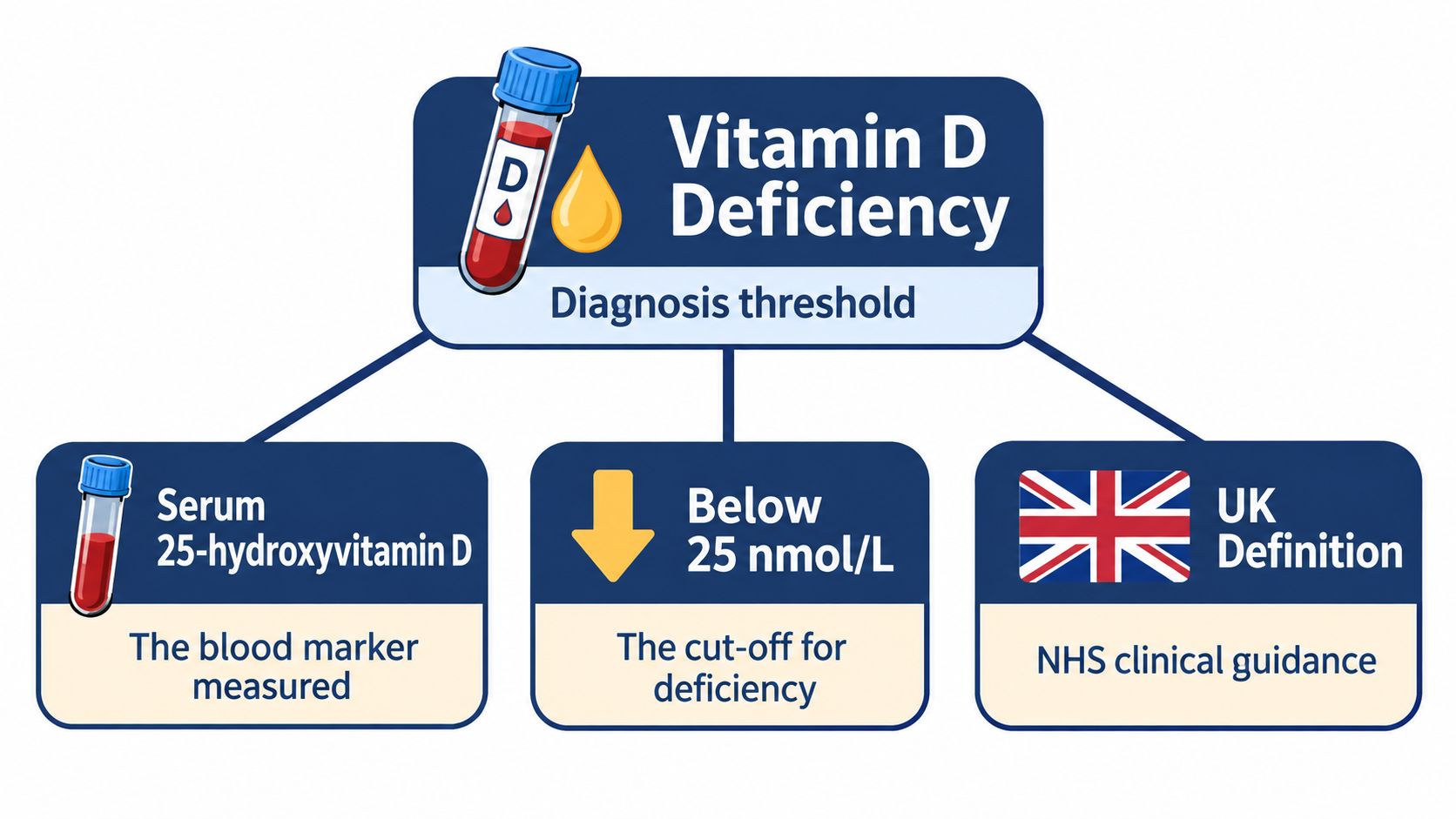
The UK National Diet and Nutrition Survey 2019–2023 found that 18% of adults aged 19–64 and 12% of adults aged 65 and over were below that threshold. The survey also recorded levels below the threshold in 10% of children aged 4–10 and 23% of those aged 11–18. These results describe the survey population, not the likelihood that any one person's symptoms are caused by deficiency. (UK National Diet and Nutrition Survey 2019–2023)
Differences between socioeconomic groups were also reported: 34% of adults aged 19–64 in the most deprived quintile were below the threshold, compared with 9%–17% in the other four groups, as reported in the same survey.
Who may be more vulnerable
Limited sunlight exposure can increase the chance of low vitamin D. This may apply if you spend little time outdoors or live indoors, and risk can also be higher for people with darker skin pigmentation, concealing clothing, regular high-SPF use, fish-free diets or gastrointestinal malabsorption.
Risk factors don't prove that someone is deficient. Likewise, symptoms such as tiredness or aches aren't specific enough to diagnose it. A blood test and clinical assessment provide a more reliable basis for treatment than trying to infer a result from how you feel. For a plain-language overview of possible signs, see this guide to vitamin D deficiency symptoms in the UK.
Prevention vs Treatment - Why the Dose Matters
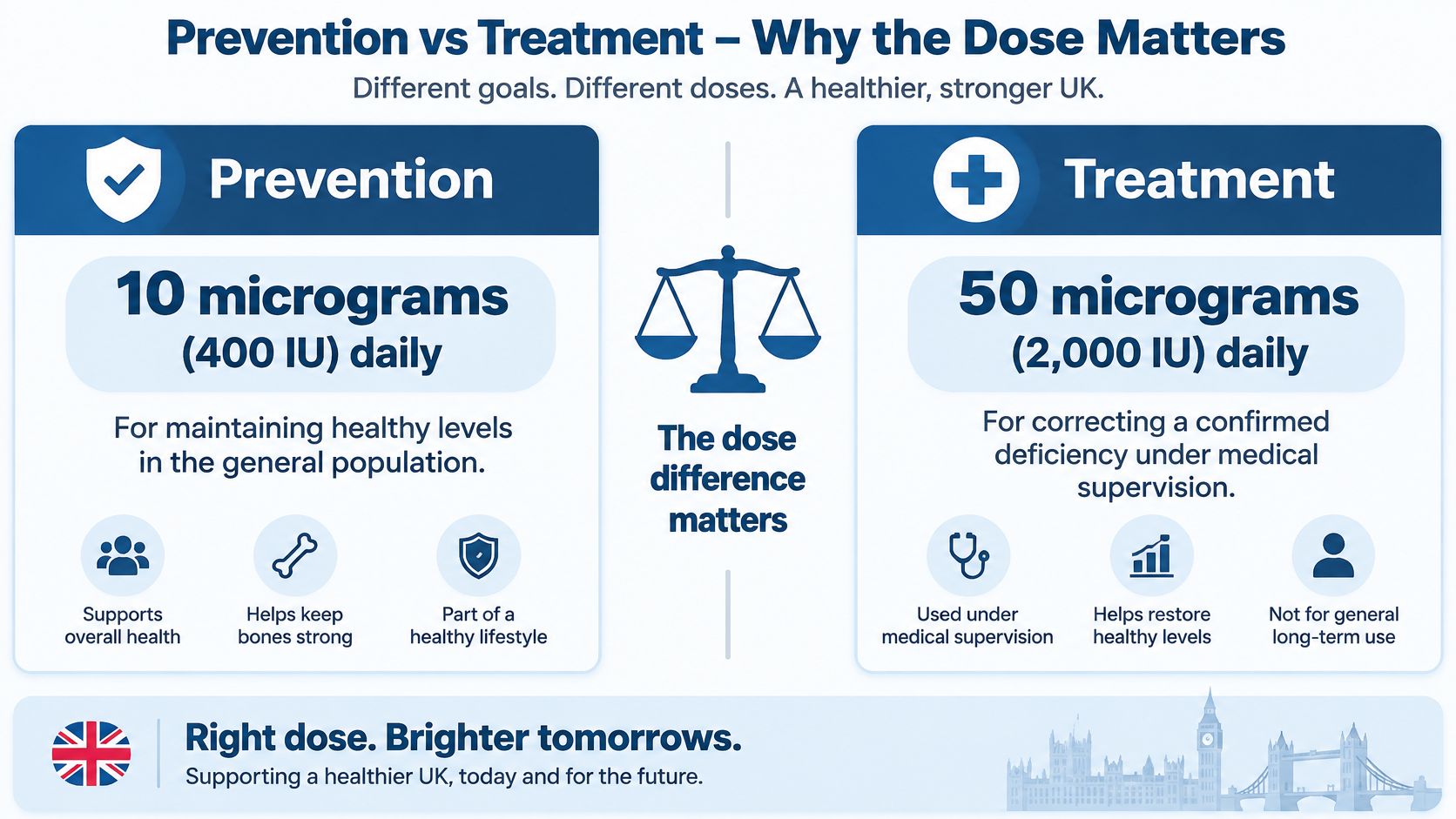
The key distinction is simple: prevention aims to support routine intake; treatment aims to correct a deficiency that has been assessed. Confusing the two can lead someone to use a high-strength product without knowing whether it's suitable.
| Situation | What the dose is for | What to keep in mind |
|---|---|---|
| Seasonal prevention | A routine nutritional intake for the general population | UK guidance gives 10 micrograms (400 IU) daily for people aged 4 and over, particularly during the low-sunlight period from October through late March or early April. |
| Treatment of confirmed deficiency | A clinician-directed plan to restore vitamin D levels | The dose and duration depend on the clinical situation; don't select a treatment regimen from a general prevention recommendation. |
| Upper safe-intake boundary | A safety limit for most people, not a dosing goal | Total daily intake up to 100 micrograms (4,000 IU) is generally considered safe for most people, but that doesn't make it a recommended treatment target. |
The UK government's guidance describes the routine intake as a nutritional reference, not a prescription for treating a confirmed deficiency. It also sets out the upper safe-intake boundary, which should not be mistaken for a dose to aim for. (UK guidance on vitamin D intake and safety)
A useful analogy is the difference between everyday maintenance and a repair job. The routine dose is intended to help maintain intake; it isn't a shortcut for correcting a measured low level. If you suspect deficiency, ask a GP whether assessment or testing is appropriate before choosing a higher-strength supplement.
The accompanying comparison shows why these categories shouldn't be blended into one recommendation.
Treatment Protocols for Confirmed Deficiency
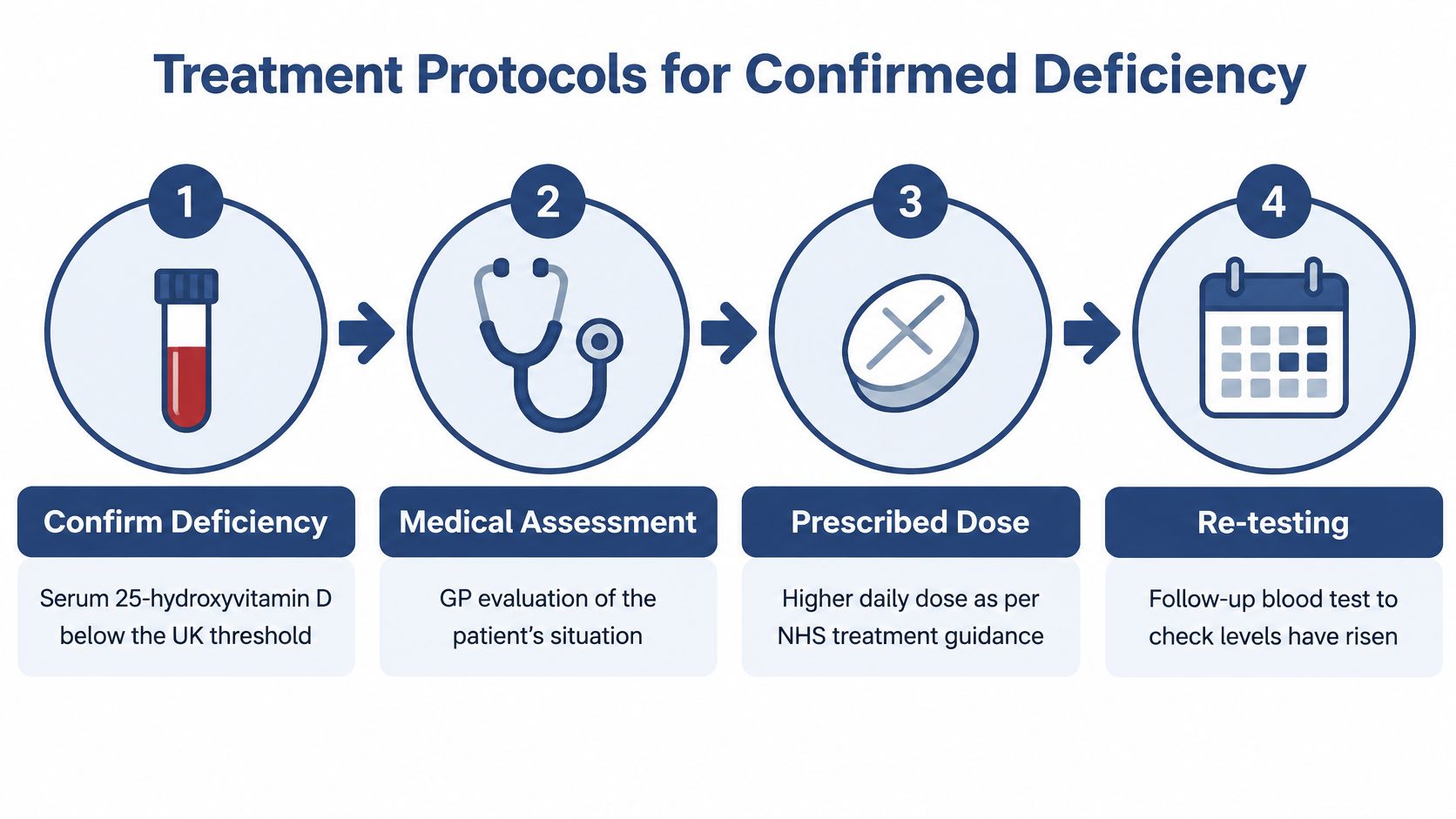
When an adult has a confirmed deficiency that needs treatment, a clinician may prescribe a loading course. This is a planned, temporary higher-dose regimen intended to restore vitamin D stores relatively quickly. It differs from taking a routine daily supplement for prevention.
One NHS primary-care pathway describes a cumulative oral loading dose of approximately 300,000 IU (7,500 micrograms) of colecalciferol over 6–10 weeks. The total may be divided across the course; one pathway specifies 300,000 IU over 6–7 weeks, while another uses 25,000 IU weekly for 6 weeks. These are examples of clinical treatment regimens, not general wellness instructions. (NENC NHS primary-care guidance for adult vitamin D deficiency)
How the treatment decision is made
A safe plan starts with the person, not the packet. A healthcare professional can consider the blood result, symptoms, age, body size, absorption, medical conditions and medicines before deciding whether a loading course is needed and how it should be taken.
That matters because some conditions can change the risks or response. Kidney disease, high blood calcium, granulomatous disease, pregnancy, malabsorption and interacting medicines call for particular care. Someone with these factors shouldn't choose a regimen by adapting an online example.
A loading course is a prescribed treatment plan. Don't reproduce it by taking repeated high-strength retail products unless a clinician has told you to do so.
If a clinician recommends treatment, ask them to make the instructions clear: which preparation to use, how to space the doses, when the course ends and what to take afterwards. If the label or instructions seem unclear, check with a pharmacist or prescriber before taking the next dose.
After Loading - Maintenance and Long-Term Dosing
Finishing a loading course doesn't always mean you should stop vitamin D altogether. Many NHS pathways move from the temporary treatment phase to a maintenance dose, which is intended to help maintain levels rather than rapidly correct a deficiency.
Adult guidance commonly gives 800–2,000 IU daily after treatment. Another NHS clinical guideline describes approximately 25,000 IU monthly as an alternative maintenance schedule. These are different schedules, so don't combine them or switch between them without checking your clinician's instructions. The same guidance describes a result above 50 nmol/L as generally adequate for bone health, while 25–50 nmol/L may be inadequate for some people. (Royal United Hospitals Bath NHS adult vitamin D deficiency guideline)
A helpful way to think about it is that loading is the initial correction, while maintenance is the ongoing plan. If the original risk remains, such as limited sun exposure or an absorption problem, stopping without discussing what comes next may not fit your needs. But the product strength alone can't tell you whether to continue, change the schedule or repeat treatment.
A practical post-treatment timeline
- Finish the prescribed course: Follow the directions you were given, and don't extend or repeat loading doses on your own.
- Start maintenance as instructed: Confirm the dose and when to begin it with your prescriber.
- Review ongoing risks: Tell your clinician if your health, medicines or ability to absorb nutrients could affect your vitamin D.
- Ask before repeating treatment: Persistent symptoms or a future low result need assessment, not an automatic repeat course.
For background on how vitamin D3 and magnesium products are presented together, see this guide to vitamin D3 and magnesium. A combination product shouldn't replace the maintenance instructions you've been given.
Monitoring, Safety, and When to See a GP
Monitoring after treatment is part of using a loading course safely. Following a therapeutic course, adjusted serum calcium should be checked within approximately one month of the final loading dose, or after starting lower-dose maintenance. This helps identify high calcium and can reveal an underlying issue such as primary hyperparathyroidism. (EPUT NHS guidance on monitoring vitamin D treatment)
A repeat vitamin D blood test isn't routinely needed for every adult who is taking the prescribed plan and improving. A clinician may consider testing at around 3–6 months if symptoms persist or if malabsorption or another risk of poor response is present.
| When | What to check | Why it matters |
|---|---|---|
| Within approximately one month after loading | Adjusted serum calcium | To check for high calcium or an underlying issue uncovered during treatment. |
| When symptoms persist or response may be poor | Consider repeat 25-hydroxyvitamin D testing | To help a clinician assess whether the plan is working and whether another factor needs attention. |
| During follow-up | Symptoms, adherence, medicines and relevant health conditions | To decide whether to continue or adjust the plan safely. |
Contact a GP if you're worried about possible deficiency, have persistent symptoms, or have a condition or medicine that could affect vitamin D treatment. Seek prompt medical advice if you feel unwell after taking a high dose, rather than taking more or waiting for a routine review.
Keep track of vitamin D from all supplements you take, including multivitamins, so a clinician or pharmacist can review the total. For a broader discussion of safe supplement use, see this guide to supplement safety myths and facts.
Choosing the Right Supplement in the UK
Start by checking the label, not the product's “high strength” wording. Vitamin D amounts may be shown in micrograms (µg) or international units (IU). For the routine preventive amount, 10 micrograms equals 400 IU. Check whether a product lists the amount per tablet, capsule or serving, and include any other supplements you take when discussing your intake with a pharmacist or GP.
A higher number on the label doesn't mean a product is more suitable. NHS guidance says severe adult deficiency may call for a clinician-prescribed loading course, followed by maintenance; that treatment schedule isn't a general wellness dose. (NHS guidance on how and when to take colecalciferol)
Choose a product with a clearly stated amount and directions you can follow. If you've been prescribed a specific preparation or schedule, ask a pharmacist before substituting a different-strength product. Don't try to recreate a loading course by taking multiple capsules or tablets from a retail product.
Some people also consider combination supplements or products for unrelated goals. For example, BrainQuick Brain Support Supplement (30 Capsules) is described as a vitamin and mineral blend that supports focus and brain function; that product description doesn't make it a vitamin D deficiency treatment.
If you're comparing products and want a general checklist for safer supplement decisions, this guide to avoiding supplement dangers in 2026 offers additional reading. For personal dosing advice, though, speak to a qualified healthcare professional, especially if you're pregnant, have kidney disease, high calcium, malabsorption or take medicines that may interact.
Frequently Asked Questions About Vitamin D Dosing
Can sunlight alone provide enough vitamin D in the UK?
Sunlight exposure varies with season, skin pigmentation, clothing and time spent outdoors. UK guidance recommends considering a routine supplement during the low-sunlight period, and people at increased risk may need year-round prevention advice. Ask a healthcare professional what applies to you rather than relying on sun exposure to treat a confirmed deficiency.
How long does it take for a supplement to raise vitamin D levels?
The response depends on your starting level, the dose and how consistently you take it. A clinician can advise when follow-up is appropriate, particularly if symptoms continue or there are factors that may affect absorption.
Can I take vitamin D with other medicines?
Some medicines and health conditions can affect vitamin D metabolism or treatment safety. Give your GP or pharmacist a full list of medicines and supplements before starting a higher dose or changing your regimen.
What if I miss a dose?
Follow the product instructions or the directions from your prescriber. Don't double a dose or add extra high-strength capsules to compensate without professional advice.
The essential distinction is prevention versus treatment: routine supplementation and clinician-directed correction aren't the same plan. If you suspect deficiency, ask a GP whether testing is appropriate, and follow professional advice for treatment and maintenance.
Vitamin Planet offers vitamins, minerals and other supplements through its UK online store, so you can browse products while keeping your clinician's dosing advice central. Visit Vitamin Planet to explore its range and choose routine supplements that match the directions on their labels.