

Vitamin D Deficiency Symptoms UK Guide You Can Trust
You come in from a dark, damp UK winter afternoon, put the kettle on and notice you're tired again. Your shoulders ache, too, so you wonder whether vitamin D might be the reason. It's a reasonable question, but tiredness and aches alone can't tell you whether you have a deficiency.
Vitamin D deficiency is often silent, and when symptoms do occur they can be vague. The useful distinction is between common feelings that have many possible causes and more concerning bone or muscle problems that deserve medical assessment. Knowing that difference can help you decide whether to follow prevention advice, speak to a clinician or ask about testing.
Table of Contents
- Why Vitamin D Matters in the UK
- What Vitamin D Does and How Deficiency Feels
- Symptoms in Children Versus Adults
- Who Is at Higher Risk in the UK
- How the NHS Tests and Diagnoses Deficiency
- Treatment Options and Safe Supplementation
- Prevention and When to Seek Medical Care
Why Vitamin D Matters in the UK
Vitamin D supports the body's handling of calcium and the health of bones and muscles. In the UK, sunlight isn't a dependable source all year: seasonal conditions mean that making enough through the skin can be difficult during much of autumn and winter. That makes prevention relevant, but it doesn't mean every winter spell of low energy is caused by low vitamin D.
A useful first step is to separate two questions. Could I be at risk of low vitamin D? And do my symptoms suggest a problem that needs clinical assessment? The answers don't always match. Someone can have low vitamin D without noticing symptoms, while someone who feels tired or achy may have another explanation.
A Royal United Hospitals Bath NHS Foundation Trust guideline estimates that around 20% of adults may have low vitamin D status in the UK, making it a population-health concern rather than a rare diagnosis (the adult vitamin D deficiency guideline). Still, a symptom list isn't a diagnostic tool. UK guidance generally doesn't recommend routine testing for people without symptoms, partly because a low result won't necessarily explain ordinary tiredness or diffuse pain.
Food can contribute to a balanced diet, although it does not replace individual prevention advice where that is needed. For a broader look at foods associated with skin health, see this guide to skin-friendly vitamin foods. As you read on, keep the central point in mind: risk, symptoms and test results are related, but they aren't interchangeable.
What Vitamin D Does and How Deficiency Feels
Vitamin D helps the body absorb calcium from the gut. Calcium is one of the materials used to build bones, while bone mineralisation is the process of laying those materials into bone. Vitamin D also supports normal muscle function. A guide to calcium and bone health explains how calcium contributes to healthy bones.
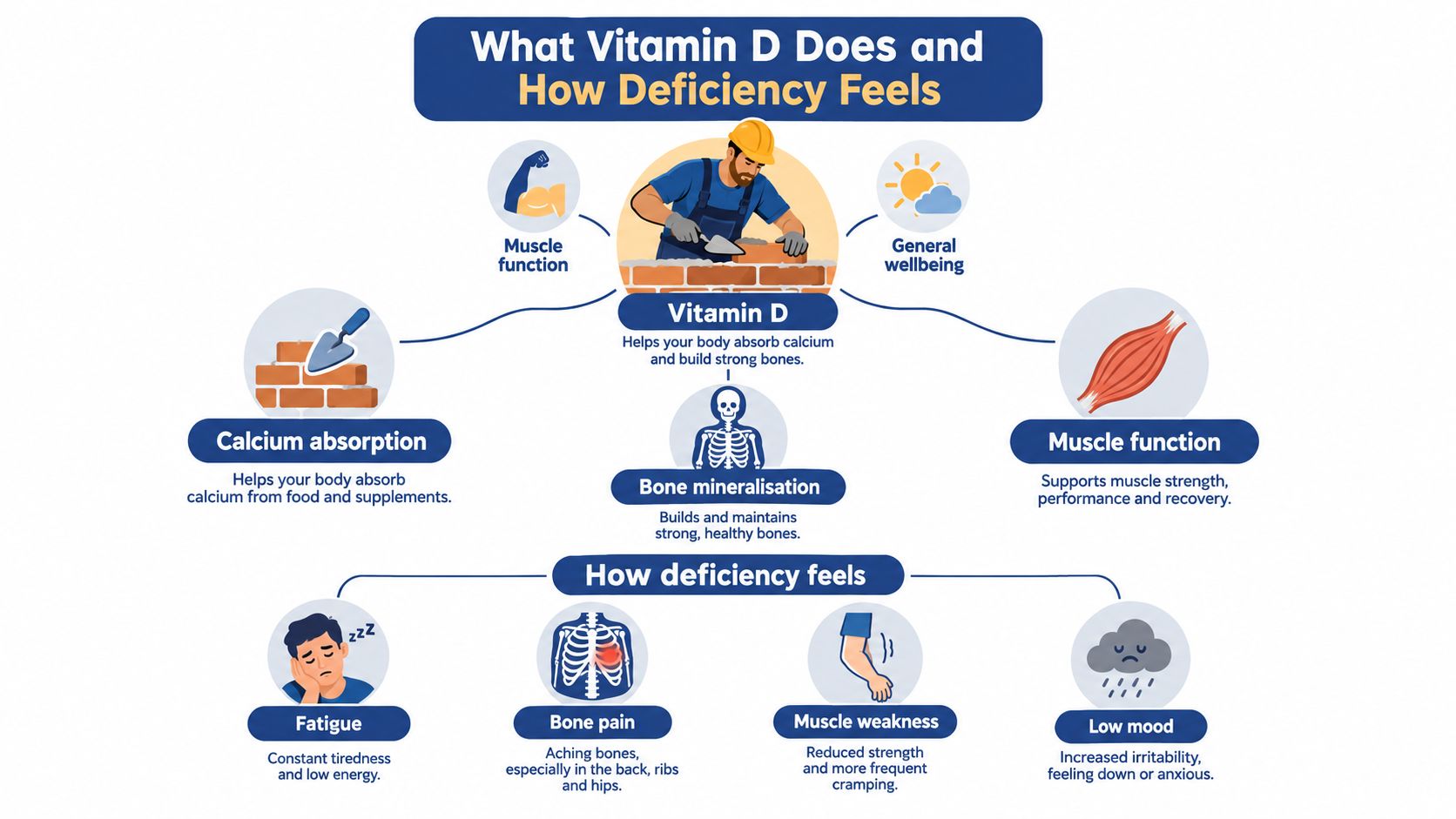
Early symptoms can be hard to interpret. Tiredness, general aches, muscle pain and reduced strength are non-specific symptoms. They have many possible causes, so they do not confirm vitamin D deficiency. Some people with low vitamin D status have no symptoms.
A clearer concern arises when severe deficiency affects bones and muscles. In adults, this can lead to osteomalacia, a condition involving impaired bone mineralisation. It may cause bone pain and proximal muscle weakness. “Proximal” means the muscles closer to the centre of the body, such as those around the hips and thighs. These symptoms can affect physical function, but they do not identify the cause on their own.
Practical rule: A symptom can be real and worth discussing without proving its cause. Persistent or function-limiting symptoms deserve assessment, not a confident self-diagnosis.
Symptoms need context. General tiredness alone is not the same as the bone pain and muscle weakness that can occur with severe deficiency, and neither pattern can confirm a diagnosis without clinical assessment. For a separate topic on vitamins and neurodevelopment, see Vitamins and Autism.
Symptoms in Children Versus Adults
A child whose legs are beginning to bow or whose walking is delayed may need a different assessment from an adult with persistent bone pain. Severe vitamin D deficiency affects growing and mature bones differently. In children, it can cause nutritional rickets, in which poorly mineralised bones may change shape and growth.
Possible signs include bowed legs or knock knees, swollen wrists, delayed walking, late tooth eruption or impaired growth. These signs warrant medical assessment, but they do not identify the cause: other conditions can affect a child's growth, movement or bone shape. A clinician can check development and decide whether tests or further investigation are appropriate.
In adults, severe deficiency can lead to osteomalacia, where bone mineralisation is impaired. The pattern may include pain in the lower back, pelvis, legs, ribs or feet, as well as weakness around the hips and thighs. This can make standing from a chair or climbing stairs harder; a waddling gait may occur when weakness affects walking.
| In children | In adults |
|---|---|
| Rickets can affect the shape and growth of bones. | Osteomalacia can cause bone pain and impaired physical function. |
| Possible signs include bowed legs, knock knees, swollen wrists or delayed walking. | Possible signs include pain in the back, pelvis, legs, ribs or feet, with proximal muscle weakness. |
| Changes in walking, growth or tooth eruption warrant assessment. | Difficulty rising, climbing stairs or walking normally warrants assessment. |
The contrast is about how symptoms may show up, not how easily they reveal the cause. A developing skeleton can show changes in bone shape or growth, while adults may notice pain and weakness that affect movement. Suspected rickets, marked weakness or unexplained bone pain should prompt medical assessment instead of self-treatment based on a symptom list. Tiredness or general aches alone are less specific, so a symptom list cannot confirm deficiency.
Who Is at Higher Risk in the UK
A single supplement message doesn't fit everyone. UK guidance distinguishes people who may benefit from seasonal prevention from those who should generally consider taking vitamin D throughout the year. Risk depends partly on how much vitamin D the skin can make from sunlight, as well as time outdoors and dietary circumstances.
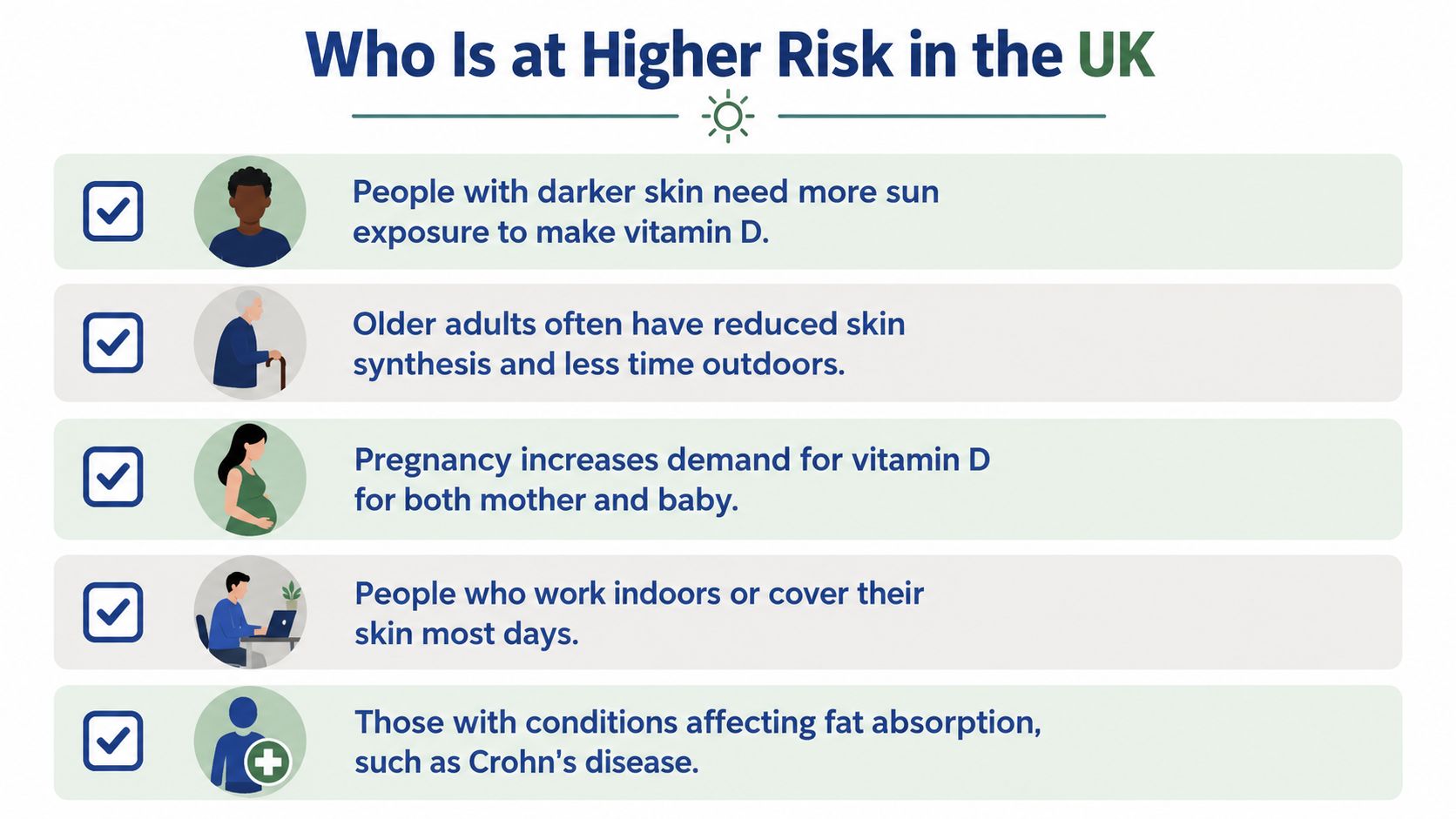
People with darker skin living in the UK are among the groups identified as higher risk. Older adults may also be more vulnerable. So may people who spend little time outdoors, including those who are housebound or work indoors, and people who cover most of their skin for cultural or practical reasons. Some people following vegan or vegetarian diets may also need to pay closer attention to prevention.
These factors don't mean that everyone in a group has a deficiency, or that a particular symptom must be caused by vitamin D. They're reasons to consider prevention and, where symptoms or clinical circumstances warrant it, seek personalised advice. A person who rarely gets outside, for example, may have a different prevention need from someone who gets regular outdoor exposure.
The clinical guidance for higher-risk groups recommends that they generally continue daily vitamin D through the year, rather than stopping after winter (Central East Integrated Care Board guidance). Ask a pharmacist or clinician if you're unsure how that applies to you, especially if you have a medical condition or take medicines that could affect your care.
The accompanying video offers another overview of the topic:
How the NHS Tests and Diagnoses Deficiency
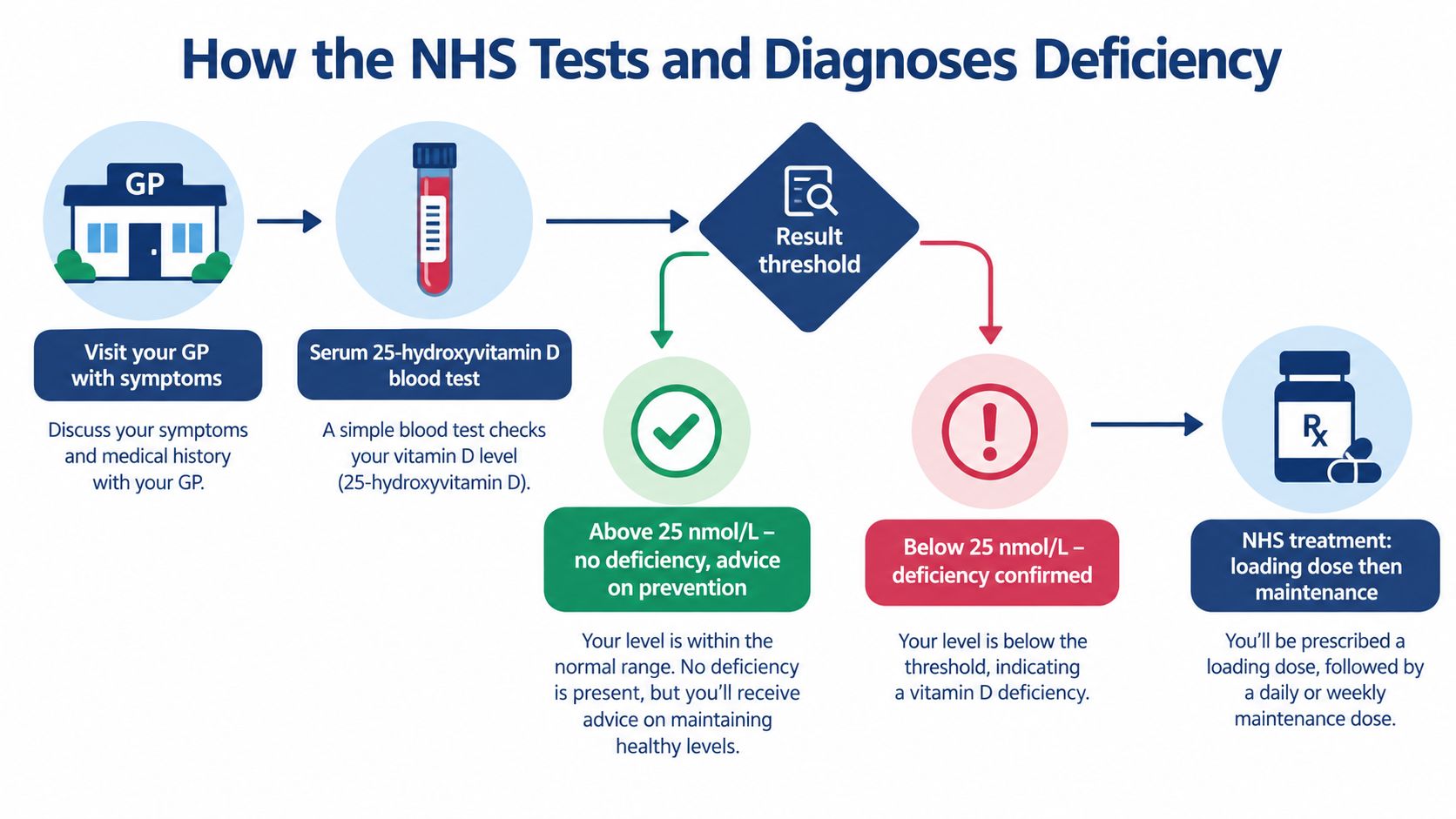
When there's a clinical reason to investigate, the usual blood test measures serum 25-hydroxyvitamin D, written as 25(OH)D. A GP may consider testing if symptoms or other clinical circumstances suggest a problem. People without symptoms generally aren't tested routinely, because a low reading doesn't automatically explain common experiences such as tiredness or widespread aches.
NHS clinical guidance uses below 25 nmol/L as the threshold for deficiency in adults. In the cited guidance, above 50 nmol/L is generally treated as sufficient for routine clinical purposes (the NHS vitamin D deficiency guidance). These cut-offs help clinicians interpret a result, but they don't replace an assessment of the person's overall health.
What happens after the blood test
A clinician doesn't have to interpret vitamin D in isolation. Depending on the situation, they may consider calcium, phosphate, alkaline phosphatase and renal function, as well as medicines, medical history and other possible causes of musculoskeletal symptoms. This broader view matters because two people with a similar vitamin D result may have different symptoms and care needs.
A low result also can't prove that every symptom comes from deficiency. If a person has persistent pain or weakness, the clinician can weigh the test alongside the pattern of symptoms and decide whether further assessment is needed. Conversely, vague tiredness alone doesn't automatically make testing useful.
The diagnostic infographic shows the basic route, but the result is only one part of the clinical picture:
At an appointment, describe what has changed, how long it has been happening and whether it affects walking, stairs or getting up from a chair. That information helps the clinician decide whether a blood test or another explanation should be considered.
Treatment Options and Safe Supplementation
Prevention and treatment aren't the same thing. For general prevention, UK government advice is to consider 10 micrograms of vitamin D daily during October to March. People at higher risk are generally advised to continue throughout the year, as described in the clinical guidance for adults.
If testing confirms deficiency, a clinician may prescribe a higher-strength course, sometimes called a loading regimen, followed by a maintenance dose. The appropriate treatment depends on the individual and should be guided by a prescriber. Don't try to copy a treatment dose from someone else or assume that an over-the-counter product is suitable for correcting a diagnosed deficiency.
Vitamin D products come in different formats, including tablets, capsules and sprays. Check the label and ask a pharmacist if you're using more than one supplement, because products can contain overlapping ingredients. For a separate look at supplement ingredients and how forms can differ, see this guide to buffered vitamin C versus ascorbic acid. Vitamin Planet also lists vitamin D3 2000 IU, but a product listing isn't a substitute for choosing a dose with appropriate clinical advice.

The BioBees Fresh Royal Jelly Capsules listing describes royal jelly, propolis extract and bee pollen. It isn't a vitamin D treatment, so don't use it in place of vitamin D prevention or prescribed care.
Prevention and When to Seek Medical Care
For everyday prevention, follow UK seasonal advice and consider whether you're in a group advised to take vitamin D year-round. Food sources can include oily fish, fortified foods and egg yolks, although diet alone may not meet everyone's needs. Keep to product directions and seek advice if you're uncertain; this overview of supplement safety myths and facts can support a more careful approach.
Seek prompt medical advice for severe or persistent bone pain, weakness that limits normal activities, or signs of possible rickets in a child. Extremely low vitamin D alongside low calcium can lead to uncommon but serious symptoms such as muscle cramps, spasms, tetany or seizures. These symptoms need urgent medical attention, not self-treatment.
A calm next step is to match your response to what you've noticed: use prevention advice if you're at risk, arrange an assessment for persistent or function-limiting symptoms, and let a clinician interpret test results in context.
Vitamin Planet is a UK-based online retailer offering vitamins, minerals and other health and wellbeing products, including vitamin D supplements. Visit Vitamin Planet to browse its range and check product information, then ask a pharmacist or clinician if you need help choosing an appropriate option.