

Zinc Supplement UK: Forms, Dosage and How to Choose
You've got two zinc products open in different tabs. One promises high strength, the other makes a fuss about picolinate, and neither makes it obvious whether you're buying something useful or a bigger dose. Before you choose a zinc supplement, UK reference values are a better starting point than the claims on the front of the bottle.
My recommendation is straightforward: establish whether you need extra zinc, compare the elemental dose, then choose a product you can tolerate. Paying more for a particular form won't rescue an unnecessary dose.
Table of Contents
- Why Zinc Supplements Confuse UK Shoppers
- How Much Zinc UK Adults Actually Need
- Zinc Gluconate Picolinate Citrate and Sulfate Compared
- Matching Zinc Form to Your Health Goal
- Who in the UK Is Likely to Need a Zinc Supplement
- Practical Tips for Taking Zinc Day to Day
- How Zinc Supplements Are Labelled and Regulated in the UK
- A Simple Checklist for Choosing a Zinc Supplement
Why Zinc Supplements Confuse UK Shoppers
The most important distinction is elemental zinc versus zinc compound weight. Zinc gluconate, picolinate, citrate and sulfate name different compounds. The compound's total weight isn't the same thing as the amount of zinc the serving supplies.
For shopping purposes, you need the nutritional declaration that states how much zinc you'll get from the recommended daily serving. Don't compare a compound weight on one label with an elemental amount on another. If a product page doesn't make the distinction clear, ask the retailer before ordering.
Start with the nutritional declaration
| Label detail | What it tells you | Buying recommendation |
|---|---|---|
| Zinc per daily serving | The elemental amount supplied | Use this for dose comparisons |
| Gluconate, picolinate, citrate or sulfate | The zinc compound used | Treat it as a secondary consideration |
| Recommended serving | How the manufacturer intends you to take it | Check whether the declaration covers a tablet or a larger serving |
| High-strength wording | How the seller positions the product | Don't treat it as proof of greater benefit |
There's a reason to assess your diet before buying. UK survey figures put mean food-only zinc intake at 90% of the RNI for boys aged 11–18 and 81% for girls, compared with 96.1% for adult men and 101% for adult women, as summarised in BBC Food's explanation of zinc intake.
Those averages don't diagnose anybody. They show why blanket advice to take a strong zinc tablet misses the point: shoppers don't all start with the same dietary intake.
Practical rule: Ignore the biggest number on the front until you understand the zinc amount in the daily serving.
The useful comparison is form, dose and intended use, not brand versus brand in isolation. A clearly labelled, modest product can be a more sensible purchase than a complicated formula with impressive wording and an unclear purpose.
How Much Zinc UK Adults Actually Need
Your daily requirement isn't automatically your supplement requirement. Food contributes towards it, so a tablet doesn't need to supply your entire reference intake on top of everything you already eat.
For people aged 15 and over, the UK Reference Nutrient Intake is 9.5 mg daily for males and 7.0 mg for females. The Estimated Average Requirement is 7.3 mg and 5.5 mg, respectively, while the Lower Reference Nutrient Intake is 5.5 mg and 4.0 mg, according to the UK government's Dietary Reference Values guidance.
Understand the reference points
- Reference Nutrient Intake, or RNI: A population benchmark for assessing whether intake is likely to be adequate, not a tablet prescription.
- Estimated Average Requirement, or EAR: An estimate of average need, rather than an ideal target for every individual.
- Lower Reference Nutrient Intake, or LRNI: A lower benchmark that helps identify potentially inadequate intake, not a desirable shopping target.
Keep the sex-specific figures in mind when reading simplified intake graphics.
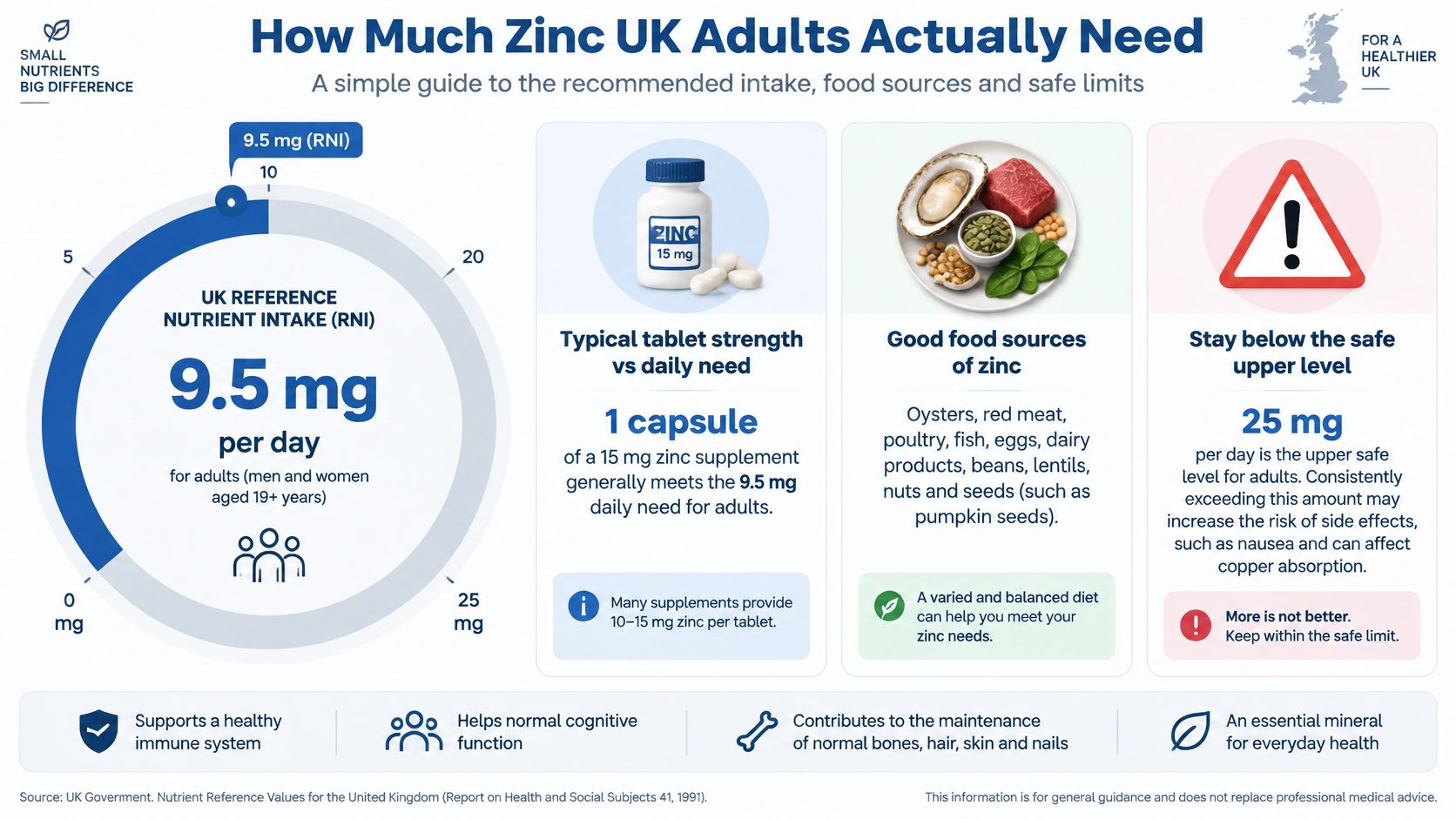
The NHS advises against taking more than 25 mg of zinc daily from supplements unless a doctor recommends it. Its adult guidance gives dietary requirements of 9.5 mg for men and 7 mg for women, making a 10 mg serving close to the male reference intake and above the female figure; 15–25 mg products should therefore be treated as high-strength choices, not routine dietary replacement, using the NHS guidance on zinc requirements and supplements.
Choose a dose for the gap
My preference for ordinary dietary supplementation is a lower-dose option rather than starting at the upper end. That's a buying principle, not a personal prescription: your food intake and existing supplements still matter.
A vitamin-and-mineral blend such as BrainQuick Brain Support Supplement (30 Capsules) belongs in that label review too. Its catalogue description alone doesn't establish its zinc contribution, so check the full nutritional declaration rather than assuming either presence or absence.
Zinc Gluconate Picolinate Citrate and Sulfate Compared
Don't pay a premium for an absorption promise you can't evaluate. A form name isn't enough to establish that a product will work better for you, feel gentler on your stomach or justify its price.
Nor does the form tell you the elemental dose per tablet. Manufacturers can formulate different serving strengths using the same compound. A responsible comparison therefore leaves unknown information unknown, rather than assigning a supposedly typical dose to every gluconate or picolinate product.
Zinc Forms at a Glance
| Form | Typical elemental zinc per tablet | Tolerability notes | Where it is most often used |
|---|---|---|---|
| Zinc gluconate | Product-specific, check the declaration | Don't assume tolerability from the name | Judge the individual product's stated purpose |
| Zinc picolinate | Product-specific, check the declaration | Premium positioning doesn't establish suitability | No form-specific use should be assumed |
| Zinc citrate | Product-specific, check the declaration | Review the whole formulation and directions | Choose by dose and intended use |
| Zinc sulfate | Product-specific, check the declaration | Ask a pharmacist if suitability is uncertain | Follow professional advice when supplied for treatment |
Gluconate is a reasonable candidate to assess without expecting anything special from its name. Its practical trade-off is simple: a straightforward formulation may suit your needs, but you still need to inspect serving size, ingredients and cost per intended serving.
Picolinate shouldn't receive an automatic upgrade in your shortlist. If it costs more, ask what product-specific evidence supports that premium. I wouldn't pay extra solely because a seller calls it superior or highly absorbable.
For ordinary shopping, I'd prioritise an appropriate dose and a clear reason for taking it over the zinc form. If a product doesn't agree with you, tolerability becomes a decisive consideration.
Separate evidence from positioning
With citrate, use the same discipline. Don't assume it's the gentle option without information that supports the claim. A suitable daily serving and an ingredient list you're comfortable with are more useful purchasing criteria than an attractive description.
With sulfate, avoid the opposite mistake: dismissing a product because the name sounds less fashionable. If a healthcare professional has recommended a particular preparation, don't substitute a different one because an online review favours another compound.
There isn't enough comparable product information here to award an absorption, empty-stomach tolerability or price winner. That's not an invitation to guess. Compare actual labels and prices, and ask for the evidence behind comparative claims.
If you're also comparing other minerals, The Sleep Consultant's magnesium breakdown offers a separate discussion of magnesium forms. Keep that distinction clear: information about magnesium compounds doesn't establish which zinc preparation you should buy.
Matching Zinc Form to Your Health Goal
A shopper picks up zinc because her skin has broken out. Another starts a tablet every October hoping to dodge winter colds. Neither has answered the question that should come first: is their zinc intake low?
A goal printed on a label does not create a need for a stronger tablet, and benefit-led dosage graphics deserve scepticism rather than trust. Here is how I would reframe the four goals brands lean on hardest.
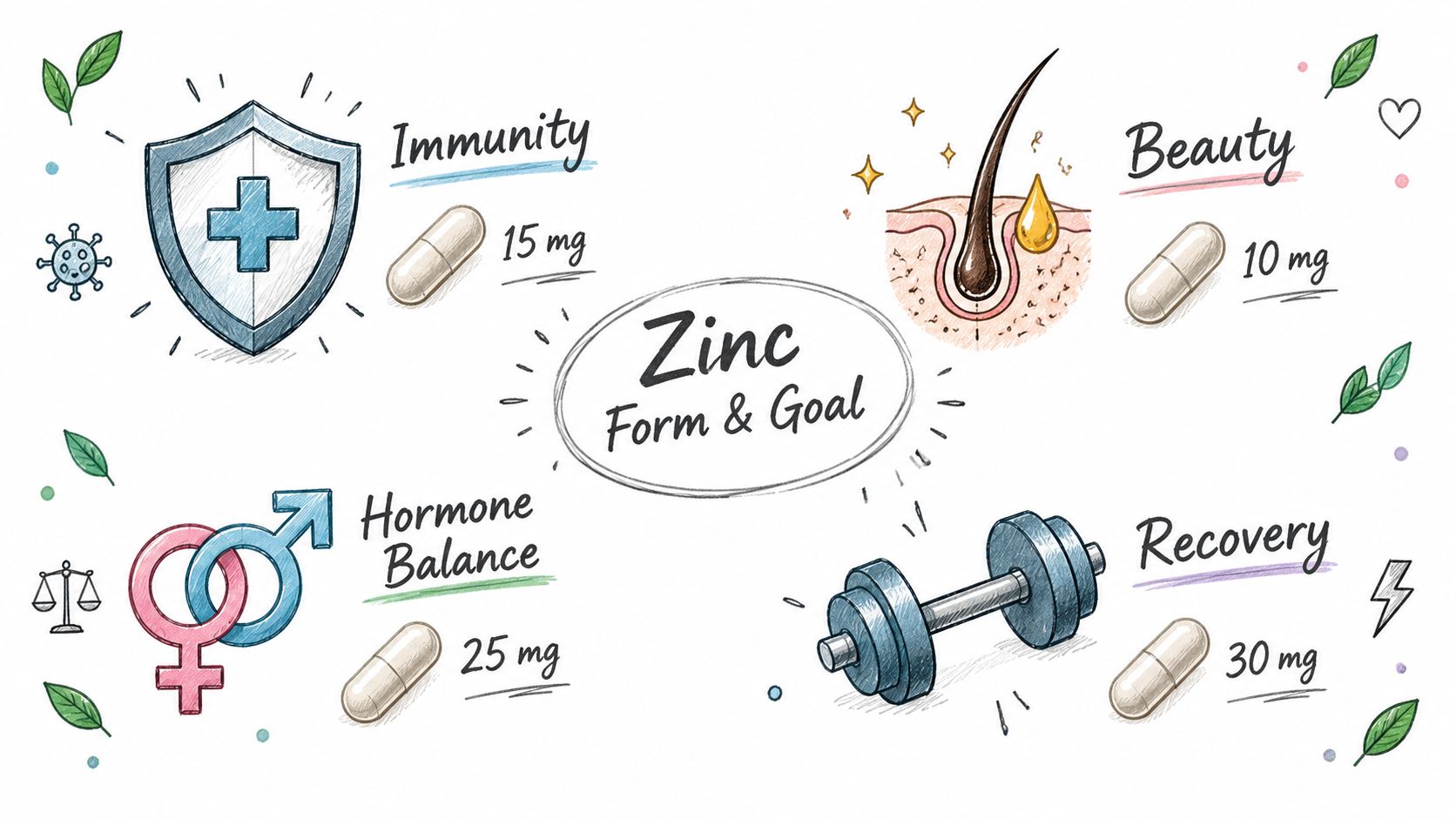
| Goal the label sells | What it implies | What I would do instead |
|---|---|---|
| Immunity and colds | A daily tablet shortens illness | Ask for evidence tied to that specific preparation and its use before buying on that basis |
| Hair and skin | Zinc is the missing ingredient | Get persistent changes assessed; a beauty-focused label does not diagnose the cause |
| Hormonal health | Normal nutritional support means raising hormone levels or treating fertility problems | Treat that jump as marketing and take the concern to a GP |
| Exercise recovery | Inclusion in a sports formula justifies adding a mineral | Review your overall diet and training demands first |
Take the skin example further. My first advice is to check for a dietary gap, and to let the skin problem be assessed on its own terms. The choice between picolinate and citrate comes later, if it comes at all. Someone with a confirmed deficiency faces a different decision entirely, where dose, preparation and duration follow clinical advice rather than a wellness category.
The figure that outweighs the front label
Whatever your goal, the Department of Health advises a warning for products supplying more than 25 mg of zinc a day, stating that long-term intake may lead to anaemia, in its advisory statements for food supplements. That ceiling matters more than whether the front says immunity, beauty or performance.
When two products compete on strength, compare the elemental zinc stated on the label rather than the compound weight, because the two are not the same figure. As noted earlier, excessive zinc can also reduce copper absorption. Leave copper out of any DIY fix and ask a pharmacist or GP to look at the whole regimen.
Buy for a documented dietary need. Get a persistent health problem assessed. Marketing blurs that line, and your wallet is where the confusion lands.
Who in the UK Is Likely to Need a Zinc Supplement
A shopper tells me she's tired all the time, her skin has flared up and she catches every cold going, so she wants "a good zinc". None of that confirms a deficiency, and treating symptoms as proof is how people end up taking a high-strength product for months without checking whether diet was ever the gap.
The survey findings discussed earlier point the other way: average intake sitting near a reference value can hide individuals eating far too little, and lower group averages still diagnose nobody. The honest question is who eats poorly enough, or absorbs poorly enough, to justify a tablet.
When the diet itself is the suspect
Run a food-first review before any purchase. The patterns I see most often are restricted or repetitive eating, plant-based diets planned without attention to zinc sources, older age with a shrinking appetite, and teenage diets built around snacks and convenience food.
Two of those deserve a nuance. Avoiding meat doesn't automatically mean tablets, but zinc from plant foods is less readily absorbed, so overall dietary planning matters more than it does for meat eaters. Teenagers need age-appropriate advice rather than a hand-me-down adult high-strength product.
NHS Wales guidance on vitamins and minerals advises that people should get enough zinc from a varied, balanced diet and cautions against excessive supplementation. For help organising that dietary review, the diet and nutrition articles can support broader thinking about meals and variety. Improve the foundation first.
When the body, not the shopping basket, is the problem
A digestive condition, previous bariatric surgery, chronic illness or prolonged restricted intake changes the question from "which zinc?" to "why is zinc low?". That belongs with your healthcare team, not a different salt on the label.
Ask your GP whether testing is appropriate and how a result would be read alongside your symptoms and medical history. Ordering a private test to obtain a number, then self-treating, skips the step that makes the number useful.
My recommendation: a plausible dietary gap gets a dietary review, and persistent symptoms or relevant medical conditions get an assessment. Some people will end up supplementing. Others will skip an unnecessary purchase and get the problem looked at sooner.
Practical Tips for Taking Zinc Day to Day
A shopper picks up a zinc tablet "for immunity" in October. By March it is still in the morning routine, the cold season has passed, and nobody has asked whether the original reason still applies. That is how zinc routines fail: slowly, through drift, rather than through any single bad decision.
Keep the product directions available and write down what you are taking, including combination formulas. Record the elemental zinc, not just the compound name on the front of the bottle. Elemental zinc is the figure that counts toward your daily total and toward the 25 mg ceiling the NHS sets for supplements taken without medical advice.
Use the checklist below as a reminder to review your routine, but let your own label directions and clinician's advice take priority over any general graphic.
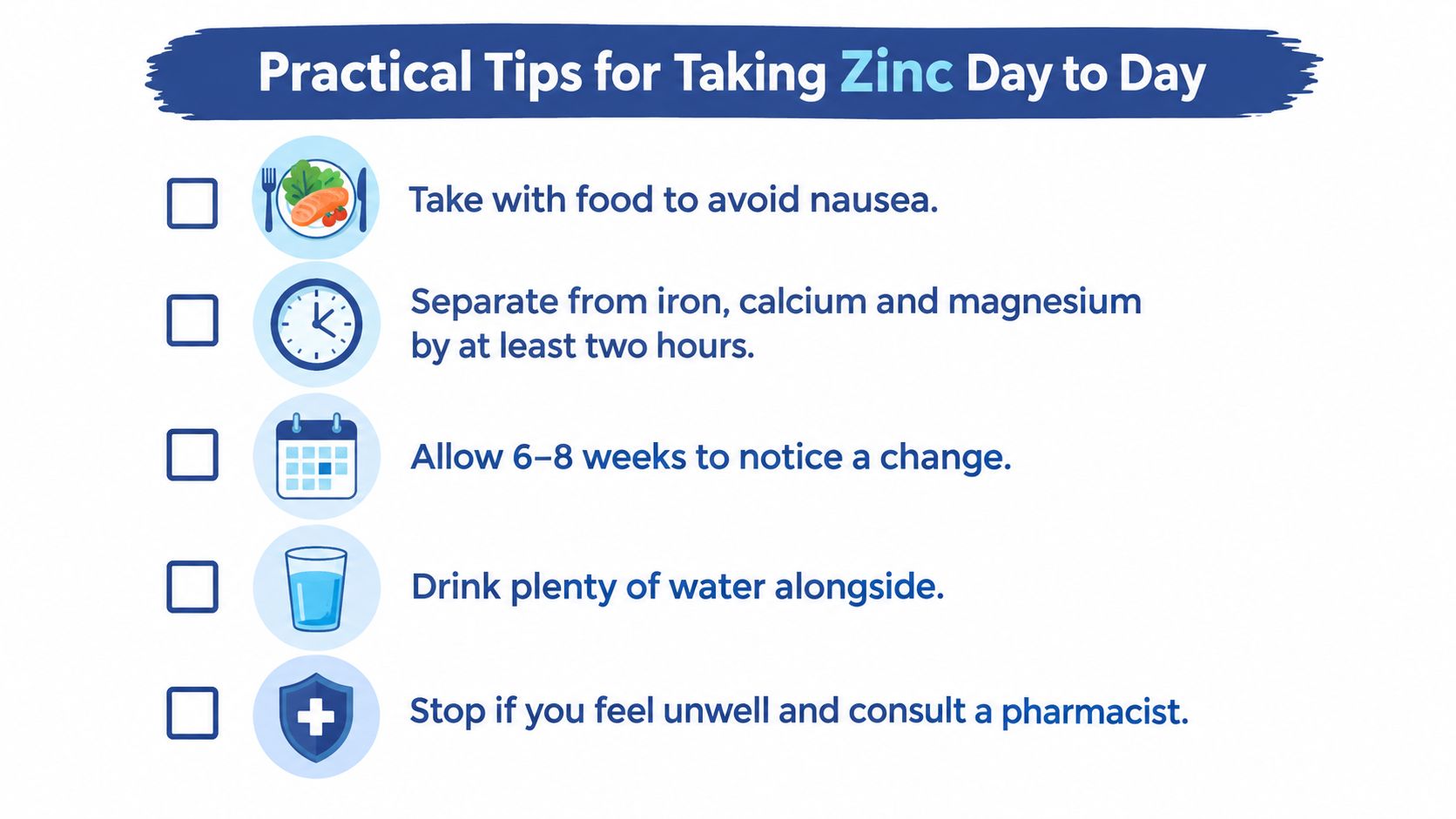
Before the habit hardens, answer these in writing:
- Does food matter for this product? Follow the label's directions. If taking it makes you feel sick, change the routine or stop. Repeating the same approach and hoping you'll adjust is not a plan.
- What else am I taking? Tell your pharmacist if you use iron, calcium or magnesium. Ask whether your particular products need separating rather than adopting a universal spacing rule.
- Does anything prescribed interact? Take the full medicines list when you ask for advice, and never adjust prescribed treatment to fit around a supplement.
- What would make me stop? Persistent gastrointestinal symptoms or an unpleasant taste deserve a review, not a stronger replacement product.
There's no universal deadline for noticing a benefit.
If you never established a reason to take zinc, waiting longer won't make the decision more evidence-based. For prescribed treatment, follow the review arrangements your clinician recommends.
The video below covers the same ground with different examples, so keep your product-specific questions in mind while watching.
Then set a review point of your own. At each one, check whether your diet, medicines or other supplements have changed. A regimen that once fixed a temporary dietary gap shouldn't continue just because there are tablets left in the bottle.
How Zinc Supplements Are Labelled and Regulated in the UK
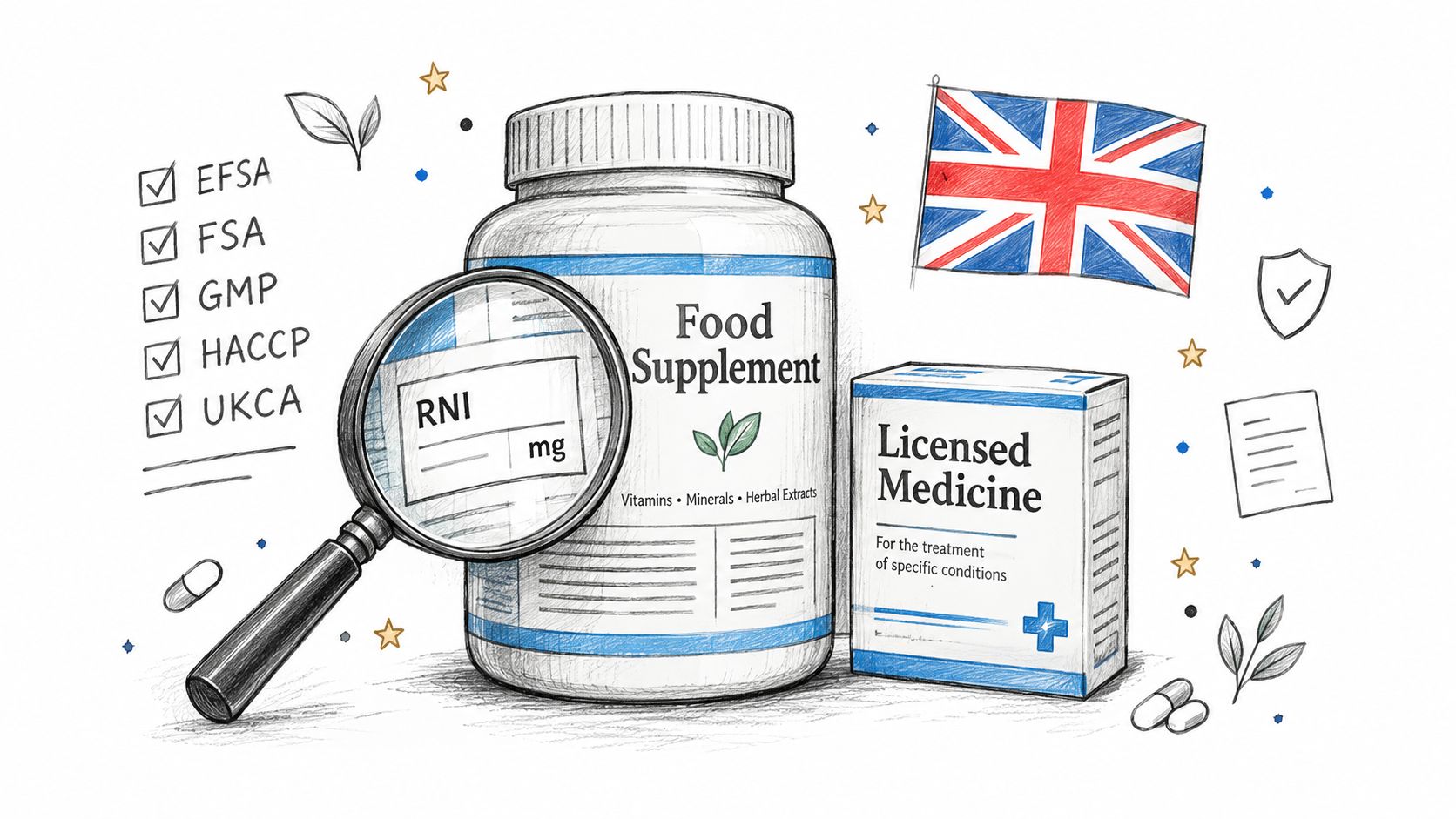
A food supplement and a licensed medicine aren't interchangeable categories. Don't infer that a zinc product treats deficiency or disease because it comes in a pharmacy-style bottle.
The government's guidance on classifying vitamins, supplements and herbal medicines provides context for that distinction. For a shopper, the practical question is whether the product's presentation matches what it is, rather than whether its packaging looks clinical.
Use the illustration as a reminder to distinguish product categories, not as proof that a particular bottle meets every applicable requirement.
Read beyond the front label
Don't call a printed reference percentage an NHS RDA. A labelling reference value and the sex-specific UK dietary benchmarks aren't interchangeable, and a large percentage isn't a measure of product quality.
For a responsible purchase, look for:
- A clear daily serving: You should be able to identify the zinc amount without interpreting advertising copy.
- A complete ingredients list: Check the compound, capsule material and other ingredients against your needs.
- Traceable product details: Look for manufacturer or supplier information, batch identification and a best-before date.
- Usable directions and warnings: Read them before ordering, particularly if you intend prolonged use.
Treat marketing as marketing
High strength describes positioning, not an automatic quality advantage. Natural, premium and advanced are also poor substitutes for a readable nutritional declaration.
The supplement safety myths and facts guide is a useful companion when separating reassurance from practical checks. My buying standard is less glamorous: if the information is incomplete or contradictory, don't purchase until it's clarified.
A polished product page should make scrutiny easier. It shouldn't require you to guess what you'll swallow.
A Simple Checklist for Choosing a Zinc Supplement
Keep your shortlist short. A suitable product needs to answer a handful of practical questions clearly, not win an argument about which compound sounds most impressive.
Zinc Supplement Buying Checklist
| Check | Why it matters | Quick test |
|---|---|---|
| Elemental zinc per daily serving | Establishes the amount you'll take | Can you identify it unambiguously? |
| Zinc elsewhere in your routine | Prevents overlooked duplication | Have you checked every combination formula? |
| Pack size and intended duration | Keeps purchasing aligned with your plan | Will you review use before automatically continuing? |
| Ingredients and format | Helps you choose something suitable | Are capsule materials and other ingredients acceptable? |
| Product traceability | Supports informed follow-up | Can you find supplier and batch details? |
| Reason for use | Keeps the purchase purposeful | Can you explain what dietary need it addresses? |
If you already take a broad formula, review what makes a good multivitamin before adding standalone zinc. The useful question is what your existing routine supplies, not how many separate products you can accommodate.
Personalise the decision without overcomplicating it
The wider principle of adapting nutritional advice to the individual is also discussed in Hosmane Longevity Center's resource on personalized nutrition for Delaware patients. Keep UK reference values and local clinical advice central to your own decision.
Buy for the need you can identify, not the benefit you hope a stronger tablet might produce.
Choose a transparent label, an appropriate serving and a defined review point. If your concern is persistent symptoms, suspected deficiency or prolonged high-strength use, take the question to a pharmacist or GP before placing the order.
The right zinc supplement may be a modest product, a clinician-directed preparation or no additional zinc at all. Being willing to choose the last option is part of making a good buying decision.
Vitamin Planet offers zinc, multivitamins and other mineral supplements across its own-label and third-party ranges. Visit Vitamin Planet to compare product labels, check your existing routine and choose a serving that fits your needs rather than selecting the strongest bottle.