

Best Digestive Enzymes UK: A Practical Buyer's Guide
You've just finished a Sunday roast, loosened your belt and started wondering whether the meal was worth the bloating that followed. Perhaps it happens after creamy pasta, a pint and a grill, or just a bowl of beans. You're not looking for a miracle. You want to eat ordinary food without paying for it afterwards.
That's why searches for the best digestive enzymes UK keep leading shoppers towards crowded shelves and vague “gut health” promises. The sensible way to choose is narrower. Match the enzyme to the food trigger, check measurable activity rather than capsule weight, verify that the product is sold and labelled as a compliant food supplement, and recognise when persistent symptoms need a GP rather than another bottle.
Table of Contents
- Why UK Shoppers Are Reaching for Digestive Enzymes
- The Main Enzyme Types and What They Actually Do
- Single Enzyme Versus Broad-Spectrum Blends Compared
- Matching Enzyme Formulas to Real UK Symptoms
- How to Read a UK Digestive Enzyme Label
- When the Smartest Choice Is Not a Supplement
- UK Buying Checklist and a Simple 4-Week Trial Plan
- Quick Answers to Common Digestive Enzyme Questions
Why UK Shoppers Are Reaching for Digestive Enzymes
Digestive discomfort is common enough to create a large market for over-the-counter support. A UK study using the Rome IV diagnostic framework found that 37% of surveyed adults met the criteria for at least one disorder of gut–brain interaction, based on 1,906 participants, with 700 people classified in that group (UK study on digestive symptoms and gut–brain interaction disorders). That figure describes the scale of digestive-health concerns. It doesn't show that an enzyme supplement treats or prevents a diagnosed condition.
The practical problem is that shoppers often begin with a symptom and end with a broad product. “Bloating” can follow lactose, beans, a very fatty meal, fast eating, constipation or an underlying gastrointestinal problem. A capsule containing a long list of enzymes may look reassuring, but a list isn't the same as a useful dose for the food that causes your reaction.
Start with the meal, not the marketing
Keep a short food and symptom record before buying anything. Note what you ate, how quickly symptoms appeared, and whether the main problem was gas, fullness, loose stools, pain or reflux. That simple record is more useful than a product page promising broad digestive support.
Retail products can make sense for a mild, occasional and recognisable trigger, such as dairy for someone who knows they struggle with lactose. They're a poor substitute for assessment when symptoms are persistent, progressive or accompanied by warning signs.
Practical rule: If you can't name the food or digestive task you want an enzyme to address, don't start with a broad blend. Start by finding out what's actually happening.
This guide uses three checks throughout. First, look for individual enzyme activity units, not just milligrams. Second, check the product's regulatory presentation and claims. Third, judge whether the formula fits your real symptom pattern. That approach produces a more honest answer than declaring one universal winner.
The Main Enzyme Types and What They Actually Do
Digestive enzymes aren't interchangeable. Each works on a particular part of food, so the label should tell you what the formula is designed to do and how much activity each enzyme provides.
Amylase helps break down starches and other carbohydrates. It may be relevant if large portions of bread, pasta, potatoes or other starchy foods consistently leave you feeling excessively full. Look for an activity declaration rather than assuming a heavier capsule contains more useful enzyme.
Protease acts on dietary protein. It appears in products aimed at meals containing meat, fish, eggs or concentrated protein. A protease listing is only meaningful if the label states its activity in a recognised unit, such as HUT or SAP, rather than hiding the amount inside one unnamed blend.
Lipase works on fats. It's especially relevant when fatty meals are a consistent trigger, but ongoing difficulty digesting fat deserves more attention than a retail supplement. A product can list lipase in units such as FIP or LU, yet the number still needs to be interpreted alongside serving size and the manufacturer's directions.
Lactase is more specific. It helps digest lactose, the sugar in milk and some dairy foods. Someone who reacts to milk but tolerates non-dairy meals is usually better served by a clearly quantified lactase product than by a kitchen-sink blend. Lactase activity may be shown in ALU or another stated activity unit.
Cellulase and related plant enzymes are marketed for plant foods and fibre. Human digestive enzymes don't break down all fibre, and beans, onions and brassicas can cause gas for reasons that aren't solved by merely adding more enzymes. Alpha-galactosidase is a more targeted option for certain legume and vegetable triggers, but it should still be tested against the actual food that causes symptoms.
| Enzyme | Breaks Down | Best-Matched Symptom | Typical UK Activity Unit |
|---|---|---|---|
| Amylase | Starches and carbohydrates | Fullness after starchy meals | DU or another declared activity unit |
| Protease | Dietary protein | Discomfort after protein-heavy meals | HUT or SAP |
| Lipase | Dietary fat | Symptoms after fatty meals | FIP or LU |
| Lactase | Lactose in dairy | Symptoms linked specifically to milk or dairy | ALU or another declared activity unit |
| Cellulase | Some plant cell-wall material | Selected plant-food tolerance concerns | CU |
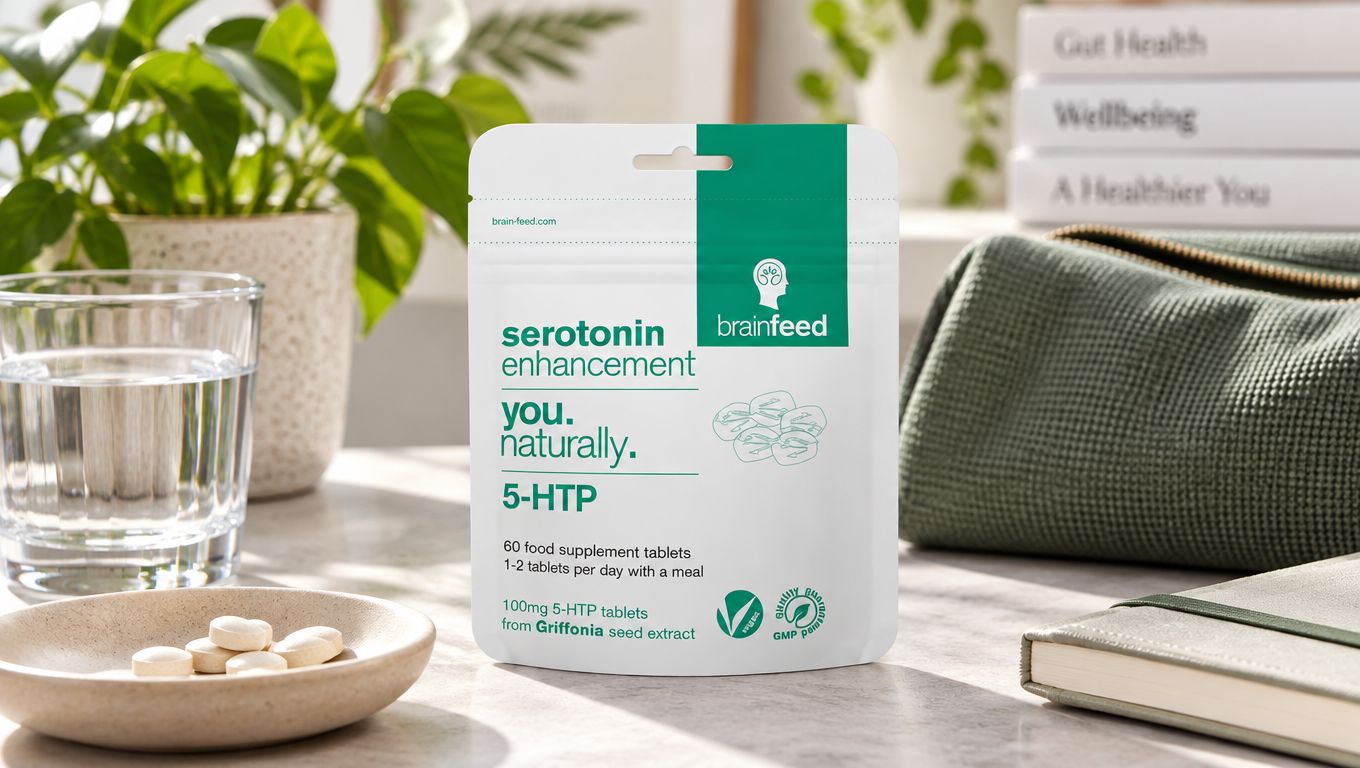
The critical distinction is mass versus activity. A 500 mg blend isn't automatically stronger than a 100 mg product, because the weight doesn't tell you how active the enzymes are. The UK comparison should record the individual enzyme activities, source, serving size, storage requirements, allergen information and testing details. A 5-HTP product such as Brain Feed 5-HTP 60 tablet is a different type of supplement entirely, so its tablet weight and ingredient description shouldn't be used as a digestive-enzyme benchmark.
Single Enzyme Versus Broad-Spectrum Blends Compared
The right choice depends on how clearly you can identify the trigger. A single enzyme gives you a cleaner experiment. If dairy causes the problem, lactase is easier to assess than a blend containing amylase, protease, lipase and several plant enzymes. It also avoids paying for ingredients unrelated to the meal you're trying to tolerate.
A broad-spectrum blend is more defensible when several types of food appear to cause mild discomfort and you don't yet know whether fat, protein or starch is the main issue. The drawback is transparency. Many formulas disclose a total proprietary-blend weight but not the activity of each component. That makes it difficult to compare products or know whether the relevant enzyme is present in a meaningful amount.
Match the format to the job
Plant and microbial enzymes are common in general retail supplements. Products based on microbial sources may be presented as suitable for room-temperature storage, but follow the actual storage instructions rather than assuming stability. Animal-derived pancreatin belongs in a different conversation because medically prescribed pancreatic enzyme replacement has a specific clinical purpose.
Capsules and gastro-resistant mini-tablets are often chosen when the manufacturer wants the contents to pass beyond the stomach. Compressed tablets may begin dissolving earlier. That doesn't make one format automatically superior, but it does mean the delivery design should match the product's stated use and instructions.
| Format | Best For | Watch Out For | Typical UK Price Band |
|---|---|---|---|
| Single lactase | A clear dairy trigger | It won't address non-dairy symptoms | Check the current listing |
| Single alpha-galactosidase | Beans and selected vegetables | It isn't a general IBS treatment | Check the current listing |
| Single lipase | A repeatable fatty-meal trigger | Persistent fat intolerance needs assessment | Check the current listing |
| Broad-spectrum capsule | Several uncertain food triggers | Individual activities may be hidden | Check the current listing |
| Compressed enzyme tablet | Buyers who prefer a tablet format | Release characteristics may differ | Check the current listing |
| Gastro-resistant capsule or mini-tablet | Products designed for later release | Coating claims must be supported by clear directions | Check the current listing |
Don't rank a blend by how many enzymes appear on the front of the tub. Rank it by transparent activity, appropriate timing and a believable fit with your meals. If one food explains most episodes, a single-enzyme trial is the cleaner and more economical decision, even when a broader formula looks more advanced.
Matching Enzyme Formulas to Real UK Symptoms
A good formula solves a defined problem. It shouldn't promise to “reset” the gut, cure IBS or compensate for every digestive complaint at once.
For lactose-related symptoms, choose lactase and take it with the first bite of the dairy-containing meal, following the product label. The strongest case is a repeatable pattern involving milk, ice cream, cream sauces or soft dairy, while other foods are tolerated. If dairy causes symptoms alongside weight loss, blood in the stool or persistent diarrhoea, stop self-testing and arrange clinical advice.
For post-meal bloating in an otherwise well adult, a blend containing protease, amylase and lipase may be a reasonable short trial when the trigger isn't obvious. Take it at the beginning of a larger meal, not hours afterwards. Keep the meal and portion reasonably consistent so you can judge the product rather than comparing unrelated eating occasions.
IBS-style symptoms need a wider plan
Enzymes don't treat IBS as a disease. Alpha-galactosidase may be worth considering when beans, lentils or brassicas reliably trigger gas, but diet structure, eating speed, stress and bowel pattern still matter. A targeted dietary approach should run alongside, not be replaced by, a supplement. For broader gut-health choices, compare the role of enzymes with probiotics for gut health in the UK, rather than assuming the two products do the same job.
People concerned about energy after meals sometimes reach for unrelated products. For example, BetterYou Boost B12 Oral Spray 25ml is described as a daily vitamin B12 oral spray with chromium and green tea extract, not as a digestive-enzyme product. Keeping those categories separate prevents shoppers from treating fatigue, bloating and nutrient concerns as one problem.
| Symptom situation | Best-fit enzyme type | When to take | UK price per day |
|---|---|---|---|
| Repeatable symptoms after dairy | Lactase | With the first bite of dairy | Check the current listing |
| Bloating after mixed, larger meals | Broad blend with declared activities | At the start of the meal | Check the current listing |
| Gas after beans or brassicas | Alpha-galactosidase | With the trigger food | Check the current listing |
| Symptoms after fatty meals | Lipase, if appropriate | With the meal | Check the current listing |
The over-50 shopper who notices new digestive changes shouldn't automatically assume “enzyme decline”. A change in bowel habits, unexplained weight loss or persistent pain deserves a proper explanation. In that situation, label strength is not the priority. Clinical review is.
How to Read a UK Digestive Enzyme Label
The front of a tub is advertising. The back label is where the buying decision happens.
UK food supplements are governed by food-supplement rules, with equivalent arrangements across the UK. Government guidance makes clear that there's no general requirement to register a food supplement before sale, but manufacturers, importers and retailers remain responsible for safety, labelling and permitted claims. Only authorised nutrition and health claims in the Great Britain register may be used, and a supplement mustn't claim to prevent, treat or cure disease (UK government guidance on placing food supplements on the market).
Read activity before capsule weight
Look for each enzyme separately. Protease may be expressed in HUT or SAP, amylase in DU or SKB, lipase in FIP or LU, lactase in ALU and cellulase in CU. The exact unit matters less than whether the manufacturer states it clearly and uses it consistently across the serving.
A number without a unit tells you very little. A total “enzyme complex” weight is even less useful if the label doesn't show how much activity comes from protease, lipase, amylase or lactase.
Check use, stability and ingredients
The label should explain how many capsules make a serving and whether to take them immediately before or with food. If it claims delayed or gastro-resistant release, check whether the directions and format support that claim. Store the product exactly as instructed and pay attention to the Best Before date, because activity can change over time.
Then inspect the less glamorous details:
- Allergens: Look for milk, soya, gluten, egg or other relevant declarations, plus cross-contamination information where provided.
- Testing: Prefer clear identity, contamination and batch-testing information over an unexplained quality badge.
- Source: Check whether enzymes are plant, microbial or animal-derived if vegan, halal or dietary requirements matter.
- Claims: Treat promises about curing IBS, repairing the gut or preventing disease as a serious warning sign.
Food-processing enzymes are not a direct efficacy benchmark for human digestive supplements. The UK information sheet on nutrition legislation distinguishes enzymes intended for human nutritional or digestive use from food enzymes used in processing (UK nutrition legislation information sheet). For more general supplement-label guidance, use supplement safety myths and facts, but still judge an enzyme product by its own label and evidence.
When the Smartest Choice Is Not a Supplement
A retail digestive blend is not a substitute for prescription pancreatic enzyme replacement therapy, or PERT. NHS guidance explains that PERT is used when pancreatic enzyme production is insufficient or enzymes can't reach the intestine effectively. Clinicians adjust the dose around meals, snacks, symptoms and nutritional status, and the treatment needs to mix with food, often from the first mouthful (NHS guidance on pancreatic enzyme replacement therapy).
That distinction matters for people with chronic pancreatitis, cystic fibrosis, pancreatic surgery or suspected pancreatic exocrine insufficiency. Oily stools, persistent diarrhoea and unexplained weight loss shouldn't prompt a stronger supermarket blend. They should prompt medical assessment.
Red flags change the buying decision
Arrange a GP appointment before experimenting with enzymes if you have:
- Unintentional weight loss or symptoms suggesting poor nutrient absorption.
- Persistent diarrhoea, especially when it doesn't settle.
- Blood in your stool or symptoms of anaemia.
- Severe pain after eating, recurrent vomiting or steadily worsening symptoms.
- New digestive symptoms later in life, particularly when they're persistent.
- A relevant family history, including coeliac disease, pancreatic cancer or inflammatory bowel disease.
A product can be legally sold as a food supplement and still be the wrong choice for you. Also check medicines with a pharmacist or clinician before using high-dose enzyme products, especially if you take blood thinners or medicines for diabetes or acid suppression. Don't use a supplement review to diagnose yourself.
Food is part of the picture, but a digestive biscuit isn't a treatment for an enzyme deficiency. If you're comparing ordinary snack options, you may come across kamut khorasan digestive biscuits, but digestive foods and digestive-enzyme medicines serve completely different purposes. Likewise, advice on how to clean your colon naturally shouldn't replace assessment for ongoing bowel symptoms.
The best digestive enzyme is sometimes no supplement at all. For a mild, occasional and clearly food-linked complaint, a targeted trial can be sensible. Anything persistent, severe or unexplained deserves a clinician.
UK Buying Checklist and a Simple 4-Week Trial Plan
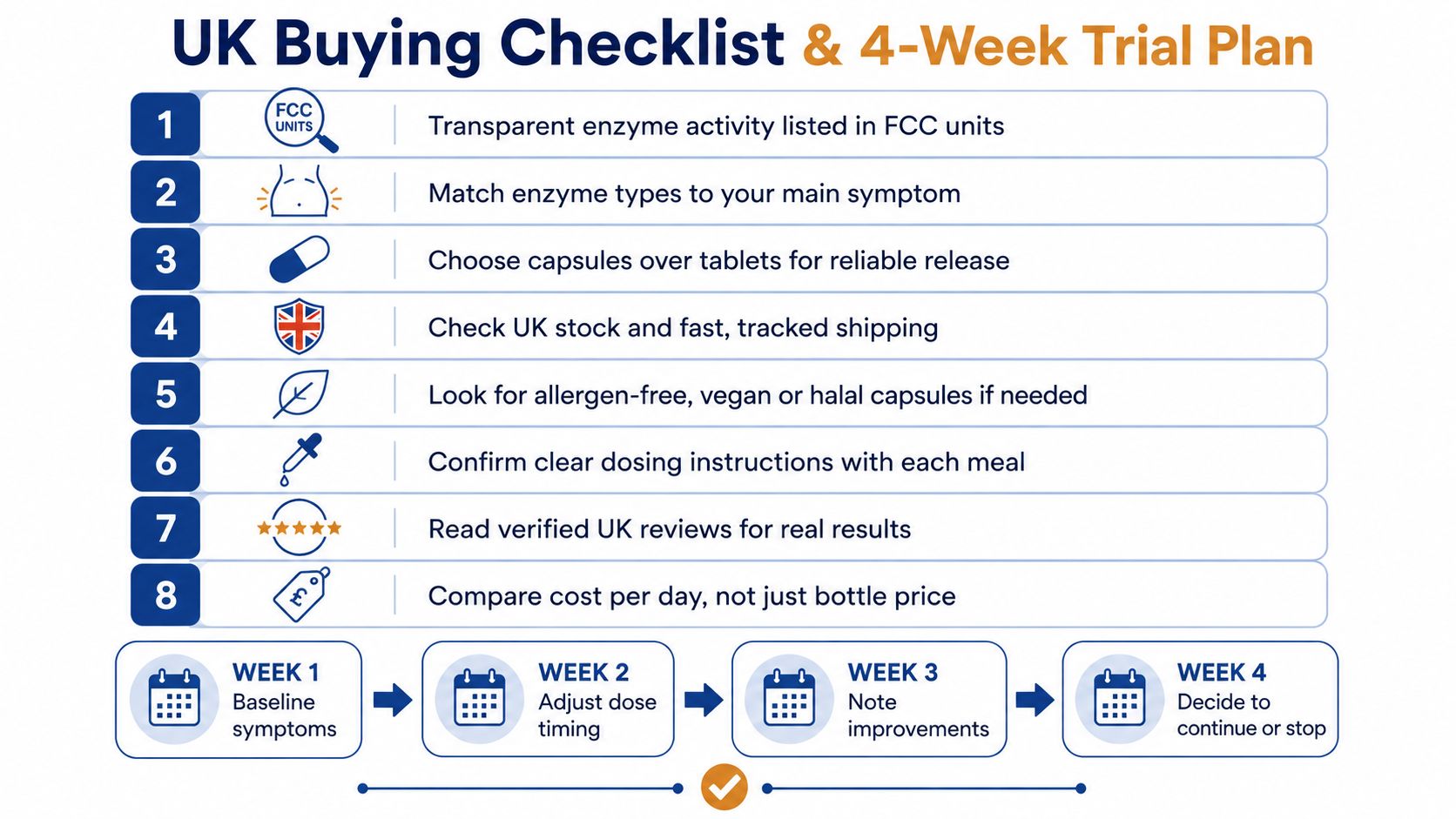
Use this checklist before paying for a tub:
- Transparent activity: Individual enzyme activities are stated in recognised units, ideally with FCC or another clearly defined standard where applicable.
- Symptom match: The formula contains the enzyme that fits your main food trigger.
- Usable format: The capsule or tablet design and release description make sense for the product's directions.
- UK compliance: The listing uses permitted food-supplement claims and doesn't present the product as a treatment for disease.
- Clear dosing: You know how much to take and whether it belongs with the first bites of a meal.
- Full ingredient disclosure: Allergens, excipients and capsule materials are easy to identify.
- Quality evidence: The seller provides credible identity, contamination or batch-testing information.
- Fair buying terms: You can check the return policy, expiry information and total cost per day before ordering.
High-street chemists and specialist online retailers usually make it easier to inspect UK labelling and delivery terms. Marketplace listings can vary because the seller, stock origin and product description may change. Check whether the item is dispatched from the UK, whether the pack is intended for the UK market, and whether customs or delivery restrictions could affect an EU-sourced order.
Run a controlled trial
Week 1: Keep a baseline diary. Record meals, trigger foods, bloating, stool consistency, energy after eating and side effects without changing your routine.
Week 2: Introduce one product at the lowest labelled dose with one repeatable trigger meal. Don't start probiotics, a new diet and several supplements at the same time.
Week 3: If the product is tolerated, move towards the labelled dose and keep meal timing consistent. Note whether the improvement is specific to the target food.
Week 4: Review four outcomes: bloating frequency, stool consistency, post-meal energy and unwanted effects. Continue only if the result is clear enough to justify the product. Otherwise stop, reassess the trigger or seek professional advice.
Quick Answers to Common Digestive Enzyme Questions
Can digestive enzymes be combined with probiotics?
Usually, enzymes and probiotics serve different purposes, so they can often be used in the same overall routine. If taking them together causes nausea, separate them and introduce one change at a time. People with suspected small intestinal bacterial overgrowth, significant digestive disease or complex medication routines should ask a clinician before stacking products.
Should enzymes be taken daily or only with meals?
For a healthy adult testing a known food trigger, meal-time use is generally the more logical approach. Take the product immediately before or with the first bites, following the label. Daily use for a diagnosed enzyme deficiency is a different matter and should follow professional guidance, particularly where PERT is involved.
What if nothing changes after four weeks?
First check the match. You may have chosen lactase for a non-dairy trigger, a broad blend with undisclosed activity, or a dose that doesn't correspond to the meal. Then review confounders such as FODMAP load, eating speed, portion size, constipation and stress.
Stop treating the supplement as the answer if symptoms persist. Book a GP appointment if you have weight loss, blood in the stool, persistent pain, ongoing diarrhoea or another red flag. A product that does nothing has still provided useful information: the problem may not be an enzyme problem.
Vitamin Planet offers a UK-based range of vitamins, dietary supplements, probiotics, sports nutrition and related health products, with products available from its online catalogue. Visit Vitamin Planet to compare relevant supplement categories, then apply the label, activity and symptom-matching checks in this guide before you buy.