

Magnesium Deficiency Signs and Symptoms You Should Know
If you've got a twitchy eyelid, a calf cramp at night or a run of tired days, the popular advice is simple. Match your symptom to a checklist, buy magnesium and wait to feel better. That approach sounds tidy, but it isn't how clinicians diagnose a deficiency.
Magnesium deficiency signs and symptoms matter, yet they're often vague, shared with many other conditions, or absent altogether until levels fall a long way. Learning what low magnesium can look like is useful. Knowing what it can't prove on its own is safer, especially when palpitations, marked weakness or confusion are involved.
Table of Contents
- Why Symptoms Alone Cannot Diagnose Magnesium Deficiency
- Common and Less Obvious Signs to Notice
- Who Is Most at Risk and Why Intake Often Falls Short
- Understanding Magnesium Testing and Its Limits
- Other Possible Causes of Similar Symptoms
- Food Sources and Common Supplement Forms
- Safe Dosing, Interactions and Red Flags
- When to See a Clinician and What to Ask
Why Symptoms Alone Cannot Diagnose Magnesium Deficiency
A cramp doesn't diagnose magnesium deficiency. Neither does poor sleep, fatigue or a bad week at work. Those complaints are non-specific, meaning they can arise from many causes, from dehydration and hard training to thyroid problems and medicines.
UK clinical guidance also makes the opposite point. People can have mild hypomagnesaemia, the medical term for low blood magnesium, and feel nothing at all. NHS Scotland guidance on hypomagnesaemia explains that mild deficiency is often clinically silent and that signs, when they appear, are often non-specific. In plain terms, you can't reliably work backwards from how you feel to a single mineral.
Why the Timeline Matters
How fast magnesium falls also shapes how you feel. A slow drift may produce few clues, while a rapid drop after illness, vomiting or diarrhoea can make someone unwell more quickly. Two people with similar blood results can therefore look quite different in clinic.
Think of symptoms as a prompt to ask better questions. How long has this lasted? Has your diet, alcohol intake, training load or medication changed? Are other electrolytes involved? That slower, wider approach is also sensible in other health decisions, whether you're assessing persistent fatigue or taking time to compare hormone optimization programs rather than assuming one test or product explains everything.
Practical rule: Treat a symptom as a reason to investigate, not as a diagnosis.
That distinction protects you in two ways. You won't dismiss something serious as a simple deficiency, and you won't keep increasing a supplement when the actual cause needs different care. Persistent, severe or rapidly worsening symptoms need clinical assessment and, where appropriate, laboratory testing.
Common and Less Obvious Signs to Notice
Magnesium helps stabilise nerve and muscle membranes and supports cellular processes that depend on energy. When levels become clinically low, nerves and muscles can become more excitable, which helps explain why signs appear across several body systems rather than in one neat place.
The diagram below groups familiar and less obvious signs so you can spot patterns instead of chasing isolated niggles.
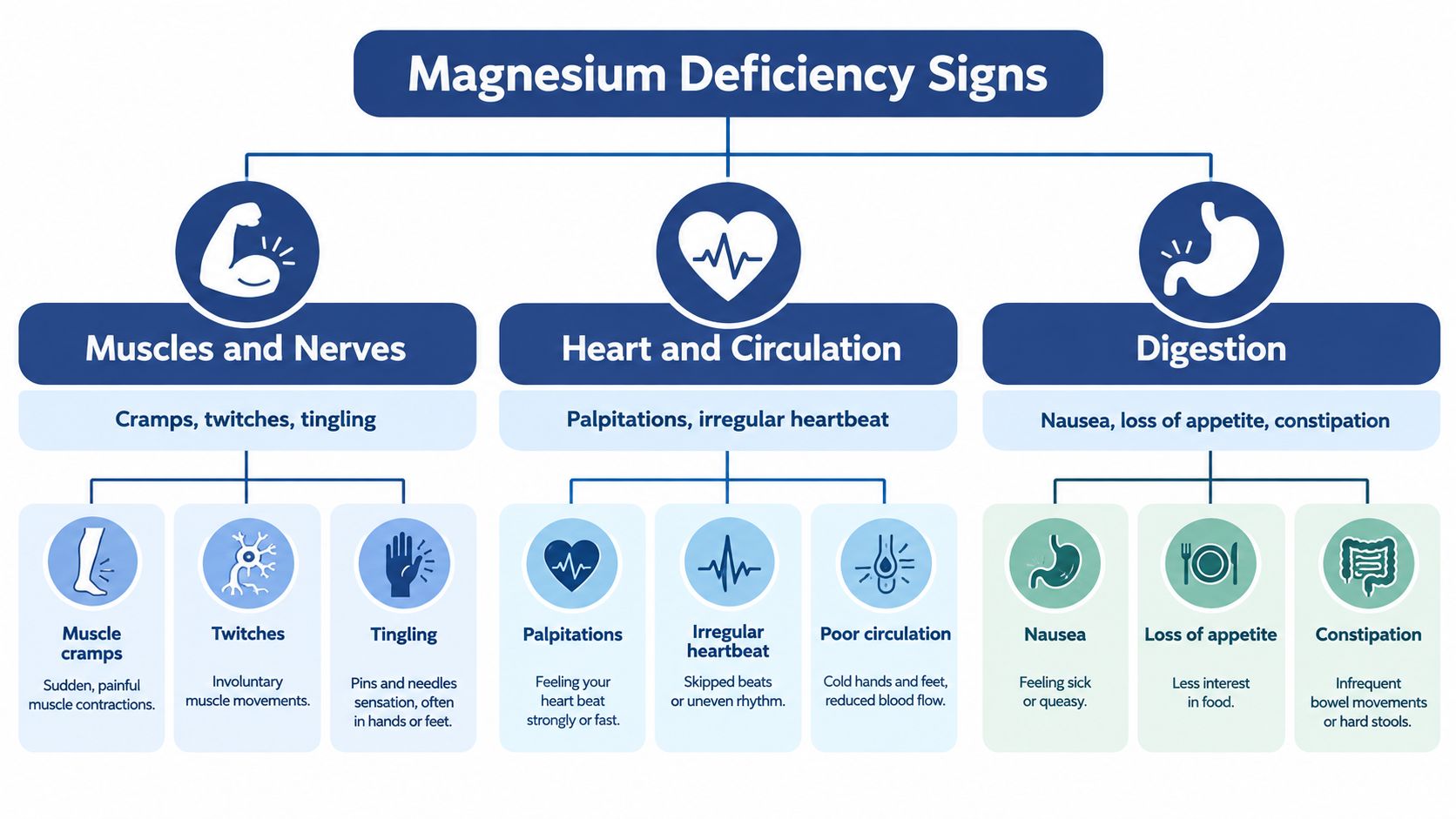
Muscles and Nerves
- Muscle cramps and twitching: Cramps, small twitches, tremor or muscle weakness can occur as neuromuscular excitability rises.
- Tingling: Abnormal sensations, often called paraesthesia, may affect the fingers, feet or area around the mouth.
- Tetany in more severe cases: Painful, sustained muscle spasm is a medical warning sign, not something to manage at home.
Heart, Digestion and Mood
Heart related signs can include palpitations or a fast heartbeat. Digestive complaints may include nausea, vomiting or reduced appetite. People may also notice lethargy, dizziness, vertigo, drowsiness or agitation.
Less obvious changes can involve mood and thinking. As depletion worsens, reported features include depression, altered mental state, confusion and unsteadiness when walking. Sleep problems are often discussed by readers, but poor sleep alone is far too non-specific to identify magnesium as the cause.
This short video offers another visual way to review the pattern before you judge whether your own symptoms cluster together.
A single cramp after a long run means little. A pattern deserves more attention, such as repeated cramps with weakness, tremor, tingling and palpitations. Combinations, persistence and severity are what make magnesium deficiency signs and symptoms worth raising promptly with a clinician.
Who Is Most at Risk and Why Intake Often Falls Short
Risk has two sides. One is how much magnesium reaches your plate. The other is how much your body absorbs, retains or loses. Focusing only on food misses people whose main problem is illness or medication related losses.
Everyday intake can fall short when meals lean heavily on refined foods and include few leafy greens, beans, nuts, seeds or wholegrains. Busy adults who skip meals, older people eating less overall, people drinking heavily and athletes with high energy demands may all find intake inconsistent. That doesn't confirm deficiency, but it gives context when symptoms persist.
The image below captures a common starting point for review, pausing over routine meals rather than assuming a supplement is the first answer.

What UK Intake Data Show
Adolescents stand out in UK dietary data. A UK analysis published in the Journal of Nutritional Science found that, from the base diet alone, approximately 60% to almost 90% of boys and girls aged 11 to 18 had magnesium intakes below the Estimated Average Requirement. It also found that more than 70% of adolescent males and females weren't achieving magnesium requirements when all dietary sources were considered.
Read those figures carefully. They describe inadequate intake, not confirmed clinical deficiency. A teenager eating too little magnesium won't automatically have low blood magnesium or symptoms.
Higher Clinical Risk
Clinical risk is higher with ongoing vomiting or diarrhoea, malabsorption, significant gastrointestinal disease or kidney disease, and medicines that increase magnesium losses. In those settings, asking why magnesium is low matters more than adding more. The cause may need treatment, monitoring or a medication review.
Understanding Magnesium Testing and Its Limits
A serum magnesium test measures magnesium circulating in blood at the time of sampling. It's useful, but it's only part of the picture because blood levels don't fully represent total body stores. A result that looks reassuring can still sit alongside depleted stores inside cells.
In UK practice, hypomagnesaemia is commonly defined as serum magnesium below 0.7 mmol/L, while symptoms often remain absent or non-specific until levels fall below approximately 0.5 mmol/L, according to Worcestershire Acute Hospitals NHS guidance on hypomagnesaemia. Those thresholds help clinicians judge urgency, but they don't replace the history, examination and speed of change.
Tests Clinicians Often Combine
Magnesium rarely travels alone. Low potassium or calcium may accompany it and can be difficult to correct until magnesium is restored, so clinicians often look at the wider electrolyte pattern together.
Common Tests Ordered Alongside Serum Magnesium
| Test | Why it is checked |
|---|---|
| Potassium | Low potassium may persist while magnesium remains low |
| Calcium | Calcium handling is closely linked to magnesium status |
| Renal function | Kidneys influence magnesium losses and safe replacement |
| ECG | Checks heart rhythm when symptoms or depletion are significant |
Useful questions include whether other electrolytes were checked, whether kidney function affects supplement safety, and whether follow up testing is needed after treatment or dietary change. Repeat testing may be reasonable when symptoms continue or the cause remains unclear.
Testing also helps separate confirmed deficiency from general wellbeing routines. Someone exploring a self-care routine with magnesium spray, for example, is making a different decision from someone with abnormal blood results and palpitations. The second situation needs clinician led interpretation, not guesswork.
Other Possible Causes of Similar Symptoms
Your body doesn't label symptoms by cause. A cramp, racing pulse or foggy afternoon can reflect several overlapping problems, and magnesium is only one possibility. Widening the lens early can save months of trial and error.
Low potassium and low calcium deserve particular attention because they commonly occur alongside low magnesium. Royal Cornwall Hospitals NHS guidance on treating hypomagnesaemia describes hypomagnesaemia alongside refractory low potassium and low calcium, noting that correcting magnesium may help correct those related abnormalities. If potassium stays low despite treatment, magnesium becomes an important part of the investigation.
Lookalikes Worth Discussing
- Iron deficiency: Fatigue, weakness and reduced exercise tolerance may fit better, especially with heavy periods or a restricted diet.
- Thyroid imbalance: Palpitations, tremor, anxiety, tiredness and temperature sensitivity can overlap with electrolyte symptoms.
- Poor sleep and stress: Both can drive fatigue, irritability, headaches and difficulty concentrating without any mineral deficiency.
- Dehydration: Cramps, dizziness and weakness may follow illness, heat, alcohol or intense exercise.
- Medication effects: Diuretics can increase electrolyte losses, and other medicines may contribute to muscle aches, fatigue or palpitations.
Vitamin D is another frequent source of confusion because tiredness and muscle symptoms get attributed to several nutrients at once. If that possibility fits your history, read this guide to vitamin D deficiency symptoms in the UK and discuss appropriate testing rather than stacking supplements blindly.
Persistent symptoms deserve a differential diagnosis, not a single nutrient verdict.
You don't need to diagnose yourself. You do need to notice when the story doesn't fit one simple explanation.
Food Sources and Common Supplement Forms
Food comes first because meals supply magnesium alongside fibre, potassium and other nutrients that support the same systems. Familiar UK options include spinach and kale, almonds and cashews, pumpkin seeds, beans and lentils, oats and brown rice, dark chocolate and oily fish. Small swaps work well, such as seeds on porridge, beans in soup or leafy greens through pasta.
The comparison below puts everyday foods beside common supplement forms so the trade offs are easier to see.
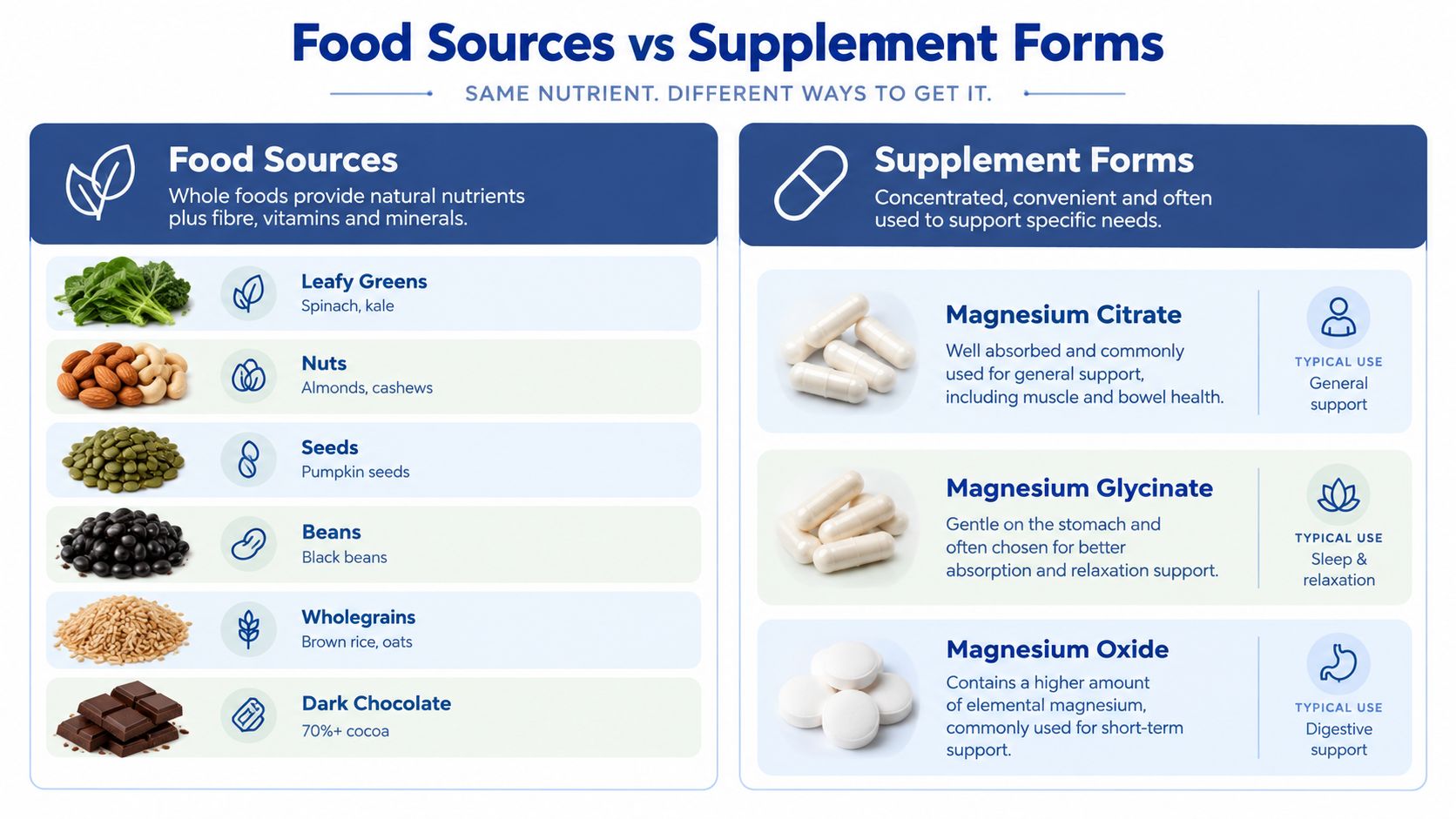
Comparing Common Forms
Magnesium citrate is widely used and generally well absorbed, though it can loosen stools. Magnesium glycinate is often chosen for tolerability and a lower laxative effect. If you want more detail on that form, Lila on glycinate benefits explains why many people consider it. Magnesium oxide contains a high proportion of elemental magnesium but is typically less well absorbed and more likely to cause digestive upset.
Topical sprays and bath salts suit some people's routines, but they shouldn't be treated as proven substitutes for assessing and correcting a confirmed deficiency. If calcium is part of your thinking, this overview of calcium and magnesium together helps separate combined products from single mineral choices.
Other wellness products shouldn't be confused with magnesium replacement. For example, BioBees Fresh Royal Jelly Capsules contain fresh royal jelly with propolis extract and bee pollen and are positioned for energy, immunity and wellness support. That's a separate category, not a treatment for low magnesium.
Safe Dosing, Interactions and Red Flags
More isn't automatically better. Supplemental magnesium commonly causes loose stools or stomach upset when the dose is too high for you or the form doesn't suit you. Follow the product label, pay attention to elemental magnesium, and don't exceed UK guidance for supplemental intake without professional advice.
The checklist below summarises the safety points to review before you start or increase a product.
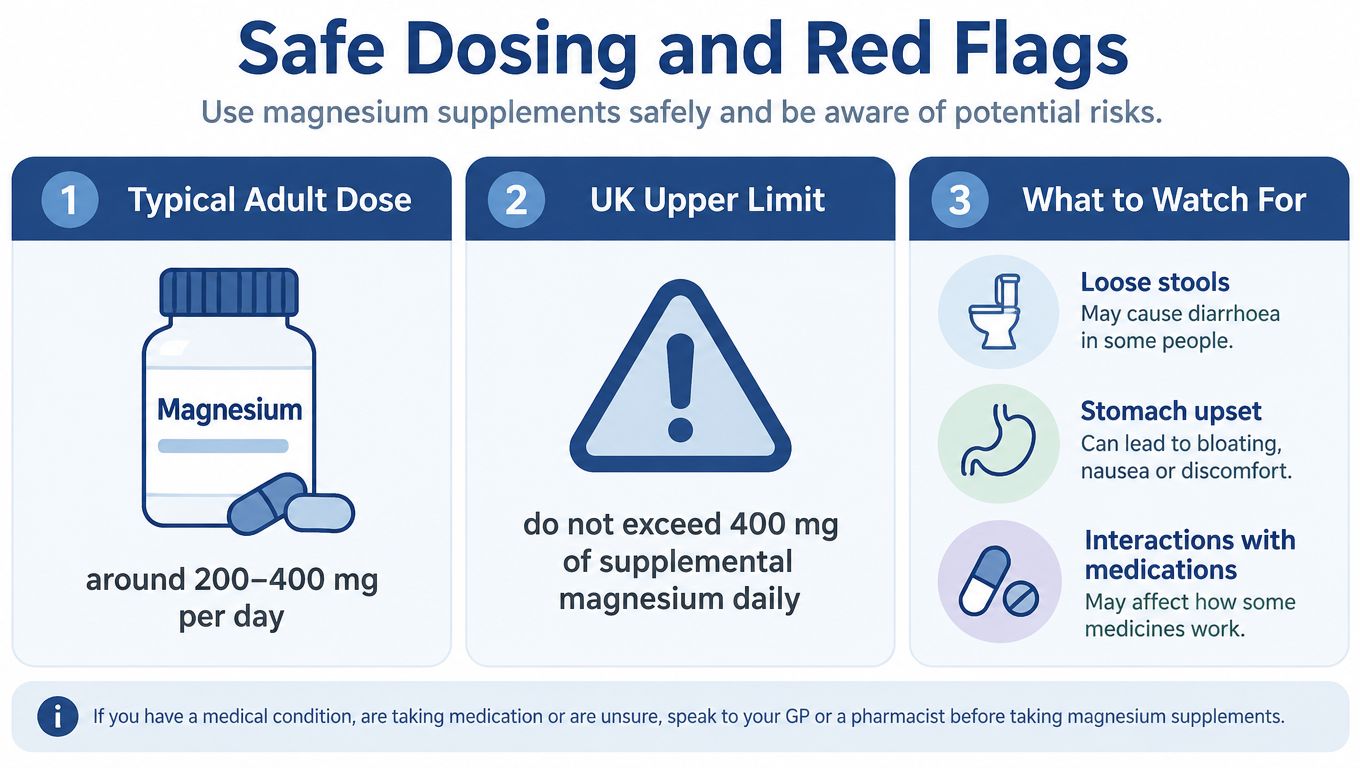
Who Should Pause Before Self Supplementing
Kidney impairment changes the calculation because reduced clearance can allow magnesium to build up. People with kidney disease shouldn't self supplement without medical supervision. Caution is also needed during pregnancy, with significant gastrointestinal illness, or when several medicines affect electrolytes or kidney function.
Magnesium can reduce absorption of certain antibiotics and some other medicines, so timing separation may be needed. Ask a pharmacist to check your full medication list rather than guessing. Practical details on timing and tolerability are covered in this guide on how to take magnesium supplements.
Red Flags That Need Urgent Care
NHS Specialist Pharmacy Service guidance on treating acute hypomagnesaemia warns that untreated hypomagnesaemia can cause life threatening arrhythmias. Seek urgent medical help for palpitations or suspected irregular heartbeat, seizures, confusion, severe weakness, marked tremor, tetany, fainting or chest pain. Severe symptomatic cases may need hospital assessment and intravenous replacement, not another over the counter tablet.
When to See a Clinician and What to Ask
Book a GP or pharmacist conversation when cramps, weakness, tremor, tingling or palpitations persist, recur or worsen. The threshold is lower if you have kidney or gastrointestinal disease, ongoing vomiting or diarrhoea, heavy alcohol use, poor dietary intake or medicines that affect electrolytes. Don't wait for a supplement trial to settle severe symptoms.
Bring specifics. Note when symptoms began, how often they occur, recent illness, training load, alcohol intake, typical meals and every medicine and supplement you take. That history helps the clinician decide whether magnesium belongs in the investigation and what else could explain the pattern.
Questions That Lead Somewhere Useful
- Could this be an electrolyte problem: Ask whether magnesium should be checked with potassium and calcium.
- Do my kidneys or medicines matter: Ask whether renal function, current prescriptions or an ECG should be reviewed.
- What happens next: Ask what result would change treatment, whether repeat testing is needed and when to return.
Food, supplements and follow up work best as one connected decision. Improve intake where it's plainly low, investigate persistent magnesium deficiency signs and symptoms properly, and treat abnormal results or red flags as clinical problems rather than shopping prompts.
If you're reviewing your diet and considering magnesium, calcium or other everyday vitamins and minerals, Vitamin Planet offers a broad UK range you can compare by form, strength and routine. Browse the options with your test results, medication list and clinician's advice in mind, then choose the product that fits your needs rather than a symptom checklist alone.