

Vitamin C Benefits How Much You Need and Best Sources
You're standing in a supermarket aisle with a packet of vitamin C tablets in one hand and a bag of oranges in the other. Perhaps a cold has gone around the family, your skin looks tired, or you've been feeling low on energy. The label promises immune support, but you're left wondering whether you need a supplement, how much is enough, and whether a higher dose will work better.
The useful answer is less dramatic than many adverts suggest. Vitamin C is essential for normal body functions, but its clearest benefit is often preventing or correcting inadequate intake, not creating a general health boost through megadoses. UK guidance gives adults a practical benchmark, while UK population data show that some children, teenagers, older adults and other higher-risk groups still fall short.
This guide explains what vitamin C does, how much you need, which foods provide it and when a supplement may be sensible. It also separates realistic benefits, such as supporting collagen formation and normal immune function, from claims that promise too much.
Table of Contents
- Introduction to Vitamin C Benefits for Everyday Health
- How Vitamin C Works in Your Body
- Evidence Based Benefits for Immunity Skin and More
- How Much Vitamin C You Need Each Day in the UK
- Best Food Sources and Smart Supplement Choices
- Safety Interactions and Common Misconceptions
- Your Practical Plan for Getting Vitamin C Right
Introduction to Vitamin C Benefits for Everyday Health
You are choosing between vitamin C tablets and a bag of oranges after a cold has gone around the family. Perhaps you also want healthier-looking skin or more energy. Those aims are understandable, yet vitamin C does not promise the same result for each one. It has recognised roles in normal immune function, collagen production, wound healing, and the health of skin, blood vessels, bones and cartilage, as described by the NHS vitamin C guidance.
Start with a simpler question: “Am I getting enough?” The UK adult reference nutrient intake is 40 mg per day, and the NHS says the average person can meet this need through a varied diet. In practice, regular fruit and vegetables usually matter more than choosing the biggest number on a supplement label.
Some people do fall short. A UK study reported intake below recommended levels in 11% of children aged 1 to 10, 17% of those aged 11 to 14, and 23% of people aged 15 and older. These figures appear in UK coverage of the Nutrition Society conference findings. Separate reporting recorded 486 NHS treatment courses for vitamin C deficiency in England, compared with 338 previously. Deficiency therefore remains a current clinical concern, not only a condition associated with the past.
The practical lesson is straightforward. Vitamin C supports normal body processes each day, while correcting a low intake is more likely to make a noticeable difference than taking a megadose when your diet already supplies enough.
The guide ahead explains the biology, UK intake guidance, food choices, supplements and safety, helping you judge whether food is sufficient or a supplement deserves consideration.
How Vitamin C Works in Your Body
Vitamin C, also known as ascorbic acid, dissolves in water. Your body uses it in fluid-filled tissues and removes excess through urine, so a regular supply matters. Unlike fat-soluble vitamins, it is not stored in the same way. That makes consistent fruit and vegetable intake more useful than relying on an occasional large dose.
One role is antioxidant protection. Normal metabolism and environmental exposure produce reactive molecules, and vitamin C helps buffer them. This supports the body's ordinary protective chemistry, but it cannot cancel out poor sleep, smoking or an unbalanced diet.
Collagen is the body's support framework
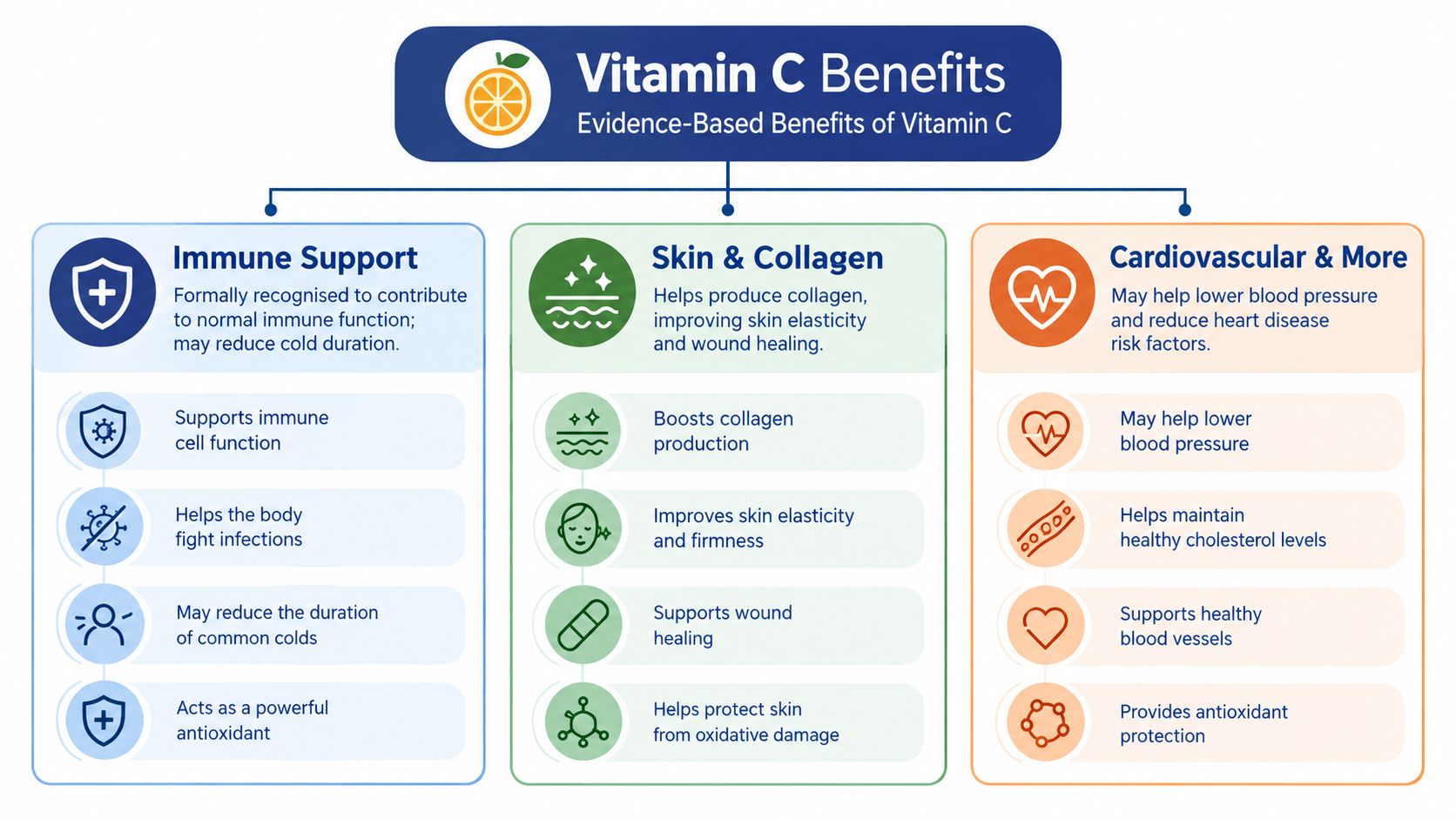
Vitamin C is also a cofactor for collagen synthesis. Collagen provides structural support throughout the body, including in skin, blood vessels, bones, cartilage and tissue involved in repair.
That connection explains why deficiency can affect wound healing and connective-tissue integrity. The biology is similar to repairing a wall: the process needs the right materials. If vitamin C is missing, repair can struggle. If your intake is already adequate, taking much more does not automatically produce stronger or younger tissue.
Immune cells need normal vitamin C availability
Vitamin C contributes to the normal function of the immune system. Immune cells use it within their normal working environment, while its antioxidant activity helps buffer oxidative stress. This supports normal immune activity, rather than guaranteeing that you will avoid or quickly cure an infection.
Blood vitamin C status exists on a spectrum. In an England cohort of 22,474 adults aged 40 to 79, mean plasma vitamin C was 54 µmol/L. Only 1.4% were classified as deficient at below 11 µmol/L, while 12% were in the hypovitaminosis range below 23 µmol/L, according to this UK-focused review of vitamin C and health. The distinction matters because someone may avoid overt scurvy while still having a lower status that does not fully support tissue saturation.
For skin-specific practical guidance, the vitamin C serum glow guide from Skinsation Aesthetics Inc. explains topical routines. A serum and dietary vitamin C serve different purposes. Serum use concerns the skin's surface, whereas dietary vitamin C supplies the whole body.
Some people also consider non-vitamin products for energy and immune routines. BioBees Fresh Royal Jelly - Natural Energy & Immune Support is described as a fresh royal jelly supplement containing proteins, amino acids, essential fatty acids and B-vitamins. It is not a vitamin C product, and anyone allergic to bee products should avoid it.
Key idea: Vitamin C supports normal systems. It is not a universal treatment, and more is not automatically better.
Evidence Based Benefits for Immunity Skin and More
If you reach for vitamin C at the first sign of a cold, the useful question is not whether a stronger tablet guarantees protection. It is whether your usual intake meets your body's needs. Vitamin C contributes to normal immune function, but supplementation is most likely to help when dietary intake or vitamin C status is low.
UK evidence supports a targeted view. Low status is concentrated in particular groups, so the benefit of supplementation is best framed as correcting a shortfall rather than raising an already adequate intake. The UK evidence review on vitamin C and immune function supports this distinction and does not justify treating every healthy adult as though they need a megadose.
Immune support without cold-cure promises
Vitamin C helps maintain normal immune function and contributes to antioxidant protection. These roles support cells during ordinary physiological stress, but they do not make vitamin C an infection cure or guarantee that you will avoid a cold.
A diet containing fruit, vegetables and potatoes may already provide enough. Someone with a restricted diet, poor appetite or few regular portions of produce has a more practical reason to address intake. The aim is to fill the gap, not to chase the highest-strength supplement.
Skin, collagen and wound healing
Collagen gives structure to skin, blood vessels, bones, cartilage and other connective tissues. Vitamin C supports collagen formation, so a consistent dietary supply helps provide the conditions these tissues need. It also contributes to normal wound healing.
This is nutritional support rather than a cosmetic treatment. Visible skin changes reflect several influences, including age, sun exposure, skin care, smoking, sleep and overall diet. Oral vitamin C supplies the body, while a serum is applied to the skin's surface. These are related choices, not interchangeable ones.
For product and routine considerations, the Finding Favourites guide compares drugstore vitamin C serums. Vitamin Planet's beauty and skin nutrition guide provides broader context. Both can sit alongside sensible eating, but neither turns vitamin C into a complete solution for every skin concern.
Other roles deserve a measured explanation
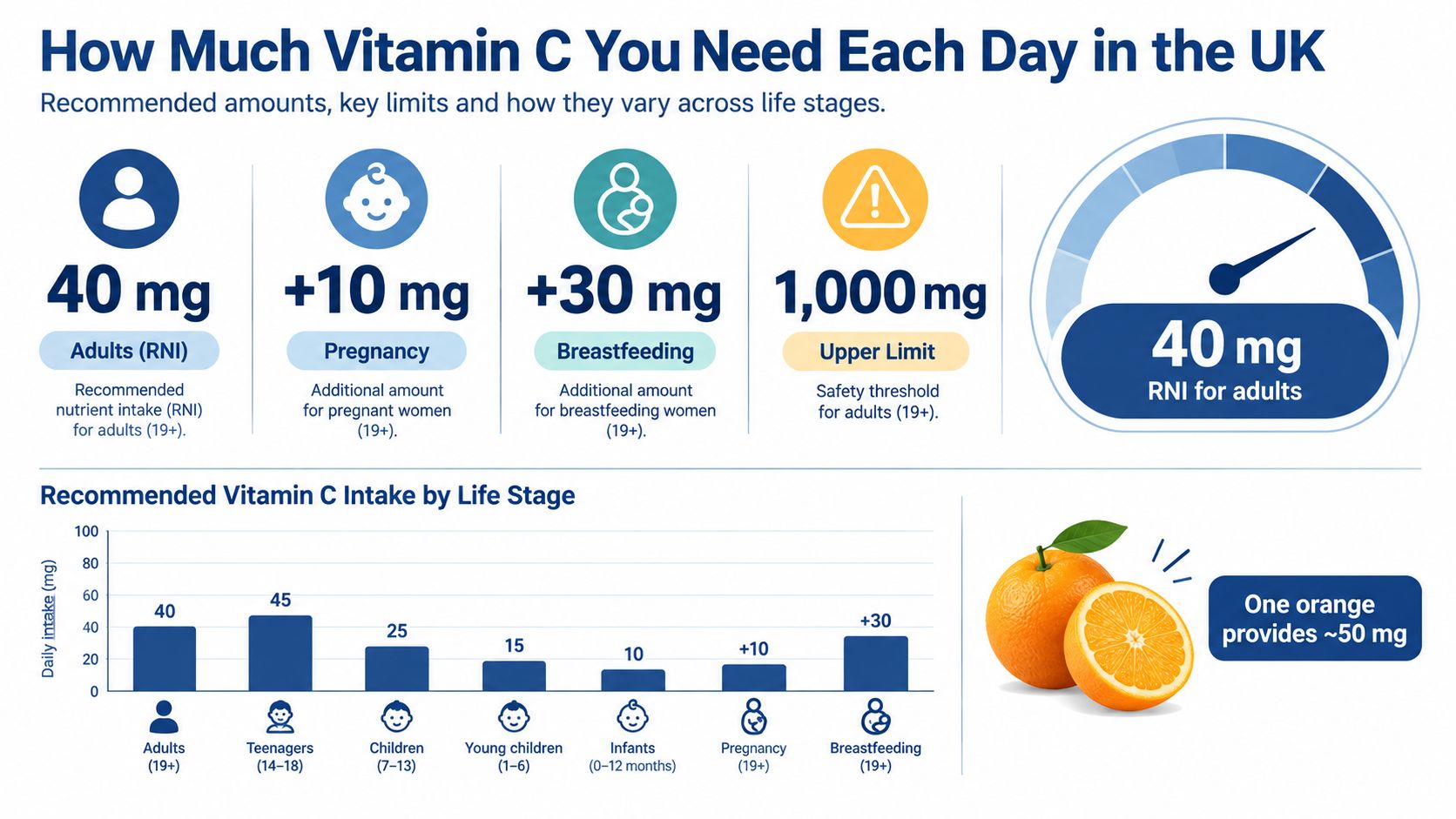
Vitamin C supports normal connective tissue and helps the body absorb iron from plant foods. Adding a vitamin C food to a meal containing beans, lentils or leafy vegetables is a useful pairing. It does not make vitamin C an energy stimulant.
Tiredness has many possible causes. Correcting inadequate intake may help someone feel better overall, but persistent fatigue needs proper medical assessment rather than an assumption that a supplement is the missing answer.
The clearest conclusion is that vitamin C benefits are most dependable when they meet a real nutritional need. That need may involve collagen-dependent processes, normal immune function or a low intake. Megadosing rarely adds a matching benefit when intake is already adequate, and vitamin C should not be presented as disease treatment or guaranteed immunity.
How Much Vitamin C You Need Each Day in the UK
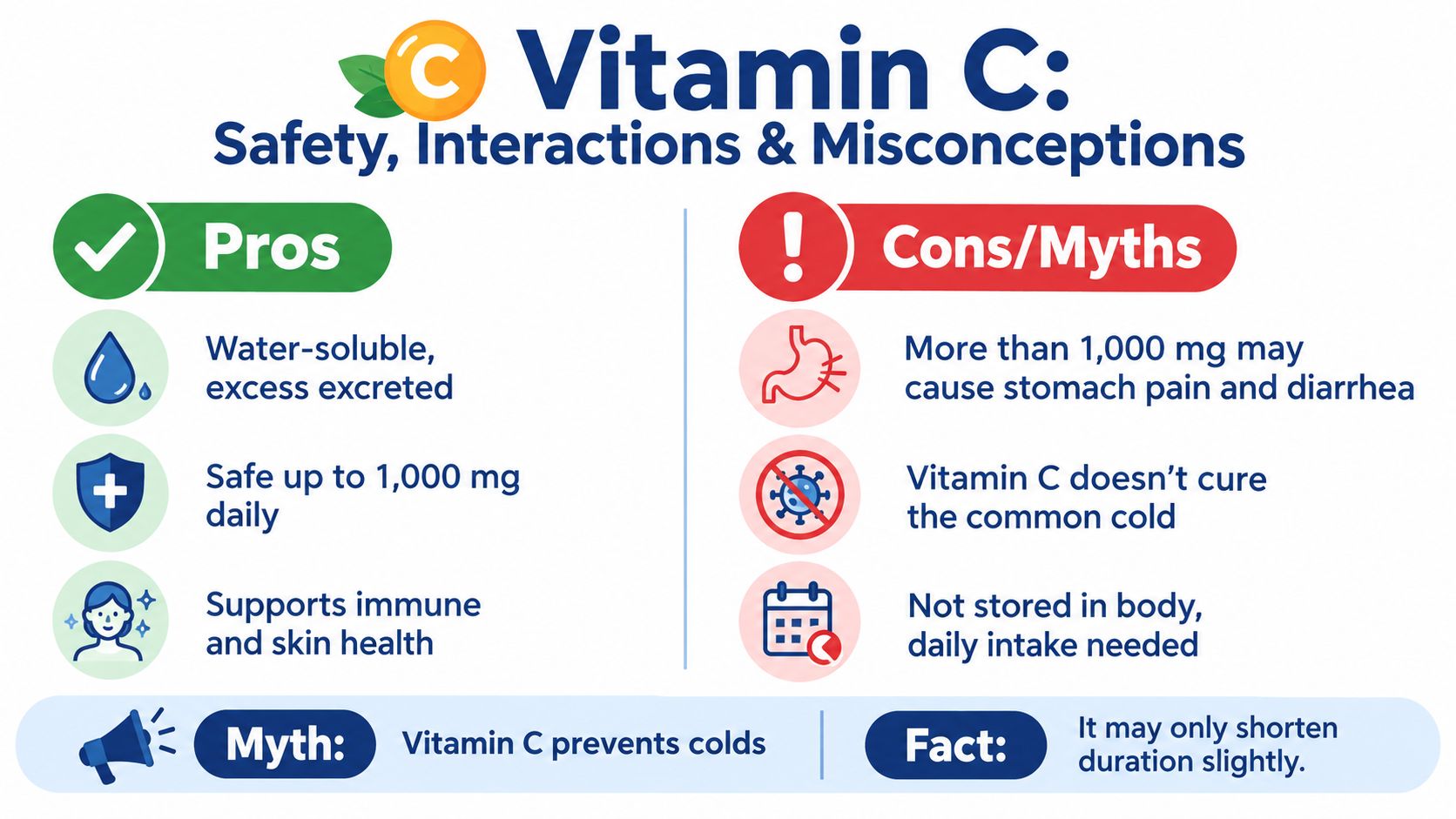
You can meet ordinary vitamin C needs without chasing high-strength tablets. UK guidance gives adults a reference nutrient intake of 40 mg of vitamin C per day. The NHS uses this recommendation for adults aged 19 to 64. The original UK Dietary Reference Values were established in 1991 and remain part of the framework for current advice. The official figures are set out in the UK Dietary Reference Values guide.
Some situations change the reference amount. Pregnancy adds 10 mg per day, while breastfeeding adds 30 mg per day. People who smoke are advised to reach 80 mg per day, because smoking increases oxidative stress and vitamin C turnover.
| Life stage or situation | UK reference |
|---|---|
| Adult | 40 mg per day |
| Pregnancy | 40 mg plus 10 mg per day |
| Breastfeeding | 40 mg plus 30 mg per day |
| Smoker | 80 mg per day |
These figures are reference amounts, not instructions for everyone to buy a supplement. Fruit, vegetables and potatoes can all contribute vitamin C. A useful check is whether these foods appear regularly across your meals, rather than whether a tablet offers the highest dose.
The same UK framework identifies 10 mg per day as sufficient to prevent and cure clinical scurvy. This lower figure describes the amount linked with preventing a severe deficiency disease. It is not the recommended everyday intake for every adult. The distinction matters: avoiding scurvy is a lower bar than maintaining an adequate, varied nutritional pattern.
A typical day could include fruit at breakfast, vegetables with lunch and a vegetable-based dinner. You do not need to count every milligram when your diet is varied. Pay closer attention if you rarely eat produce, follow a highly restricted diet or regularly struggle to eat enough. Those are situations where reviewing intake, and possibly discussing a modest supplement with a qualified professional, makes more sense than megadosing.
Practical rule: Use the UK reference intake to spot possible inadequacy. It is not an invitation to keep increasing the dose once your needs are covered.
Best Food Sources and Smart Supplement Choices
Food is usually the easiest starting point because it combines vitamin C with fibre, water and other nutrients. Fresh fruit and vegetables are familiar sources, while potatoes can also contribute to intake. The exact amount in a serving varies with the food and preparation, so it's more useful to build a regular pattern than to rely on one “superfood”.
Heat, water and long storage can reduce vitamin C in foods. Steaming, microwaving with little water or eating some produce raw can help retain more than prolonged boiling. Chopping produce shortly before eating and storing it sensibly also supports a better intake pattern.
Try adding berries or fruit to breakfast, peppers or tomatoes to lunch, and a serving of vegetables to dinner. A squeeze of citrus over a meal can add flavour and make vitamin C-containing foods easier to include, but you don't need an elaborate recipe.
Food first or supplement decision helper
| Situation | Best approach | Why it fits |
|---|---|---|
| You regularly eat varied fruit and vegetables | Food first | A varied diet can meet ordinary needs while providing fibre and other nutrients |
| You rarely eat produce | Review meals, then consider a modest supplement | A supplement may help fill a consistent gap, but it shouldn't replace dietary improvement |
| You follow a restricted diet | Check the pattern with a qualified professional | Restrictions can make inadequacy more likely, especially when appetite or food choice is limited |
| You smoke | Pay attention to the UK higher reference amount | Smoking increases vitamin C turnover, so the standard adult figure may not be the relevant benchmark |
| You're pregnant or breastfeeding | Use UK life-stage guidance and seek individual advice where needed | Your reference amount changes, and pregnancy supplements should be chosen carefully |
| You have symptoms or suspected deficiency | Speak with a GP or pharmacist | Symptoms may need assessment rather than self-treatment |
Label reading should be equally practical. Check the amount per serving, the suggested daily use and whether the product duplicates vitamin C in another multivitamin or fortified food. A very large number on the front of the packet isn't evidence that the product suits your needs.
For broader meal planning, Vitamin Planet's diet and nutrition guidance can sit alongside NHS advice. Vitamin Planet offers vitamins, minerals, dietary supplements and related health products, so shoppers can compare formats and ingredients, but the choice should still begin with your diet, life stage and reason for use.
Safety Interactions and Common Misconceptions
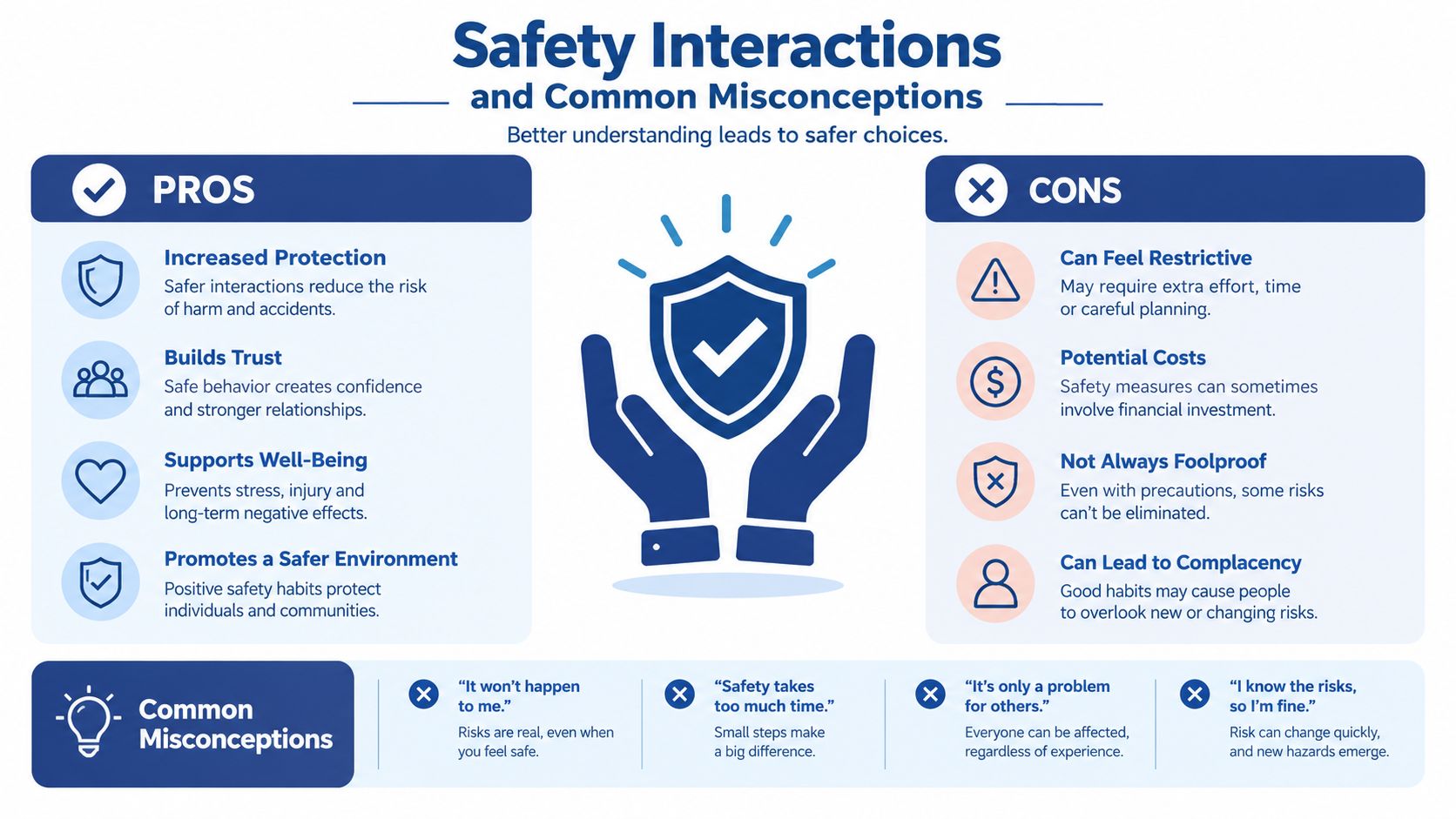
Vitamin C is water-soluble, but that doesn't make unlimited intake harmless. UK consumer guidance notes that common side effects appear above 1,000 mg per day, including stomach pain, diarrhoea and flatulence. The Which? vitamin C guidance highlights the same tolerability issue, while NHS advice emphasises that needs can be met through food.
A short myth and fact check
-
Myth: A megadose guarantees protection from colds.
Fact: Vitamin C supports normal immune function, but correcting low intake is a more defensible reason to supplement than expecting a high dose to prevent every infection. -
Myth: Water-soluble means excess never matters.
Fact: Large intakes can cause digestive symptoms, particularly above the level noted in UK consumer guidance. -
Myth: A supplement is automatically better than food.
Fact: Food often meets needs while adding variety and fibre. -
Myth: Every tired person needs vitamin C.
Fact: Fatigue has many causes and shouldn't be self-diagnosed as vitamin C deficiency.
If you take regular medicines, have a health condition, are pregnant or are being investigated for deficiency, ask a GP or pharmacist before starting a high-dose product. Vitamin C can also affect iron absorption, which matters for people with conditions involving iron storage. Professional advice is especially sensible when several supplements are used together.
Topical vitamin C creates a separate safety question. If you're combining a serum with acne treatments or other active skincare ingredients, the 2026 skincare rules for acne from Neutralyze offers routine-focused context. Introduce new products carefully and stop if irritation develops.
For a wider checklist on choosing and using supplements, see supplement safety myths and facts. The safest routine is usually the one you can explain clearly: what you're taking, why you're taking it and whether the dose is justified.
Your Practical Plan for Getting Vitamin C Right
Start with your weekly eating pattern rather than the supplement shelf. Aim to include fruit or vegetables regularly, keep some vitamin C foods available for quick meals and use gentle cooking methods when practical. If your diet is varied, food may be all you need.
A supplement deserves more consideration if you rarely eat produce, follow a restrictive diet, smoke, are pregnant or breastfeeding, or have been told that your vitamin C status is low. Choose a product with a clear serving amount, avoid stacking several products unnecessarily and review whether it's helping you meet a specific need.
Keep expectations realistic. Vitamin C supports normal immune function, collagen formation, connective tissue and wound healing, but it won't replace medical care, sleep, nourishing meals or treatment for an underlying condition. If you experience persistent fatigue, poor wound healing or other concerning symptoms, speak with a healthcare professional.
Write down what you're taking and why, then review the routine rather than increasing the dose automatically. Adequacy is the goal, not megadosing.
Vitamin Planet offers UK shoppers access to vitamins, minerals, dietary supplements and related health essentials in a broad online catalogue, including vitamin C formats for different routines. Visit Vitamin Planet to compare options, check serving information and choose a product that fits your diet-led approach to vitamin C.