

Multivitamin Side Effects and Safety Risks
The most popular advice about multivitamin side effects is also the least useful: “Just take the recommended dose and don't worry.” That reassurance is reasonable for many healthy adults using a standard multivitamin alone, but it misses the situation that causes many avoidable problems. A daily multivitamin may sit alongside separate vitamin D drops, cod-liver oil, magnesium, iron, an energy formula, sports nutrition, fortified foods, and medicines.
The important question isn't only, “Can this multivitamin cause side effects?” It's, “What is my total daily exposure to each nutrient?” UK evidence suggests that reported adverse reactions to food supplements have historically been uncommon, with one UK-focused submission recording 11 reports over an 11-year period, most described as minor. That figure isn't a precise incidence rate because spontaneous reporting can miss cases, but it offers useful context: serious harm from an ordinary multivitamin used according to its label appears uncommon for most healthy UK consumers. The European Commission submission also supports a more careful conclusion than either panic or complacency.
Table of Contents
- The Reality of Multivitamin Side Effects and Nutrient Stacking
- Managing Common Gastrointestinal Reactions
- Recognising Fat-Soluble Vitamin Toxicity
- Hidden Risks of High-Dose B Vitamins and Folic Acid
- Vulnerable Populations and Medication Interactions
- Auditing Your Supplement Stack and Seeking Medical Advice
The Reality of Multivitamin Side Effects and Nutrient Stacking
A multivitamin isn't automatically harmless because you bought it without a prescription. It's a concentrated product, and the label describes one product, not the complete collection of nutrients you consume each day. The risk often begins when people treat every bottle as an independent decision.
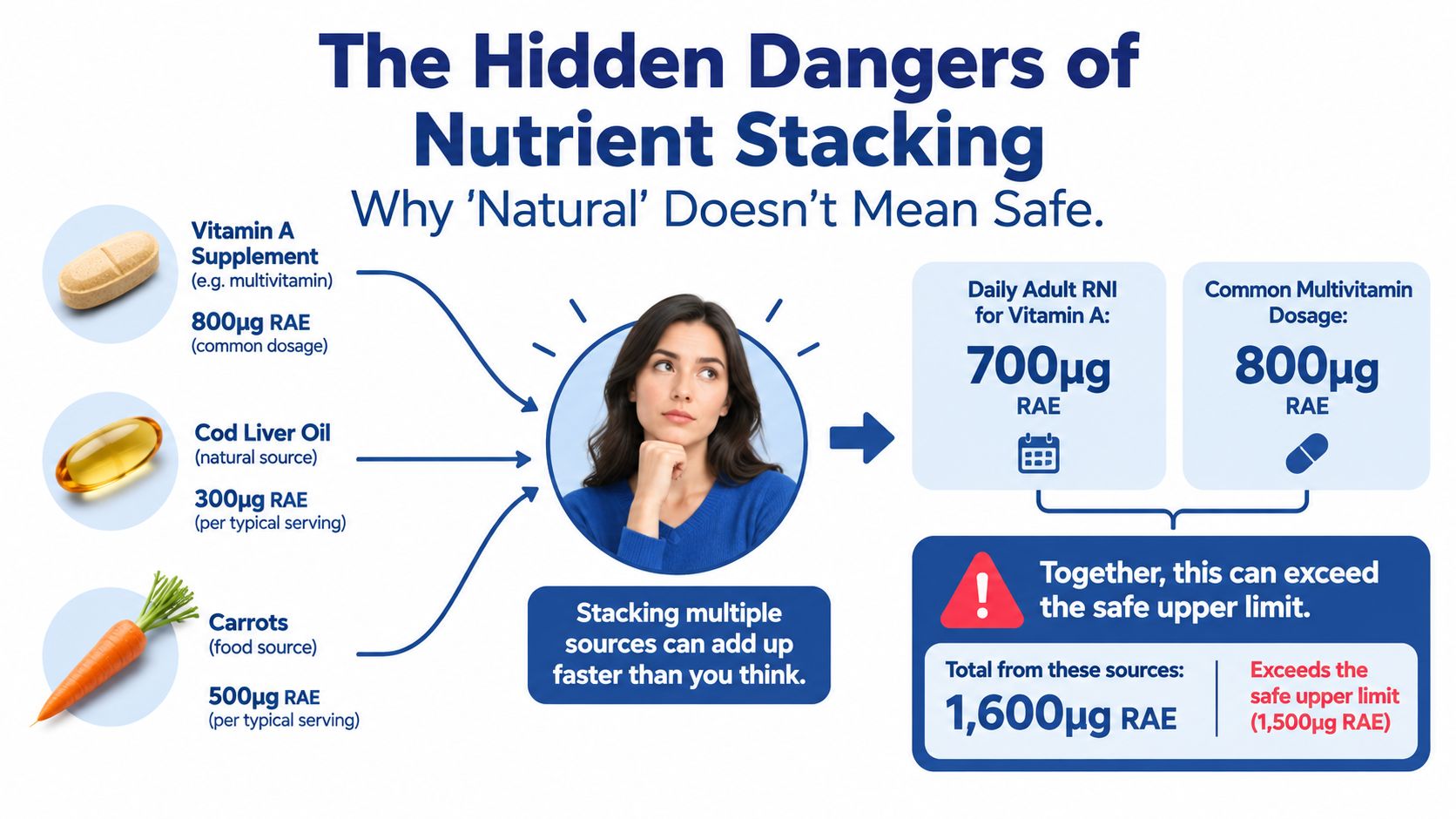
For example, someone might take a multivitamin containing vitamin D, add a separate vitamin D spray during winter, use cod-liver oil, and drink a fortified shake. Each choice may seem sensible in isolation. Together, they can create nutrient stacking, the unplanned accumulation of the same vitamin or mineral from several sources.
The same problem can occur with vitamin A, iron, zinc, magnesium, vitamin E, or B vitamins. A product marketed for energy may contain a high-strength B-complex, while a sports product adds more minerals and a beauty supplement contributes further vitamins. The UK Food Standards Agency's consumer guidance on food supplements warns that over-the-counter products don't have the same pre-market evidence and manufacturing controls as medicines, and that undeclared ingredients may occur.
Why the label needs a wider reading
“Take one tablet daily” tells you how to use that particular product. It doesn't tell you whether another capsule, fortified food, or medicine contains the same ingredients. You need to read the amount per serving, the number of tablets in that serving, and the chemical form of the nutrient.
This matters especially for long-duration or high-strength products. A person may experience no immediate warning, yet gradually receive more of a nutrient than intended. The UK Specialist Pharmacy Service guidance on supplement quality and vitamin D toxicity notes that supplements can contain substantially more or less active ingredient than their labels state, and that excessive vitamin D has caused toxicity.
Practical rule: Treat your supplement cabinet as one regimen. Add the amount of each repeated nutrient across every product before deciding whether another supplement belongs in your routine.
A standard multivitamin taken alone and exactly as directed is therefore different from a stack of overlapping products. The first may cause no problem at all. The second can expose you to excessive amounts of particular nutrients, especially when you assume that “natural”, “gentle”, or “over the counter” means risk-free.
Managing Common Gastrointestinal Reactions
The most familiar multivitamin side effects are often digestive. Nausea, stomach discomfort, constipation, and diarrhoea can appear soon after taking a supplement, particularly when the formula contains concentrated minerals or when you swallow it on an empty stomach.
Iron and zinc are common suspects, although the whole formulation matters. A large tablet, mineral salts, sweeteners, or other excipients may irritate a sensitive stomach. One person may tolerate a product easily, while another notices queasiness within a short time.
Start with timing and food
Take the supplement with a proper meal unless the label or a clinician tells you otherwise. Food can dilute the concentrated ingredients and slow their arrival in the stomach, which may reduce nausea. A light snack may not be enough for someone who reacts to mineral-heavy formulas, so try taking it with the meal you tolerate best.
Constipation deserves a slightly different response. Check whether the product contains iron, then review your fluid intake and general fibre pattern. Adequate hydration can support normal stool passage, but persistent constipation shouldn't be dismissed as something you must accept.
For practical background on improving bowel regularity and digestive comfort, review this guide to supporting a healthy digestive system.
Change one variable at a time
If symptoms continue, don't add several new products to counter them. Instead, speak with a pharmacist about whether you need the same formulation, whether a lower-strength product is appropriate, or whether a different mineral form may be better tolerated. Some people find chelated minerals or gummies gentler, but gummies can still contain active nutrients and shouldn't be treated as sweets.
Stop the supplement and seek advice if symptoms are severe, persistent, or accompanied by swelling, breathing difficulty, repeated vomiting, or significant abdominal pain. If you're considering intravenous vitamins rather than oral products, a separate safety discussion is essential. This overview of IV infusion safety and potential side effects can help you prepare questions for a qualified clinician, but it doesn't replace individual medical assessment.
Recognising Fat-Soluble Vitamin Toxicity
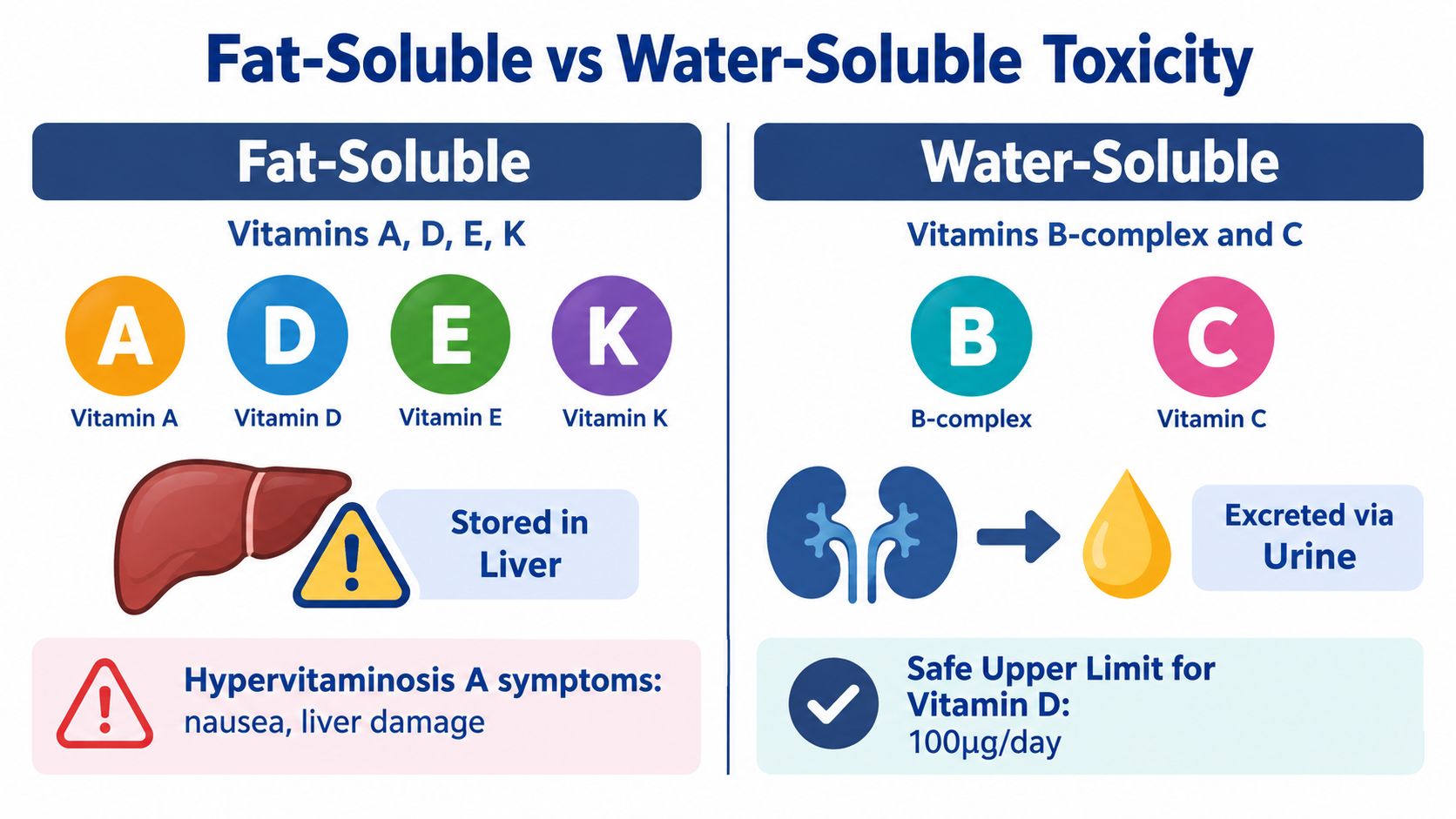
Vitamins A, D, E, and K are fat-soluble, which means the body can store them in tissues rather than rapidly removing all excess in urine. That storage is useful for normal physiology, but it also means repeated high intake deserves more caution than a single accidental dose.
Vitamin A presents a particular concern when a multivitamin containing preformed vitamin A, or retinol, is combined with cod-liver oil or another vitamin A product. Excess retinol can cause nausea, headaches, dry or thickened skin, hair loss, liver and bone damage, and increased pressure inside the skull. Chronic exposure can weaken bones.
Vitamin D requires dose awareness
Vitamin D toxicity follows a different pathway. Excessive intake can raise blood calcium, a condition known as hypercalcaemia. High calcium levels may weaken bones and damage the kidneys and heart, so symptoms such as persistent thirst, frequent urination, nausea, weakness, confusion, or ongoing vomiting need medical attention, particularly if you're taking high-dose vitamin D.
UK safety guidance commonly identifies 100 micrograms, or 4,000 IU, daily, as a safe upper amount for most adults, but this is not a target dose. It doesn't mean that everyone should approach that amount, and it doesn't override advice for kidney, liver, bone, or calcium disorders. This UK guide to vitamin D3 supplementation provides product-related information, but your total intake still needs to include every source.
The distinction between food sources and supplements also matters. Normal dietary intake doesn't automatically create the same concern as concentrated retinol or high-dose vitamin D, but cod-liver oil and fortified products can add to the total.
Pregnancy changes the decision
Excess preformed vitamin A can harm fetal development. UK government guidance advises people who are pregnant or trying to conceive to avoid vitamin-A-containing supplements, including fish-liver-oil products, unless a doctor has specifically advised them.
The safest approach is to check the label for retinol, not just “vitamin A”, and ask a pharmacist or GP before combining products. Persistent headaches, visual changes, unexplained bone or joint discomfort, severe nausea, or symptoms of high calcium aren't normal reasons to switch brands casually. They warrant a review of your intake and, where appropriate, clinical testing.
Hidden Risks of High-Dose B Vitamins and Folic Acid
“Water-soluble” doesn't mean “risk-free at any dose”. The body handles many water-soluble vitamins differently from fat-soluble vitamins, but certain B vitamins can still cause clinically important problems when high-strength products are taken for long periods.
Vitamin B6 is the clearest example. UK NHS guidance reports that intakes of 200 mg per day or more can cause peripheral neuropathy, with symptoms such as reduced sensation or numbness in the arms and legs. The NHS guidance on vitamins and minerals describes the dose-related nerve risk, which may be overlooked when people combine a multivitamin with a B-complex, magnesium product, sports formula, or energy supplement.
Read B6 in every relevant product
Neuropathy may feel like tingling, burning, numbness, unusual sensitivity, or weakness. It can affect balance and everyday movement, and it isn't a normal sign that a supplement is “working”. The difficulty is that consumers often notice the symptom in one product's context while the exposure comes from several products.
Check whether the label lists vitamin B6 per tablet or per serving. Then record the amount from every supplement. Don't assume that a product labelled “energy”, “stress support”, or “nerve support” is nutritionally separate from your multivitamin.
Folic acid creates a different problem. Doses above 1 mg per day can mask the blood-related signs of vitamin B12 deficiency while neurological damage continues. Someone may therefore feel reassured by an apparently improved blood picture while the underlying B12-related nerve injury remains unrecognised.
Symptoms deserve a proper investigation
Persistent tingling, numbness, balance changes, unusual weakness, anaemia, or unexplained fatigue should prompt a GP or pharmacist review. Don't self-treat indefinitely with another B-complex before checking the original product and considering whether B12 status needs assessment.
Laboratory testing may be useful when symptoms, diet, medicines, or medical history suggest a deficiency or excess. Information about micronutrient and B-vitamin testing can help you understand what panels may examine, but a clinician should decide which tests are appropriate and interpret the results alongside your symptoms.
The practical lesson is simple: check milligrams and micrograms, not just the product category. A low-dose daily multivitamin is not equivalent to a high-strength B-complex taken on top.
Vulnerable Populations and Medication Interactions
A product that suits a healthy adult may be inappropriate for someone who is pregnant, has kidney or liver disease, or takes regular medicines. Supplement safety depends on the person as well as the label.
Pregnancy is the clearest example. Excess preformed vitamin A can cause fetal malformations, so people who are pregnant or trying to conceive should avoid retinol-containing supplements and fish-liver-oil products unless their doctor directs otherwise. This is different from making a blanket judgement about every multivitamin, because formulations vary and pregnancy-specific advice may identify a suitable product.
Kidney disease changes the way the body handles fluid, minerals, and some medicines. Excess vitamin D may worsen calcium-related problems, while mineral ingredients may be unsuitable depending on kidney function and prescribed treatment. Liver conditions also deserve caution because the liver processes and stores several nutrients, including preformed vitamin A.
Medicines make the decision more personal
Vitamin K can affect anticoagulant treatment such as warfarin. The issue isn't necessarily that every vitamin K-containing product is forbidden, but that a sudden change in vitamin K intake can complicate anticoagulation management. Speak with the anticoagulation team before starting, stopping, or switching a multivitamin.
Other ingredients may affect absorption, metabolism, blood results, or the tolerability of prescription medicines. Iron, calcium, magnesium, and zinc can be particularly relevant when timing matters for a medicine. A pharmacist can check the full list rather than assessing one supplement in isolation.
| Situation | Why a routine multivitamin may need review |
|---|---|
| Pregnancy or trying to conceive | Retinol may pose fetal risk |
| Kidney or calcium disorders | Vitamin D and mineral exposure may require individual control |
| Liver disease | Stored or processed nutrients may need closer supervision |
| Warfarin treatment | Changes in vitamin K intake may affect anticoagulation management |
| Multiple prescriptions | Minerals and vitamins may alter timing, absorption, or monitoring |
Older adults, children, and people with diagnosed deficiencies also need specific advice. A label designed for a general adult audience can't account for every medical condition, diet, or treatment plan.
Auditing Your Supplement Stack and Seeking Medical Advice
A safer routine starts with an audit, not another purchase. Gather every supplement, including occasional sports products, beauty gummies, cod-liver oil, vitamin sprays, fortified drinks, and medicines that contain nutrients.
Use a simple three-stage check
- Gather the labels. Write down the product name, serving size, frequency, and amount of every repeated nutrient. Check whether “per serving” means one tablet, two capsules, or several gummies.
- Add overlapping nutrients. Create separate totals for vitamin A, vitamin D, vitamin E, B6, folic acid, iron, zinc, magnesium, and any other ingredient repeated across products. Include fortified foods where they make a meaningful contribution, then compare the result with UK guidance or ask a pharmacist to review it.
- Match the stack to your circumstances. Note pregnancy, kidney or liver disease, anticoagulants, other prescriptions, and symptoms. A supplement safety myths and facts guide can help challenge common assumptions, but it can't replace personalised advice.
Stop and seek prompt medical advice for unexplained numbness or tingling, balance problems, severe or persistent vomiting, significant abdominal pain, allergic swelling or breathing difficulty, confusion, visual changes, or symptoms that began soon after starting a supplement.
Don't just switch brands if symptoms continue. Stop the suspected non-essential product, keep the packaging, and contact a GP, pharmacist, or urgent care service according to the severity of the symptoms. If you take several medicines, a structured medication safety review can help identify interactions, duplication, and timing problems.
A blood test may be useful, but it shouldn't become a substitute for reviewing labels. Tests answer specific clinical questions, and results need interpretation in the context of your diet, medicines, symptoms, and supplement history. Tell the clinician and laboratory about every product you use.
Vitamin Planet offers multivitamins, single vitamins, minerals, sports nutrition, and targeted formulas in one UK online catalogue, which can make it easier to compare labels before building a regimen. Visit Vitamin Planet to review product ingredients carefully, then ask a pharmacist or GP to check any overlapping nutrients that concern you.