

Magnesium Glycinate vs Malate: A Practical UK Guide
The popular advice is tidy: magnesium glycinate for sleep, magnesium malate for energy. It's also more confident than the evidence allows. UK guidance treats magnesium as one nutrient, not as two clinically distinct products with a guaranteed bedtime or daytime effect.
The useful comparison is less glamorous and far more practical. Check the elemental magnesium per serving, assess how your stomach responds, calculate what you're already getting from other supplements, and then choose the form you're most likely to take consistently. The compound name matters, but it shouldn't distract you from the label.
Table of Contents
- Why Glycinate vs Malate Is the Wrong Question
- Elemental Magnesium and How to Read a UK Label
- Side by Side Glycinate and Malate at a Glance
- Matching Each Form to Sleep Stress Energy and Recovery
- Dosing Tolerance and Stacking With Other Supplements
- Safety Monitoring and When to Involve a GP
- Which Form Should You Choose and FAQs
Why Glycinate vs Malate Is the Wrong Question
The popular split, magnesium glycinate for sleep and magnesium malate for energy, gives shoppers a neat answer but a weak basis for choosing. Glycinate is magnesium bound to glycine; malate is magnesium bound to malic acid. That chemistry explains the labels and marketing, not a guaranteed clinical effect.
UK guidance treats magnesium as one nutrient. For adults aged 19–64, the NHS lists a daily reference intake of 300 mg for men and 270 mg for women, while focusing on total intake, supplement amounts and possible adverse effects rather than ranking one compound above the other (NHS guidance on vitamins and minerals).
Published head-to-head trials comparing glycinate with malate are scarce, so claims that one is superior for sleep, fatigue, muscle recovery or cognition should be treated as unproven. Glycine has a plausible connection with relaxation, and malic acid participates in energy pathways, but plausibility is not the same as evidence that the finished supplement delivers a different outcome.
What the NHS approach tells you
Assess both products first as sources of magnesium. Their carrier molecules may influence tolerability, the way a product feels and the audience a manufacturer targets. They do not turn either form into a separate treatment.
An evening glycinate trial or a morning malate trial can be sensible if it fits your routine. Treat those choices as practical experiments, not proof of a fixed sleep-versus-energy divide.
The practical rule: choose the product that provides a useful elemental dose, suits your digestion and costs an amount you can justify. Do not pay more for a claim the evidence has not established.
Ask: which product gives me an appropriate elemental-magnesium dose, at a sensible cost, without upsetting my digestion? Your goal should guide the trial, not decide the answer before you read the label.
Keep food in the calculation. A varied diet remains the foundation, and a supplement should not become an automatic response to unexplained tiredness, poor sleep or recurring cramps.
Elemental Magnesium and How to Read a UK Label
The headline weight of a magnesium compound is not the figure that matters most. A label may show a substantial amount of magnesium glycinate or magnesium malate, but that total includes glycine or malic acid. Your body receives the declared elemental magnesium, not the full compound weight.
Find wording such as “elemental magnesium per serving” or “providing magnesium”. Compare that figure across products. The compound name helps identify the form, while the elemental amount tells you how much magnesium the serving supplies.
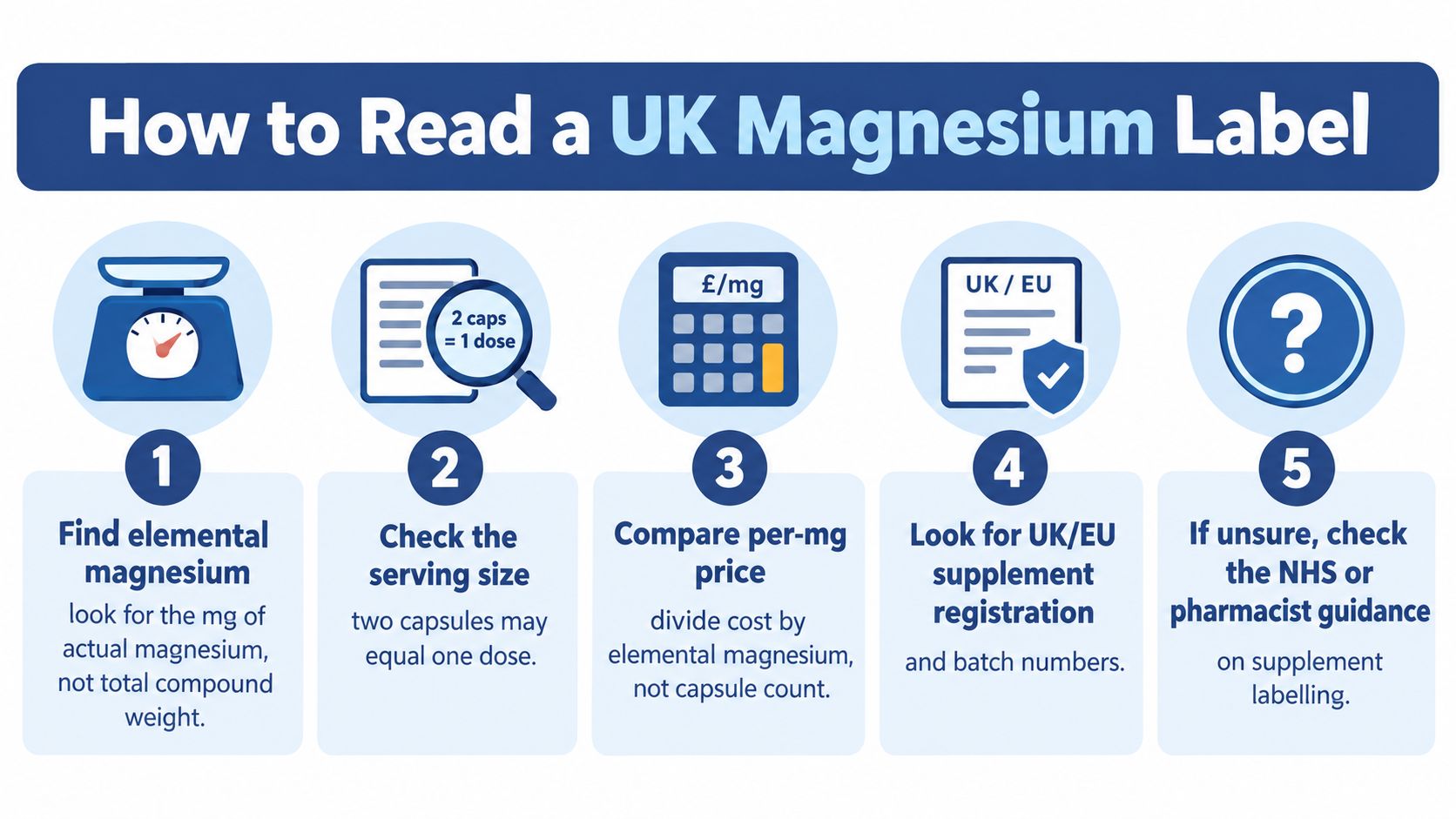
Five checks before you buy
- Find the elemental figure. Ignore the larger compound weight until you have identified the actual magnesium supplied per serving.
- Confirm the serving size. One serving may contain two capsules rather than one. Compare the complete serving, not isolated capsules.
- Assess value using elemental magnesium. Divide the product cost by the amount of elemental magnesium supplied. Capsule count alone can make a low-dose product look inexpensive.
- Read the full product information. Check the ingredient panel, serving directions and batch details. The front label rarely gives the whole picture.
- Get help with unclear labelling. A pharmacist can explain unfamiliar wording or calculations, particularly where a product contains several minerals.
UK guidance places the commonly used upper threshold for magnesium from supplements at 400 mg or less per day, with higher short-term amounts more likely to cause diarrhoea. This figure concerns elemental magnesium from supplements, not the total weight of a glycinate or malate compound. Check current NHS advice before making a high-dose choice, especially if you take medication or have a health condition.
The distinction is practical. A product marketed with a large amount of magnesium glycinate may deliver a comparatively modest elemental dose. Two products with similar compound weights can therefore provide different amounts of magnesium.
Cost comparisons should use the elemental figure as well. A larger tub is not automatically better value if each serving contributes little elemental magnesium. Check how many complete servings the pack provides, then compare the magnesium supplied per serving and the price together.
Section 5 explains how to total elemental magnesium across your full supplement routine.
If you are also reviewing products marketed for mental performance, BrainQuick Brain Support Supplement is listed as a vegetarian vitamin and mineral blend supporting focus and brain function. It does not replace checking the magnesium line on its own label.
Side by Side Glycinate and Malate at a Glance
The sleep-versus-energy argument oversimplifies the choice. Elemental magnesium per serving, the compound used, and your digestive response matter more than the front-of-pack claim. Head-to-head clinical evidence for glycinate and malate remains limited, and the NHS treats magnesium as one nutrient rather than separate sleep and energy products.
| Attribute | Magnesium Glycinate | Magnesium Malate |
|---|---|---|
| Binding molecule | Glycine | Malic acid |
| Approximate elemental share by compound weight | Roughly 14% | Around 10 to 15%, depending on the malate salt |
| Common marketing position | Sleep, calm and relaxation | Energy, fatigue and exercise |
| Evidence for a superior use | Not established in direct comparative trials | Direct comparative trials have not established a superior use |
| Practical first trial | Often suits an evening routine if tolerated | Often suits a morning or earlier routine if preferred |
| Main comparison point | Glycine may influence product preference, but does not prove better sleep | Malic acid may influence product preference, but does not prove greater energy |
The binding molecule is the compositional difference. Glycinate supplies glycine alongside magnesium, while malate supplies malic acid. That distinction can guide your preference, but it does not establish that glycinate improves sleep or that malate increases energy.
Use the table as a screening tool, not a substitute for the full label. A glycinate product may contain less elemental magnesium than its compound weight suggests, while a malate product may provide a different amount per serving. The listed elemental figure decides the comparison.
The usual marketing position can still help you choose where to start. Glycinate is the more intuitive trial for an evening routine, while malate may fit a morning or training routine. Choose the product with clear labelling and a sensible serving, then judge it by tolerance and the magnesium it provides.
Tolerability is individual
“Gentle” describes positioning, not a guaranteed result. Either form can cause loose stools in some people, particularly when the elemental dose is high. Take the labelled serving in a routine you can maintain, and stop treating a different compound as the answer if your digestion objects.
For a wider comparison of forms, read this NZ Supps guide to magnesium types. Keep the useful distinction in view, then compare products by elemental magnesium rather than the compound's larger headline weight.
Vitamin Planet's guide to what magnesium glycinate is used for provides background on glycinate. Use it for context, while the actual label and your own tolerance should decide your purchase.
Matching Each Form to Sleep Stress Energy and Recovery
The cleanest way to assess these products is to separate the popular claim from the reasonable decision.
For sleep, glycinate is commonly presented as the obvious choice because it contains glycine. That makes it a sensible form to trial if you want an evening product and tolerate it well. It does not prove that glycinate is clinically better for sleep than malate, because head-to-head evidence is limited.
Stress follows the same pattern. A glycinate product may fit a calming routine, particularly if you prefer taking it with food in the evening. But persistent anxiety, low mood or disrupted sleep needs proper assessment rather than repeated changes between magnesium products.
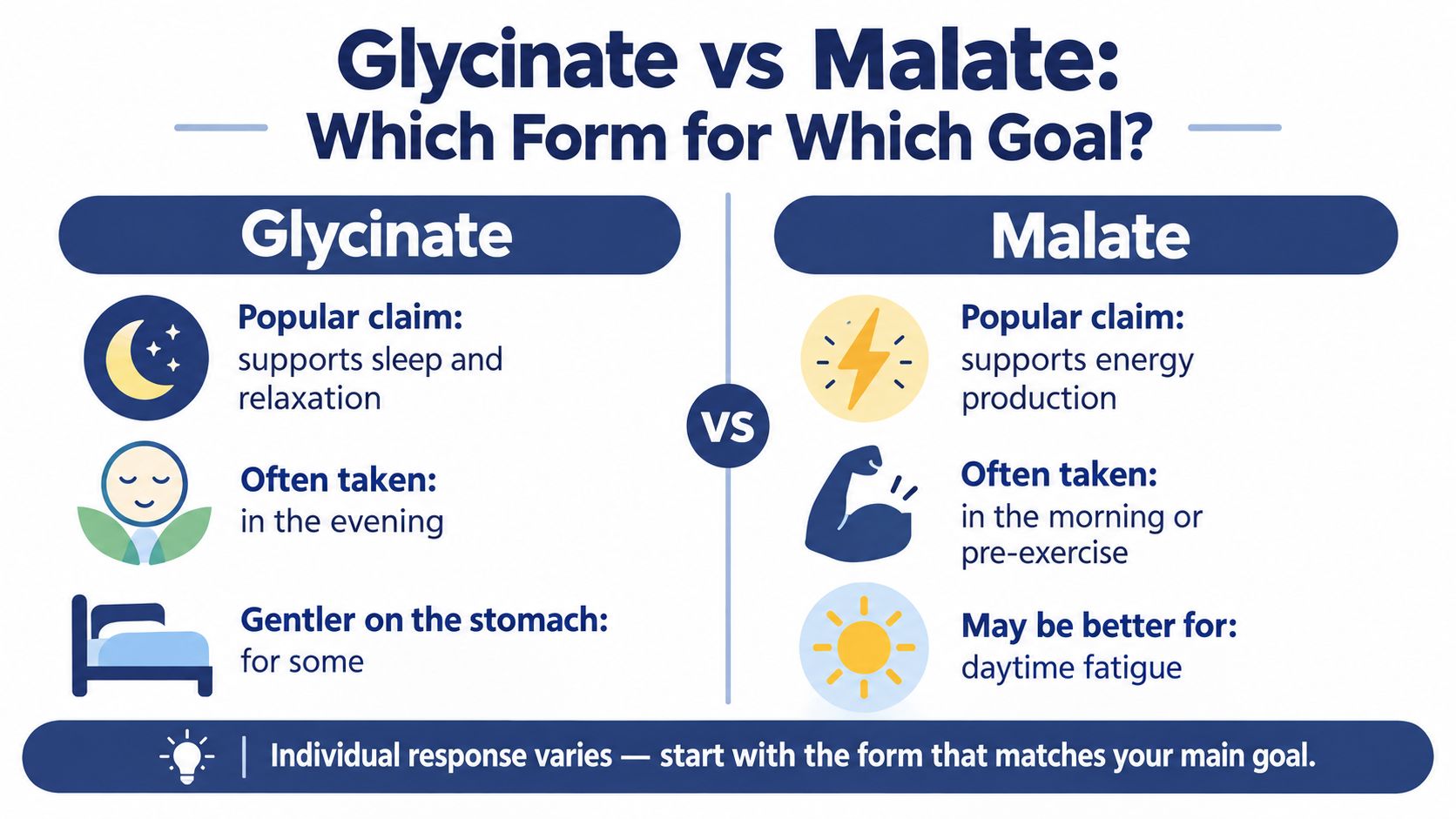
Match the routine, not the slogan
| Goal | Popular claim | More defensible starting point |
|---|---|---|
| Sleep | Glycinate is calming | Trial glycinate in an evening routine if the label provides a sensible elemental dose and it suits your digestion |
| Stress | Glycinate supports relaxation | Judge the whole routine and seek help for persistent symptoms |
| Daytime energy | Malate is energising | Trial malate earlier in the day, but don't treat it as a replacement for investigating fatigue |
| Exercise recovery | Malate supports muscles | Prioritise total magnesium intake, diet, training load and tolerability |
| Cognition | A particular form boosts focus | Check the full formula and avoid attributing a cognitive effect to the magnesium form alone |
Malate has a plausible daytime appeal because malic acid is associated with energy metabolism. That makes morning or pre-exercise use a reasonable preference. It isn't evidence that malate reliably treats fatigue, and it doesn't mean glycinate cannot be taken during the day.
The same caution applies to muscles. Magnesium contributes to normal muscle function, but a consumer comparison can't establish that malate delivers better recovery than glycinate. If cramps, weakness or post-exercise pain persist, changing the carrier molecule is a poor substitute for looking at training, hydration, diet, medication and underlying health.
Consistency beats form-flipping
A product that causes diarrhoea won't support a reliable routine. A product with an unclear elemental dose makes it impossible to judge what you're taking. A product that fits your schedule and is tolerated well is usually the more sensible choice, regardless of whether the front label says glycinate or malate.
The embedded explanation below can help if you want another overview of the two formulations.
Persistent insomnia, marked fatigue, ongoing cramps or cognitive changes deserve GP input. Supplement switching can be appropriate for a label or tolerance problem, but it shouldn't delay assessment of symptoms that continue.
Dosing Tolerance and Stacking With Other Supplements
The label matters more than the form. Begin with the stated serving, then judge it by the elemental magnesium it supplies and by your digestion. Starting below the full serving is sensible if magnesium has previously caused loose stools or stomach discomfort. Increase only if the lower amount is tolerated and still suits your purpose.
Food can make magnesium easier to tolerate. Splitting a serving may also help, although it does not change the total elemental amount taken that day. Check every product that contributes magnesium, including multivitamins, mineral blends and recovery formulas.
For example, a multivitamin providing 60 mg plus a malate capsule providing 100 mg elemental magnesium gives 160 mg from supplements in total. That remains below the UK supplement threshold discussed earlier. The calculation must use elemental magnesium, not the heavier glycinate or malate compound listed in the ingredient name.
The NHS guidance states that 400 mg or less per day from magnesium supplements is unlikely to cause harm, while higher short-term amounts can cause diarrhoea (NHS guidance on magnesium intake and adverse effects). Treat that figure as a tolerance guide, not a target. A lower amount that causes no symptoms is more useful than a higher serving that disrupts your routine.

Timing should serve tolerance
Glycinate may fit an evening routine, while malate may suit earlier use, but labels do not turn those preferences into medical rules. Move malate earlier if taking it late appears to interfere with sleep. If glycinate makes no noticeable difference, increasing the dose purely because of calming marketing is poor practice.
A formula that combines magnesium with other minerals or performance ingredients may need separate timing. Read the complete ingredient list and follow medicine instructions rather than treating magnesium as a standalone product.
Use this guide to learn how to take magnesium supplements when setting up a routine. Reduce or stop use if persistent diarrhoea, cramping, nausea or other unusual symptoms develop. Speak with a GP or pharmacist if they continue, or before supplementing if you have kidney problems, take medicines that may interact, suspect deficiency or are pregnant.
Safety Monitoring and When to Involve a GP
Self-care supplementation and medically supervised magnesium treatment aren't the same thing. A person choosing a modest, correctly labelled product has a different situation from someone being treated for confirmed deficiency, receiving repeated high doses or being monitored because of kidney or electrolyte concerns.
A UK NHS oral-magnesium protocol gives a serum magnesium reference range of 0.7–1.0 mmol/L and recommends checking levels weekly initially. If treatment continues beyond two weeks, monitoring every one to two weeks may be appropriate. The protocol advises stopping supplementation if serum magnesium exceeds 1.0 mmol/L and rechecking after 5–7 days (UK NHS oral-magnesium supplementation protocol).
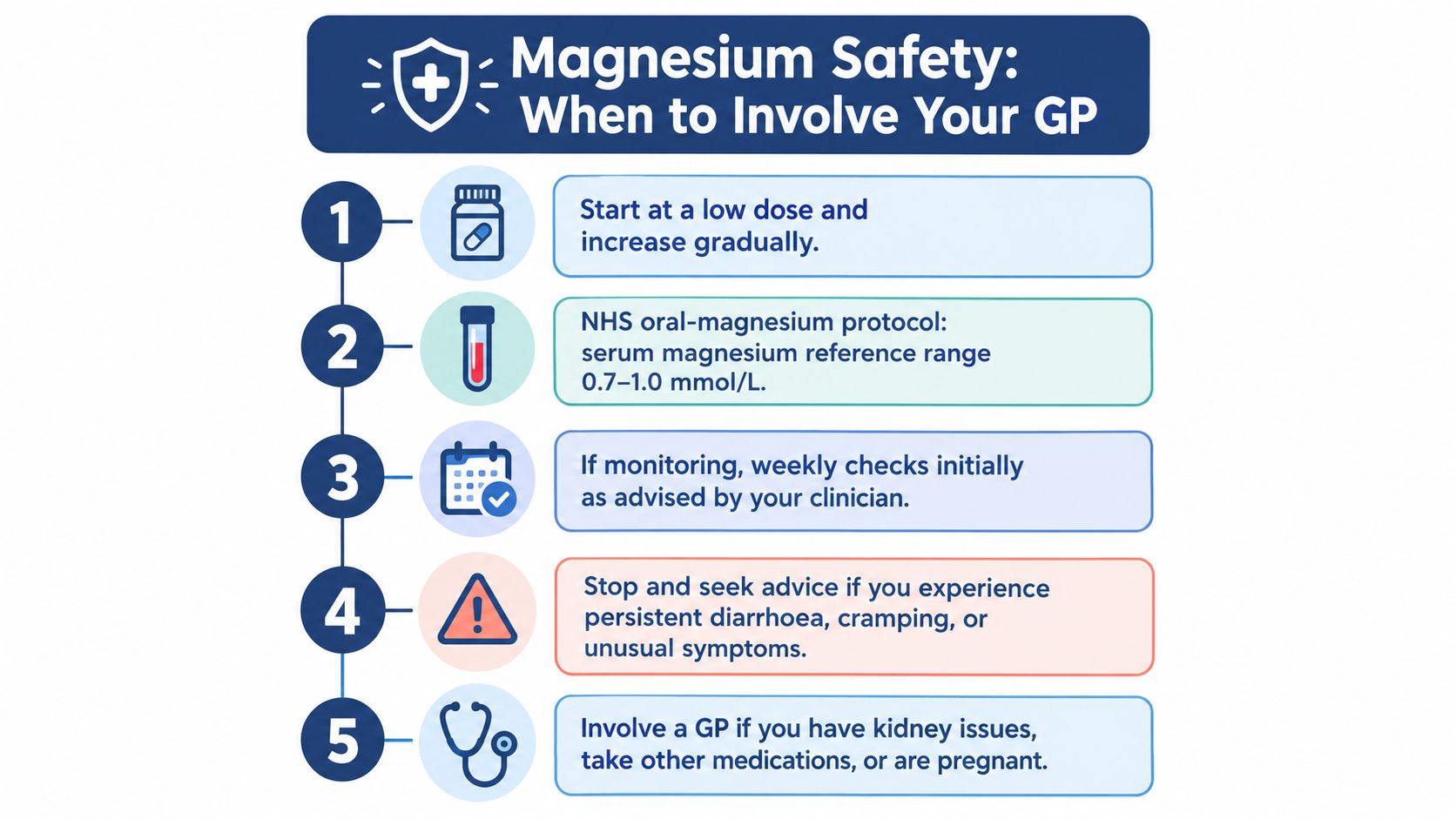
Kidney function changes the risk
Severe renal impairment, commonly defined as an estimated glomerular filtration rate below 30 mL/min/1.73 m², raises the risk of magnesium accumulation and severe hypermagnesaemia. Oral magnesium shouldn't be used routinely in that setting without specialist oversight, according to the NHS protocol linked above.
That safeguard matters more than the choice between glycinate and malate. Both deliver magnesium, so neither form removes the need to consider kidney function, duration, dose or monitoring.
Large ingestions can cause nausea, vomiting, diarrhoea and fluid or electrolyte loss. Correct use of magnesium-containing supplements and normal dietary exposure wouldn't generally be expected to cause adverse health effects, but “natural” doesn't mean unlimited.
If you're researching supplements alongside treatment for persistent back discomfort, a general safe back pain medication guide may provide broader medication context. It doesn't replace advice about your own medicines or kidney function.
Pregnancy, kidney disease, ongoing gastrointestinal symptoms, suspected deficiency and regular medication use all justify professional advice. Vitamin Planet's information on magnesium supplements in pregnancy can provide background, but your GP or midwife should guide individual decisions.
Which Form Should You Choose and FAQs
| Reader profile | Better starting point | Why |
|---|---|---|
| Poor sleeper | Glycinate | Fits an evening trial, but superiority for sleep isn't proven |
| Regular gym-goer | Malate | Suits a daytime or training routine, with no proven recovery advantage |
| Busy professional with low energy | Either, after checking the label | Investigate persistent fatigue rather than relying on a carrier molecule |
| Older adult focused on bone and muscle support | Either with professional advice if needed | Prioritise elemental dose, diet, medicines and kidney function |
| Sensitive stomach | The better-tolerated option | Individual response matters more than the marketing category |
Is glycinate better for sleep? It may be a reasonable evening choice, but evidence proving it is better than malate is limited.
Does malate boost energy? That is a popular positioning, not an established guarantee. Persistent fatigue needs assessment.
Are either forms safe long term? Safety depends on elemental dose, kidney function, other products, medicines and monitoring needs. Don't treat long-term use as automatically harmless.
Is cheaper magnesium oxide a substitute? It can provide magnesium, but compare the elemental amount and your gastrointestinal response. A cheaper compound isn't automatically the best tolerated option.
Your decision rule is simple: choose the product with a clearly declared elemental-magnesium dose that your body tolerates and your routine can sustain.
Vitamin Planet offers magnesium and broader vitamin, mineral, sports nutrition and health-product ranges, so you can compare labels across a wider supplement routine rather than buying in isolation. Visit Vitamin Planet to review the available products, check elemental magnesium per serving and choose a formula that fits your needs.