

Best Time to Take Magnesium for Sleep: A UK Guide
The UK evidence doesn't prove a single best time to take magnesium for sleep. Many choose it with the evening meal or roughly 1 hour before bed for routine and tolerance, while keeping it 2–4 hours away from medicines that interact.
You're probably reading this late at night, hoping for a simple answer before putting your phone down. Perhaps you've seen advice saying magnesium should always be taken 30–60 minutes before bed, but you're unsure whether that applies if you take iron, an antibiotic, or another prescription medicine.
The practical answer is less dramatic and more useful. Timing is a decision based first on medicines, then on food and stomach comfort, and finally on your bedtime routine. Magnesium may support relaxation for some people, but it isn't a sleeping pill, and taking it at night hasn't been scientifically proven to work better than taking it in the morning.
Table of Contents
- Why Timing Matters for Magnesium and Sleep
- How Magnesium Is Thought to Support Sleep
- Comparing Magnesium Forms for Evening Use
- Working Out the Right Dose for You
- Medicines, Meals, and the Evening Decision Tree
- Common Timing Mistakes and Misconceptions
- Your Simple Evening Magnesium Routine
Why Timing Matters for Magnesium and Sleep
The phrase “best time to take magnesium for sleep” suggests there's one correct point on the clock. UK evidence doesn't support that conclusion. A UK sleep-medicine review notes that some sources recommend magnesium in the hours before bed, while others say it can be taken at any time. Because controlled evidence is insufficient, the review concludes that no particular timing can currently be recommended (Sleepstation's review of magnesium and sleep).
That doesn't mean timing is irrelevant. It means your choice should solve practical problems rather than promise a clinically proven sleep effect. Taking magnesium with an evening meal may be easier on your stomach, while taking it around an hour before bed may fit a wind-down routine. If you take medicines that interact with magnesium, spacing them safely matters more than following a generic bedtime instruction.
Practical rule: Choose the time you can repeat safely and comfortably, not the time that sounds most impressive on a supplement label.
A useful decision tree looks like this:
- Check medicines and other supplements first.
- Use the evening meal or a snack if food improves your tolerance.
- Move it nearer bedtime only when the required spacing allows it.
You can find more practical background in this guide on how to take magnesium supplements, but timing shouldn't be treated as a substitute for addressing caffeine, irregular sleep, pain, stress, or an unsuitable sleep environment. Magnesium is better viewed as a possible support within a wider routine.
How Magnesium Is Thought to Support Sleep
If your body feels tense at bedtime or your thoughts remain active, magnesium may offer biological support, but it is not a sleeping tablet. It works more like a soft dimmer switch than an on-off sedative, potentially helping reduce excessive nervous-system activity without forcing sleep.
One proposed pathway involves GABA, a chemical messenger that helps quiet nerve activity. Magnesium also supports normal muscle function, which may explain why it interests people whose cramps or tension disturb rest. These roles provide a reason to study magnesium for sleep, not proof that it will relax every person's muscles or silence a busy mind.
Magnesium also contributes to pathways associated with melatonin, the hormone linked with the sleep-wake rhythm. A supplement does not act like melatonin or reset the body clock immediately. Its possible role is supportive, alongside factors such as a regular routine, suitable light exposure, and manageable caffeine intake.
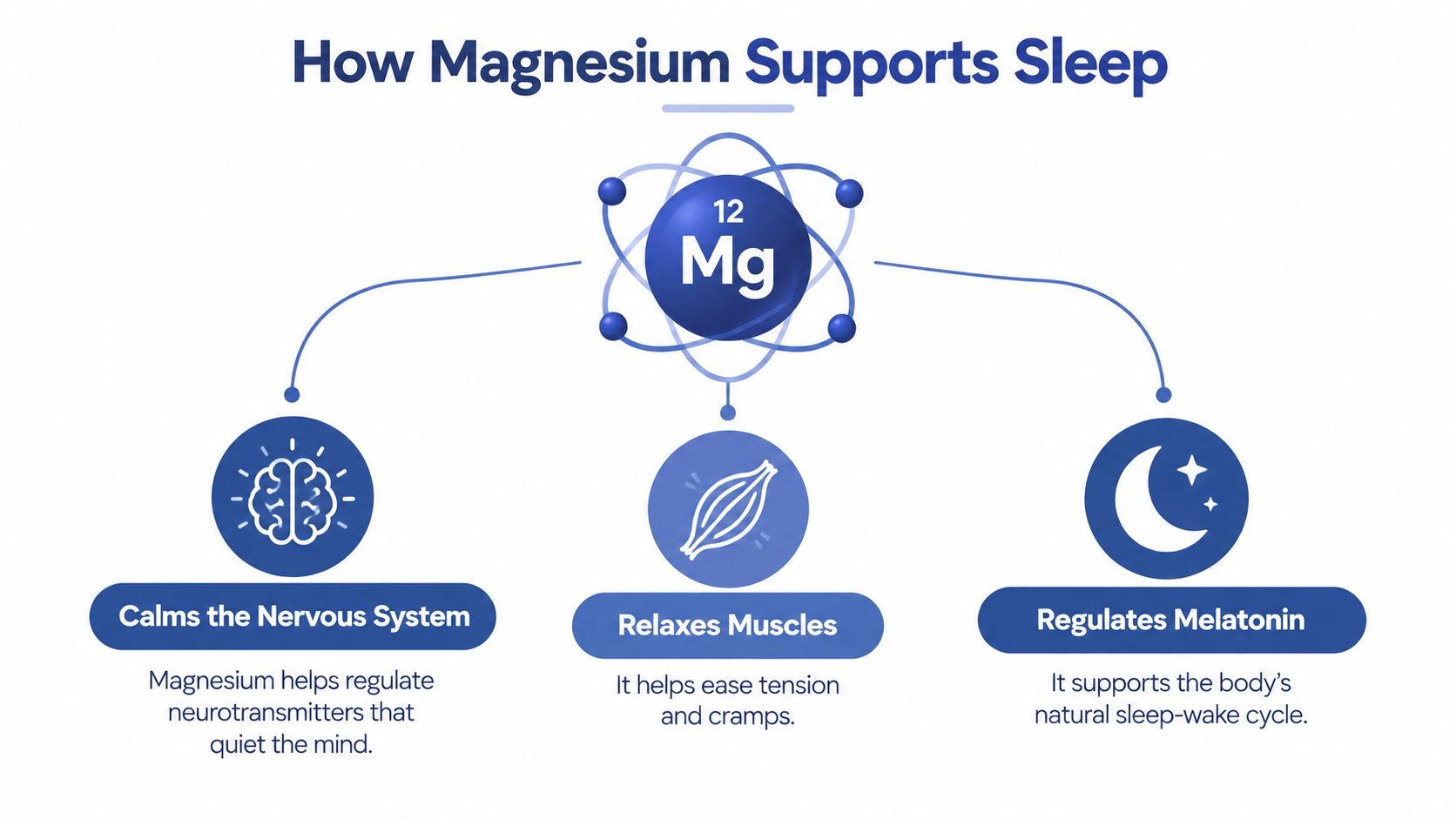
Mechanism isn't the same as proof of benefit. A nutrient can take part in a biological process without producing a noticeable sleep improvement for everyone. One small trial involved adults aged 60–75 taking 500 mg of magnesium daily for 8 weeks. It reported statistically significant improvements in sleep-onset time, sleep efficiency, and insomnia-severity scores. A pooled review of three studies involving 151 older adults, however, found no significant overall improvement in sleep and could not establish whether supplementation was effective or safe (Sleepstation's evidence summary).
The sensible expectation is modest. Magnesium might make a routine feel calmer or make physical discomfort less distracting, but it should not be expected to overcome night-shift work, untreated sleep apnoea, persistent anxiety, or substantial late-day caffeine use. Timing can help you take it comfortably and consistently. It cannot turn uncertain evidence into a guaranteed sleep effect.
Comparing Magnesium Forms for Evening Use
The form on the label can affect how a supplement fits your evening. The key questions are how much elemental magnesium it provides, how your stomach responds, and whether you can take it consistently. Absorption claims are often presented too confidently, so treat broad statements such as “best absorbed” as a prompt to check the actual product information rather than a guarantee of better sleep.
| Form | Typical absorption | Best fit for evening use | Notes for UK shoppers |
|---|---|---|---|
| Glycinate | Often chosen when gentle digestion is a priority | A bedtime routine or evening snack | Check the label for elemental magnesium and watch for individual tolerance |
| Citrate | Commonly used and generally practical with food | Evening meal, particularly when a powder or liquid routine suits you | May loosen stools in some people |
| Oxide | Common and often less well absorbed than several other forms | A budget-focused option if tolerated | A larger amount on the label doesn't automatically mean more usable magnesium |
| Threonate | Marketed for brain-related benefits, but sleep evidence doesn't establish a universal advantage | An evening option only if it fits your budget and routine | Avoid assuming a higher price or specialised marketing proves better sleep |
Glycinate is frequently selected for an evening routine because many people find it relatively gentle. Citrate can be a reasonable practical choice, especially when taken with food, but digestive effects may influence whether bedtime is convenient. Oxide is widely available, yet it may be less suitable for someone who experiences loose stools or who wants a smaller, gentler evening routine.
Magnesium threonate is often positioned towards cognitive or brain-health goals. That marketing shouldn't be confused with proof that it's the best form for sleep. No single form has been established as the universally superior choice for bedtime use.
For a broader explanation of how to find the right magnesium form, compare the elemental magnesium amount rather than judging a product by the name of the compound alone. A capsule may contain a large amount of a magnesium compound but provide a much smaller amount of elemental magnesium.
If you're comparing glycinate with another chelated or organic form, this guide to magnesium glycinate versus malate may help you identify which label details matter. The BioBees Fresh Royal Jelly Capsules product is a separate supplement containing fresh royal jelly, propolis extract, and bee pollen, so it shouldn't be treated as a magnesium alternative.
Working Out the Right Dose for You
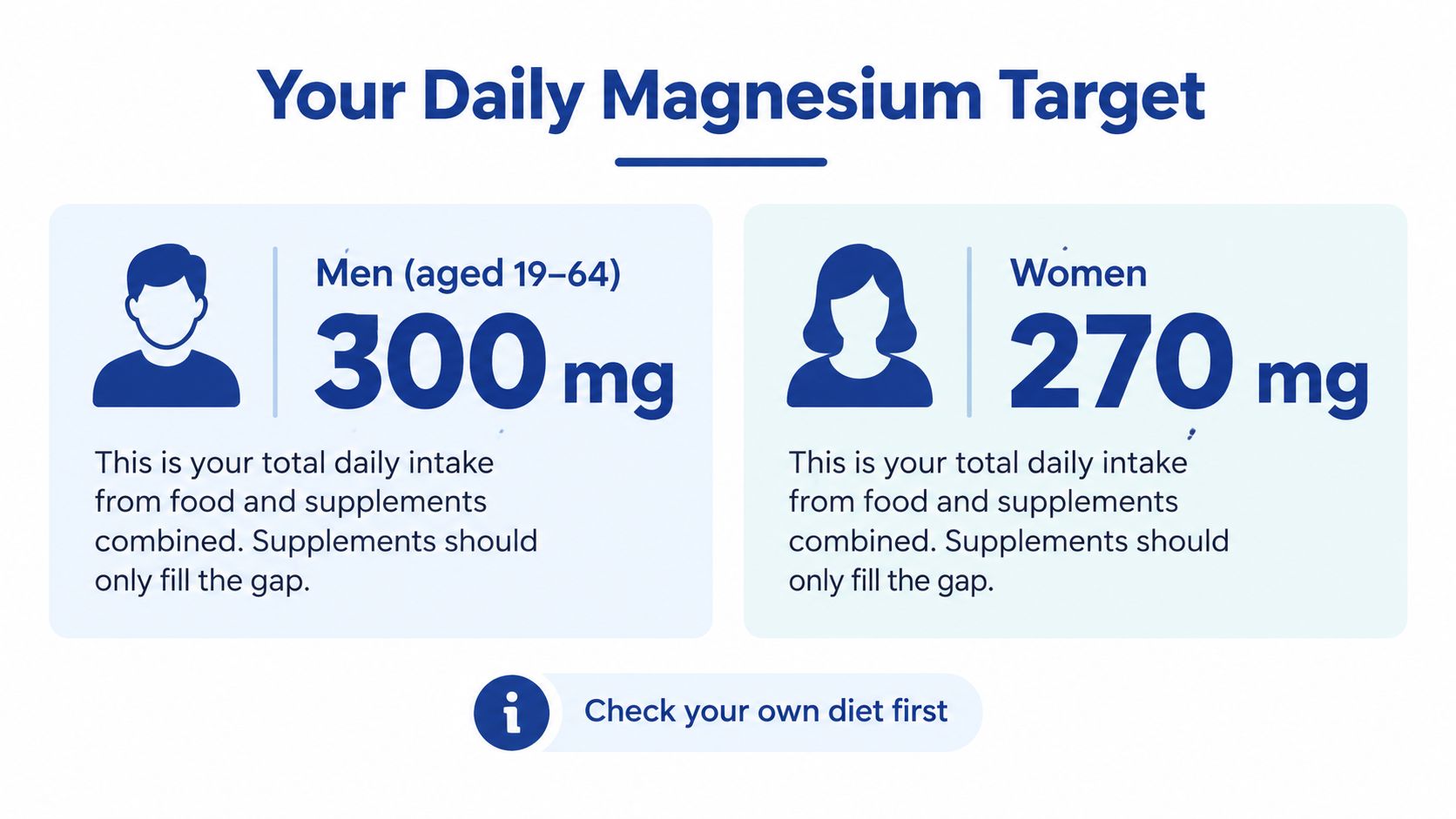
A sensible starting point is to separate total daily magnesium from the amount you get from a supplement. UK guidance commonly cites 300 mg a day for men aged 19 to 64 and 270 mg a day for women. Those figures refer to your overall intake from food and supplements, not a sleep tablet dose.
Foods such as nuts, seeds, beans, wholegrains, and leafy vegetables can do a lot of the work. A supplement is there to fill a gap, not automatically sit on top of everything already in your diet. The An infographic displaying daily magnesium intake guidelines for men and women, emphasizing food sources over supplements. reflects that food-first logic.
Start with the lowest amount that fits the product directions and your usual diet, then see how your stomach and sleep routine respond. Increasing the dose because one night was poor can lead to unnecessary trial and error, especially if the product causes diarrhoea or bloating.
A label can also be misleading if you only read the compound name. A product may list 1,000 mg magnesium citrate on the front, but that does not mean you are getting 1,000 mg of magnesium itself. The serving may provide only a much smaller amount of elemental magnesium, so the figure that matters is the one stated for magnesium content, not the total weight of the compound.
Read the label before adding another product
Look for these details:
- Elemental magnesium: This shows how much magnesium the serving provides.
- Serving size: One capsule may not equal one full serving.
- Other ingredients: Powders and combination products may include additional active substances.
- Digestive tolerance: A form that upsets your stomach is unlikely to suit an evening routine, even if the label looks appealing.
The guidance above is a reminder to think about your total intake. If you already take a multivitamin, mineral blend, or another product that includes magnesium, add those amounts before deciding whether you need more.
A product such as Bonemax Collagen 400mg Supplement for Bone Health is described as a collagen product for joint and bone support, not as a magnesium supplement. Don't count it towards your magnesium intake unless its own label explicitly lists magnesium.
Medicines, Meals, and the Evening Decision Tree
The safest answer for someone taking medicines may not be “one hour before bed”. Start with the medication list, then choose the most comfortable time that leaves enough separation.
First check for interactions
UK NHS clinical guidance advises taking oral magnesium with food to reduce stomach upset and diarrhoea. The same guidance warns that magnesium can reduce absorption of tetracycline antibiotics, quinolone antibiotics, bisphosphonates, iron, and several other medicines. Product information commonly advises separating some medicines from magnesium by 2–4 hours (UK NHS clinical guidance on oral magnesium supplementation).
That includes situations that can be easy to overlook:
- Iron in the evening: Magnesium may need to move to another part of the day, depending on the product instructions.
- An antibiotic course: Don't place magnesium alongside the antibiotic because both are scheduled after dinner.
- A weekly osteoporosis medicine: A weekly dose still needs careful planning around magnesium.
- Several daily medicines: A pharmacist can help you find a workable schedule rather than asking you to guess.
If you have kidney disease, don't create your own supplement schedule without speaking to a pharmacist or clinician. The same applies if you're pregnant, have a complex prescription routine, or take several mineral supplements.
Then choose food or bedtime
If no interaction requires a different arrangement, take magnesium with your evening meal or a small snack if that reduces stomach discomfort. This is often easier to remember and follows the UK guidance to take oral magnesium with food.
Only move it closer to bedtime when the spacing requirements are satisfied. The exact point might be roughly an hour before bed for one person, while another person may need to take it earlier with dinner. Neither timing has been established as clinically superior for sleep.
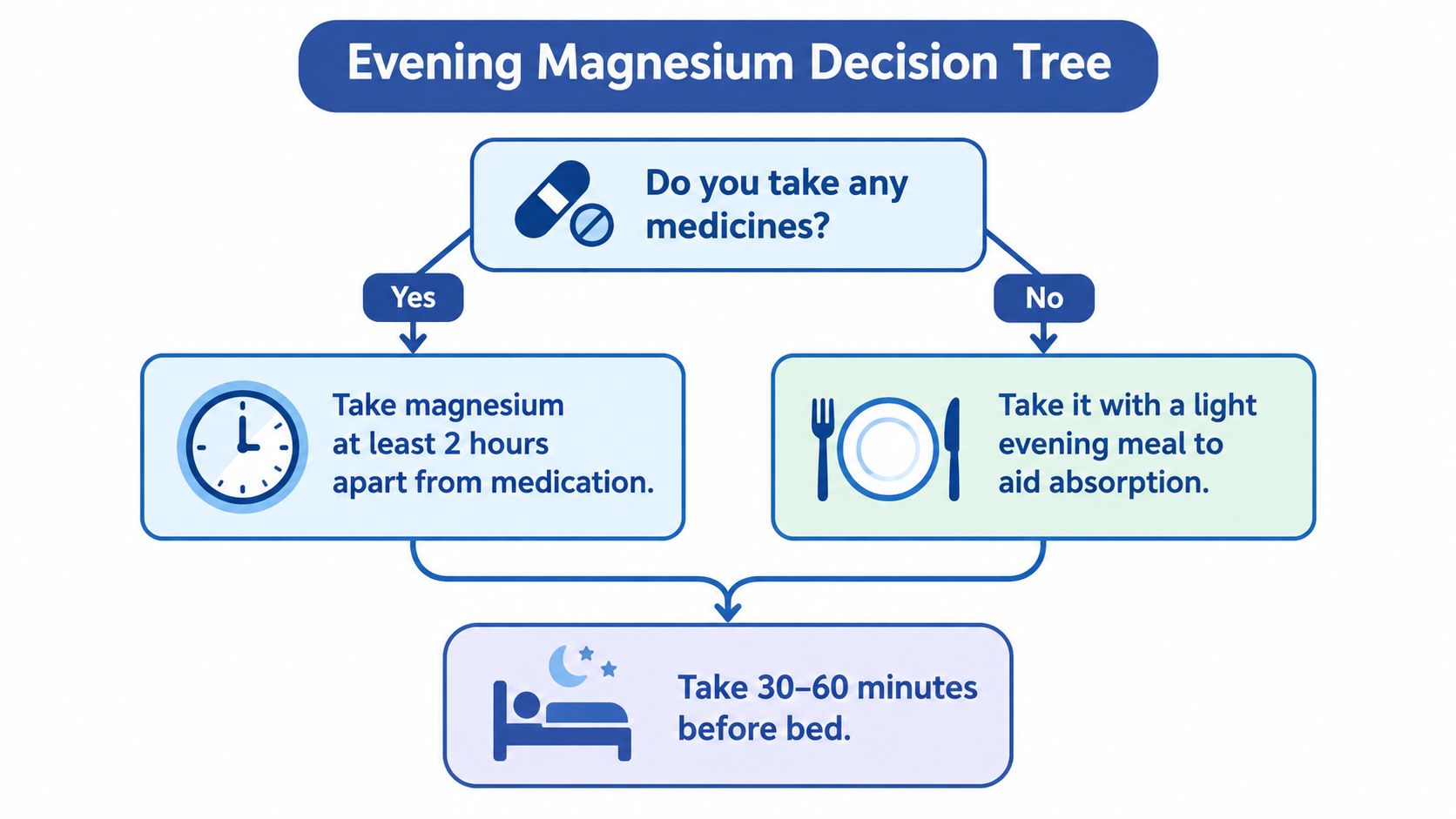
A practical example makes the logic clearer. If you take no interacting medicines and tolerate magnesium with food, the evening meal may be your best routine anchor. If you take evening iron or an antibiotic, the safest choice may be an earlier or later slot after a pharmacist confirms the required interval. If your schedule changes daily, consistency should never come before safe spacing.
Common Timing Mistakes and Misconceptions
A bedtime label can create false confidence. Taking magnesium at night doesn't guarantee better sleep, because UK evidence hasn't established a universal timing advantage. If an evening dose gives you diarrhoea, stomach discomfort, or repeated trips to the bathroom, it may be working against the rest you want.

More isn't automatically better. A larger amount can increase digestive problems and may be unsuitable alongside other magnesium-containing products. Don't respond to a poor night by repeatedly adding capsules or changing forms without checking the elemental magnesium total.
Another common mistake is treating every form as interchangeable. Glycinate, citrate, oxide, and threonate can differ in how they suit your stomach and routine. If you change forms and timing at the same time, you won't know which change affected your experience.
Coffee and late-night stimulation also deserve attention. Magnesium can't reliably cancel out a late caffeine habit, bright screens, an irregular sleep schedule, or an uncomfortable bedroom. Correcting those factors may be more useful than moving a supplement from dinner to bedtime.
For a wider look at common sleep myths debunked, focus on claims that promise certainty. Good sleep advice usually includes limits, individual differences, and a plan for checking whether something is helping.
A final misconception is that a supplement must be taken at the same minute every night. A repeatable window is usually more realistic. If taking magnesium with dinner means you remember it, tolerate it, and keep it safely separated from medicines, that may be a better plan than chasing a precise bedtime.
Your Simple Evening Magnesium Routine
Start with a routine you can follow without rearranging your whole evening.
- Check the label and your medicine list. Look for elemental magnesium and identify iron, antibiotics, osteoporosis medicines, or other products that may need separation.
- Ask a pharmacist when the schedule is complicated. Don't guess if you take several prescriptions, have kidney disease, or aren't sure whether two products can be taken together.
- Use the evening meal as your default anchor. Taking oral magnesium with food may reduce stomach upset and diarrhoea.
- Move it towards bedtime only if spacing permits. Roughly an hour before bed can be a convenient routine, but it isn't a proven magic time.
- Keep a short record of your response. Note when you take it, whether your stomach is comfortable, how long sleep seems to take, and whether you wake during the night.
A simple note over a couple of weeks can reveal whether the habit is useful or merely adding another task. Change one thing at a time, such as the form or timing, so your observations remain meaningful. Guidance on bedtime advice from SouthShore Fine Linens can complement the supplement decision with practical changes to your wider wind-down routine.
Stop and ask for professional advice if you develop persistent diarrhoea, have kidney problems, become pregnant, or start a medicine that may interact. You can also review the difference between a general supplement and a product specifically marketed for sleep in this guide to magnesium sleep tablets.
Magnesium may support a good routine, but it isn't a cure for ongoing insomnia. If sleep remains poor, speak with a GP or pharmacist about possible causes rather than continually increasing the supplement.
Vitamin Planet offers magnesium, vitamins, minerals, and other health products from UK-based operations, alongside targeted ranges for sleep, stress, joints, and general wellbeing. Visit Vitamin Planet to compare product labels and choose a supplement that fits your diet, medicines, and evening routine.