

How to Improve Brain Memory and Concentration
The most popular advice about improving memory is often the least useful: buy a brain supplement, add another ingredient, then wait to feel sharper. Start with sleep and movement instead. A capsule is the wrong tool for a working day built around broken nights, skipped meals and constant interruptions.
If you're asking how to improve brain memory and concentration, aim for a small routine you can repeat on an ordinary, inconvenient week. Then check whether you have a nutritional gap worth correcting. Don't confuse treating a deficiency with enhancing an already healthy brain.
Table of Contents
- A Minimum Routine for Memory and Focus
- How to Fix Sleep and Movement First
- Nutrients That Actually Feed Concentration
- Supplements Worth Taking and When to Stop
- Focus Drills for a Busy Weekday
- When Memory Problems Need a GP
A Minimum Routine for Memory and Focus
A short, repeatable routine beats a perfect plan you abandon. Start with the habits below, rather than trying to overhaul your entire week.
Starter dose for focus
| Habit | Starter dose | What to expect |
|---|---|---|
| Brisk walking or cycling | Under half an hour, twice weekly, as a manageable starting point | Modest, cumulative benefits rather than an instant change |
| Strength work | A short introductory session if you're new to training | A broader activity base, not a guaranteed memory improvement |
| Sleep | A consistent window that leaves enough time for restorative sleep | A better foundation for daytime attention and recall |
| Daylight and sitting breaks | Get outside in the morning and interrupt long seated spells | A practical break from the desk, not a substitute for sleep |
| Meals and fluid | Plan regular meals and keep water accessible on workdays | Less reliance on skipped lunches and repeated coffees |
The activity starting point has some support. A 2025 review covering roughly 258,000 people, described in Runner's World's coverage of exercise and brain health, linked low-to-moderate activity lasting less than 30 minutes twice weekly with small to moderate improvements in cognition, memory and executive function within one to three months.
That coverage also describes a UCL study of 76 UK adults aged 50–83, in which 30 minutes of moderate-to-vigorous activity, alongside at least six hours of sleep, was associated with better episodic and working memory the following day. These are associations and group findings, not a promise that your recall will improve after a particular walk. Six hours also shouldn't become a target that encourages you to cut a longer, restorative night short.
Make the routine easy to repeat
Choose a route and a place in your diary before choosing a fitness app. A walk after dropping the children off or a cycle before an evening shift is more useful than an ambitious session with no realistic time slot.
Move briskly enough to breathe harder while still being able to talk. If a medical condition limits your activity, agree an appropriate intensity with your clinician rather than copying someone else's pace.
Practical rule: Treat the starter routine as an entry point, not a ceiling or a test you can fail.
Give your improved attention somewhere useful to go. For studying, the study retention advice from Kohru offers a separate resource for organising how you learn and revisit information. Keep learning technique distinct from health claims: a study method doesn't diagnose the cause of forgetfulness.
Expect gradual progress, not a dramatic sensation of being switched on. Judge the routine by whether you can sustain it and complete everyday tasks more reliably, not by whether you feel unusually energetic after every session.
How to Fix Sleep and Movement First
In a University of Leeds survey of more than 1,000 UK adults aged 18–80, participants sleeping fewer than five hours nightly reported everyday memory problems, including forgotten tasks, misplaced belongings and missed intentions such as taking medication.
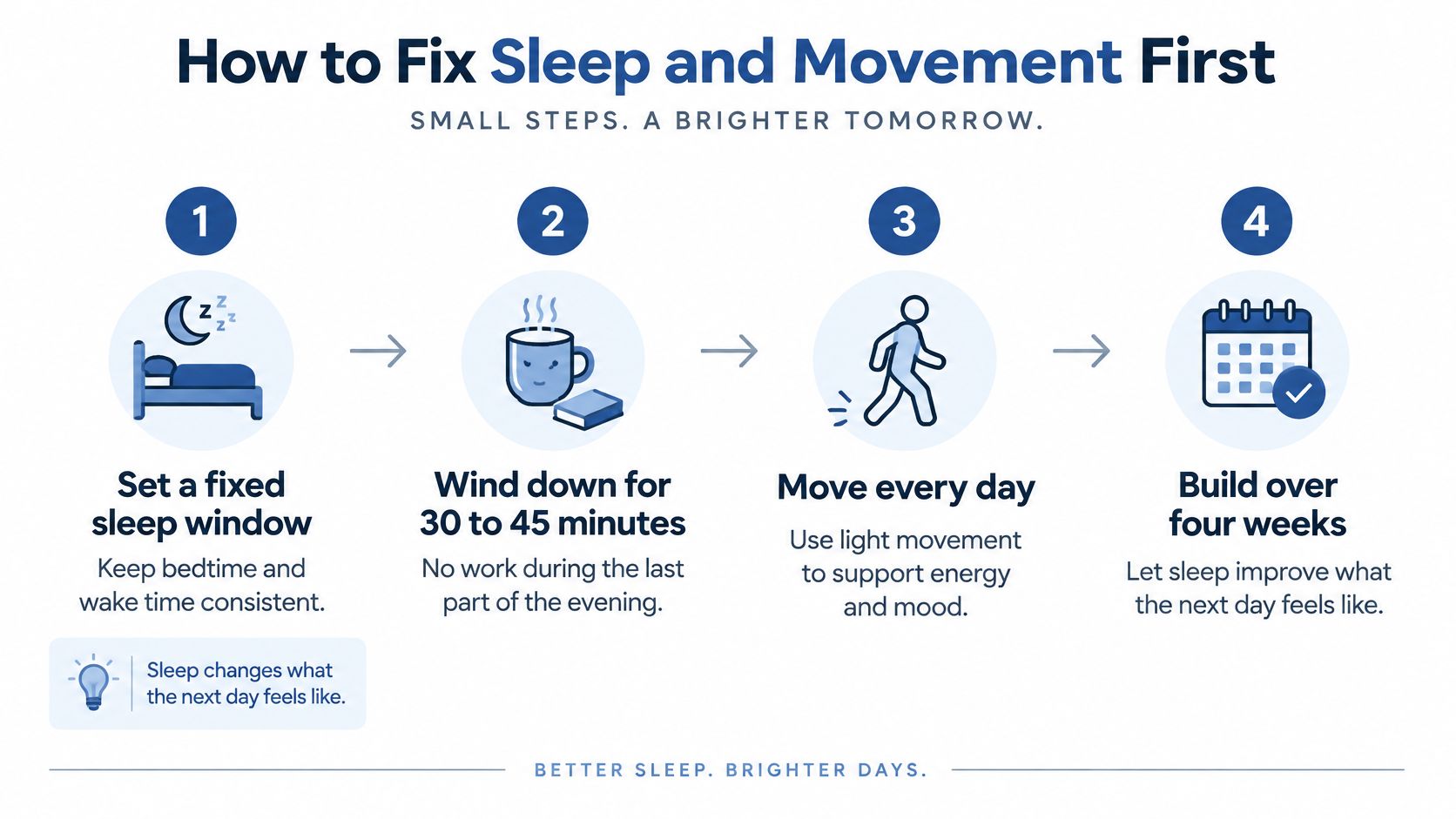
Pick one bedtime and one wake time, and keep them within an hour on workdays. Leave the final part of the evening free from work email. If later caffeine leaves you alert when you want to sleep, adjust its timing. A guide to the importance of sleep can help you review your habits.
Build a routine you can repeat
- Record your starting point. Note walking, cycling, physical work and long seated periods, not just formal exercise. This shows where movement already fits and where you spend most of the day sitting.
- Use the starter table as your movement target. Build from that routine at a pace you can sustain. Include regular strength work, using controlled chair rises, wall press-ups, resistance bands or suitable weights to work your major muscle groups. If pain, balance or technique is a concern, get professional instruction.
- Adapt movement for age and falls risk. For adults 65 and over, UK older-adult activity guidance recommends 150 minutes of moderate activity or 75 minutes of vigorous activity weekly, strength work on at least two days, and balance and coordination work on at least two days for those at risk of falls. Choose supported balance movements and avoid unstable furniture.
- Ease off after a bad night. Keep an easy walk if you feel able, but postpone hazardous or strenuous activity when you're excessively sleepy. Return to your usual routine when you're rested.
Don't mistake time in bed for good sleep
Loud snoring, persistent insomnia and excessive daytime sleepiness deserve attention, even if your diary shows enough time in bed. Medicines, anxiety and depression may also need assessment. If the problem persists, take your sleep record to your GP.
Nutrients That Actually Feed Concentration
A lunch of coffee and biscuits leaves little room for a filling meal. Make a simple lunch you'll eat: a wholegrain sandwich with sardines, tomatoes and fruit, or a chickpea and leafy-green salad with wholegrain bread.
Focus nutrients, food sources and why they matter
| Nutrient | Why it matters | UK food sources |
|---|---|---|
| Omega-3, including EPA and DHA | Include food sources as part of a varied diet | Oily fish such as salmon, mackerel and sardines |
| B12, folate and B6 | A varied diet helps provide these nutrients; reliable B12 provision needs particular attention on a vegan diet | Meat, dairy, eggs, pulses, leafy vegetables and appropriately fortified cereals |
| Vitamin D | Consider dietary intake alongside seasonal circumstances | Oily fish and fortified foods; sunlight contributes to vitamin D production |
| Iron | Include iron-containing foods as part of a varied diet | Pulses, dark leafy vegetables, fortified cereals and red meat |
| Magnesium | Include sources as part of a varied diet | Nuts, seeds, whole grains and leafy greens |
For a fully plant-based diet, check what your fortified foods contain. Vegan foods can provide many nutrients, but reliable B12 provision needs particular attention.
Keep meals practical on busy days. Bring lunch before the first meeting, and have a snack ready if you routinely work through meals, such as fruit with nuts or yoghurt that suits your diet. For broader meal ideas, use this diet and nutrition guidance.
- Review your usual meals: Write down what you eat on rushed workdays, not just what you aim to eat.
- Note food exclusions: Record whether you avoid animal products, fish or several food groups.
- Make lunch easy to reach: Keep a water bottle nearby and pack a meal you can eat between meetings.
If coffee regularly replaces lunch, this discussion of how to engineer sustained focus with caffeine can help you examine the habit. Caffeine is no substitute for a meal.
Aim for a varied, adequate diet that fits your budget and routine. Food can help fill dietary gaps, but it won't sharpen memory overnight.
Supplements Worth Taking and When to Stop
A supplement earns a place in your routine when it addresses a defined need. A vague hope of sharper focus is a poor reason to buy a stack of brain products.
Keep dementia claims separate from everyday concentration advice. The Kent and Medway NHS dementia information booklet describes mixed evidence for vitamins and insufficient evidence for several commonly promoted alternatives. It also states that NICE doesn't recommend ginseng, vitamin E or herbal supplements to treat dementia. Don't treat these products as dementia treatments.
Brain supplement decision matrix
| Ingredient | Sensible use | Evidence stance | Stop or avoid when |
|---|---|---|---|
| Omega-3 fish oil | Use only if a clinician or pharmacist advises it as a suitable way to address a defined need | Not an established universal memory enhancer | A pharmacist or clinician identifies an interaction or advises against it |
| Vitamin D | Follow a treatment plan or appropriate seasonal advice | Correcting a need is different from boosting memory | You'd duplicate a prescribed product or don't know your total intake |
| Vitamin B12 | Use for a confirmed deficiency or a clinician-advised dietary requirement | Targeted replacement, not a general concentration treatment | Persistent symptoms are being self-treated instead of assessed |
| Iron | Use for a test-supported deficiency and an appropriate treatment plan | Treats the identified deficiency | There's no confirmed need, or iron overload is a concern |
| Ginkgo, ginseng, vitamin E, selenium | No routine recommendation here for treating memory complaints | Don't assume products marketed together have equivalent evidence | You're using them for dementia or worsening memory loss |
| 5-HTP | Get professional advice before considering it | A mood-related product is not a memory treatment | You take antidepressants or haven't checked medicine compatibility |
| Combined brain vitamin and mineral blend | Use only where its contents match an identified need | A broad blend has no established advantage over targeted correction | It duplicates other products or replaces medical assessment |
Decide what would justify continuing
Before buying, write down why you're taking the product, what it should address, and who will review it. For prescribed treatment, follow the clinician's monitoring plan. Don't stop because you notice no immediate change in concentration.
For a product you chose yourself, set a review point rather than buying an indefinite supply. Stop and seek advice if you suspect an adverse effect. If the first product doesn't help, don't keep adding ingredients.
Compare the milligrams per tablet with the dose your need requires, not the highest figure on the label. Check for overlapping ingredients across multivitamins, energy formulas and separate tablets. The supplement safety guide offers a prompt for checking labels and asking a pharmacist about compatibility.
A study about fish oil doesn't by itself support a memory claim for an off-the-shelf capsule. Million Whys' EPA and DHA study explained can help you frame questions about fish-oil products.
The same standard applies to products outside the usual brain-supplement category. BioBees Fresh Royal Jelly Capsules contain royal jelly, propolis extract and bee pollen; that ingredient description doesn't establish a treatment for poor concentration. Buy a product only when it matches a defined need, and stop when that need or treatment plan no longer applies.
Focus Drills for a Busy Weekday
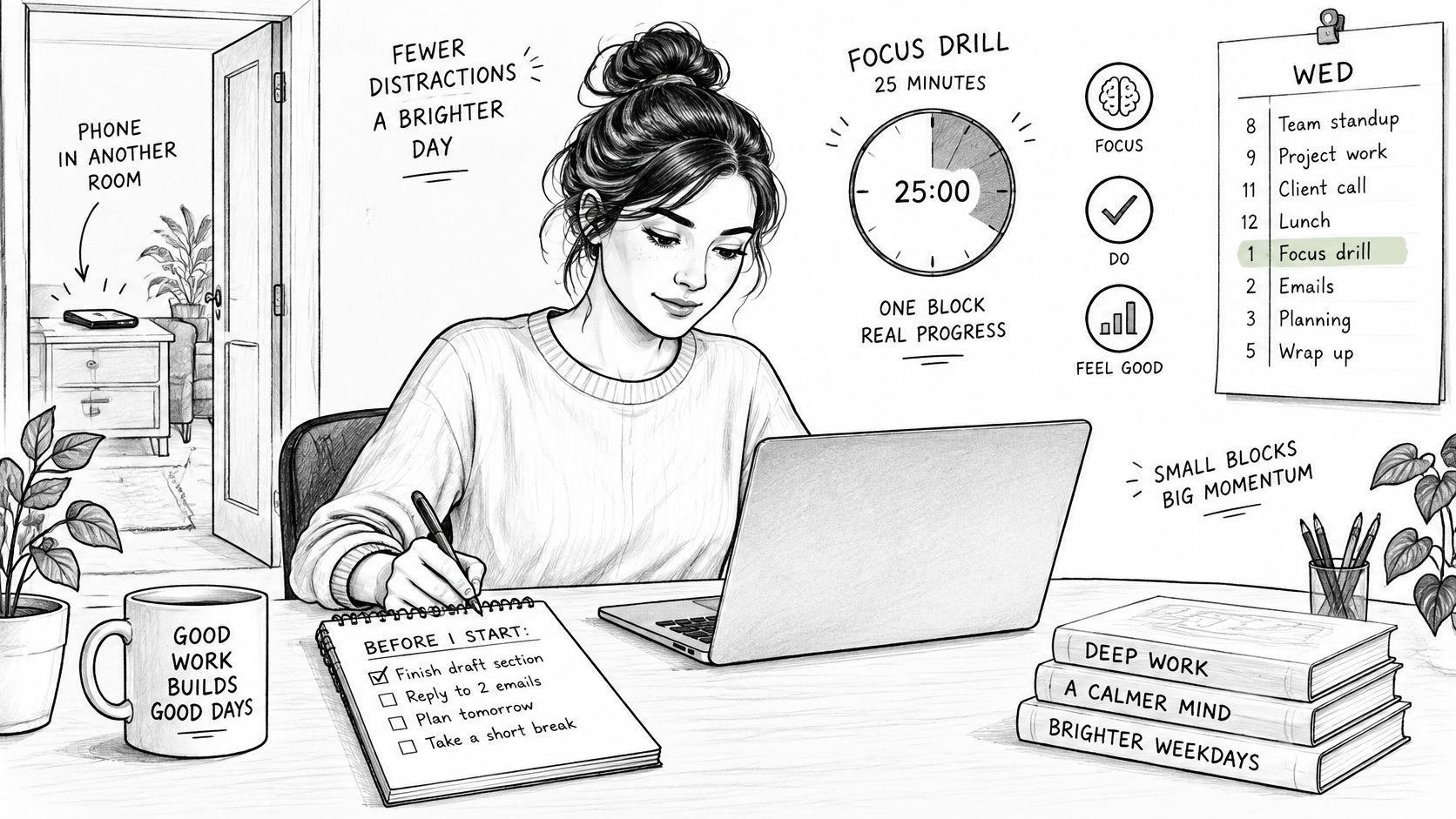
Make the task easier to attend to before blaming your memory. If messages interrupt every paragraph you read, you haven't given yourself a fair chance to take the information in.
Use a timer, paper checklist and a quiet workspace if you have access to one. These are practical tools, not medical treatments.
Give attention a clear job
- Protect a single-task block. Choose a manageable period during the part of your day when you're most alert. Put your phone elsewhere, close unrelated tabs and define the output before starting, such as drafting the opening of a report.
- Leave a visible memory list. Write down the essential things you need to remember before you begin. A clear reminder is more useful than repeatedly interrupting yourself to check whether you've forgotten something.
- Practise retrieval. Read a short passage, close it and explain the main points in your own words. Reopen it to check omissions or mistakes. Treat this as practice with that material, not a test of your overall brain health.
- Use a familiar place as a cue. For a short list, associate each item with somewhere you know well, such as your front door, kitchen or bedroom. Pick distinctive images rather than trying to memorise an elaborate system.
- Set message-checking boundaries. Where your job allows it, check messages at planned intervals instead of keeping every notification active. If you must remain available, agree which channel is for urgent requests.
Reading can be optional practice for staying with a single thread. Choose a book or article you want to finish, rather than forcing yourself through something difficult purely because it sounds beneficial. Reading isn't a cure for persistent memory loss.
Use a reduced version on difficult days
After lunch, step away from the screen and go outside if practical. Keep this separate from judging whether you've completed an exercise target: the immediate task is to take a deliberate break.
If you slept badly, shorten the work block and do the important task first. Don't spend your best available attention organising apps, selecting background music or designing an elaborate productivity system.
Make the task smaller before you make the day longer.
Consider a parent working a late shift. A realistic day might include a brief walk, a proper lunch and recalling the main points of a work handover before checking the notes. That's a usable routine without an ideal morning, a silent house or expensive equipment.
Your seven-day tick list
Use this as a record, not a scorecard. Note what you managed and what repeatedly got in the way.
- Sleep window: Did you protect a realistic opportunity to sleep?
- Movement: Did you complete your starter sessions or progress at a suitable pace?
- Food: Did you plan an oily-fish meal or an appropriate fortified alternative within a varied diet?
- Single-task work: Did you finish a clearly defined task without avoidable interruptions?
- Retrieval: Did you practise recalling something you needed to learn?
When Memory Problems Need a GP
Book a GP review if memory problems are worsening, someone else has noticed a change, or everyday tasks are becoming difficult. Getting lost on familiar routes, struggling to find words or repeatedly mishandling bills deserves an assessment rather than another product trial.
Sudden confusion, new weakness, a severe headache or chest pain needs urgent medical attention, especially if symptoms occur together. Don't wait to see whether food, rest or a supplement helps.
Bring useful information to the appointment
Describe what has changed in everyday terms. Forgotten appointments, repeated questions and difficulty following familiar instructions give a clinician more useful detail than “brain fog”.
Before the appointment, note:
- The change: What you're struggling with, when it began and whether it's getting worse.
- Other observations: Anything a partner, relative or colleague has noticed.
- Sleep and mood: Persistent insomnia, loud snoring, daytime sleepiness, anxiety or low mood.
- Medicines and alcohol: New prescriptions, over-the-counter products, supplements and drinking patterns.
- Dietary clues: Food exclusions, heavy periods, poor appetite or other reasons a deficiency might be considered.
Discuss whether any nutrient tests covered in the earlier sections are appropriate for your symptoms and dietary history.
Choose assessment over another purchase
Medicines, alcohol, stress, poor sleep and nutritional problems can all contribute to concentration difficulties. A plausible explanation still needs a clinician to confirm the cause.
This routine does not treat dementia. If your ability to manage daily life is changing, arrange a review even when lifestyle factors might be involved. A clinician can decide which investigations, treatment or referral are appropriate.
After assessment, keep the habits you can sustain and address any remaining need. Choose a daily supplement only when you know why you're taking it and have agreed how to review its use. A purchase cannot replace an appointment.
Vitamin Planet offers vitamins, minerals and dietary supplements for identified nutritional needs. Once you know which gap you're addressing, compare ingredients and formats at Vitamin Planet, and ask a pharmacist or GP if you're unsure what's appropriate.