

Pre Workout Supplements UK: Your Complete 2026 Guide
The popular advice is simple: choose the strongest pre-workout you can tolerate. In the UK, that's increasingly the wrong question. A useful product isn't necessarily the one that produces the biggest caffeine rush. It's the formula that matches your training time, caffeine tolerance, exercise goal, and wider routine.
That distinction matters because pre-workout supplements are now a broad category. Some products centre on caffeine and alertness, while others focus on blood flow, muscle endurance, or training without stimulants. UK consumers also need to understand how food-supplement guidance, caffeine labelling, serving size, and personal sensitivity affect a sensible choice.
Table of Contents
- The Truth About Pre-Workout Supplements
- Understanding Key Performance Ingredients
- Stimulant-Based vs Non-Stimulant Formulas
- Navigating UK Caffeine Guidance and Dosing
- Choosing the Right Product in the UK Market
- Putting It All Together for Your Goals
The Truth About Pre-Workout Supplements
A pre-workout isn't just a powdered energy drink. It's a combination of ingredients intended to support a training session, and the relevant ingredients depend on what you're trying to do. A caffeine-based formula may suit an early strength session, while a stimulant-free product may be more appropriate for evening training or anyone who already consumes caffeine elsewhere.
The UK market reflects that broader choice. Independent coverage describes pre-workout as a major part of sports nutrition, with one report estimating that it represents 33% of the overall UK sports nutrition market. The same report projects the wider UK sports nutrition market at USD 1,084.8 million in 2025 and USD 2,498.3 million by 2035, with an 8.7% compound annual growth rate over that period. These are market estimates and a projection, not a promise about any individual product. (UK sports nutrition market coverage)
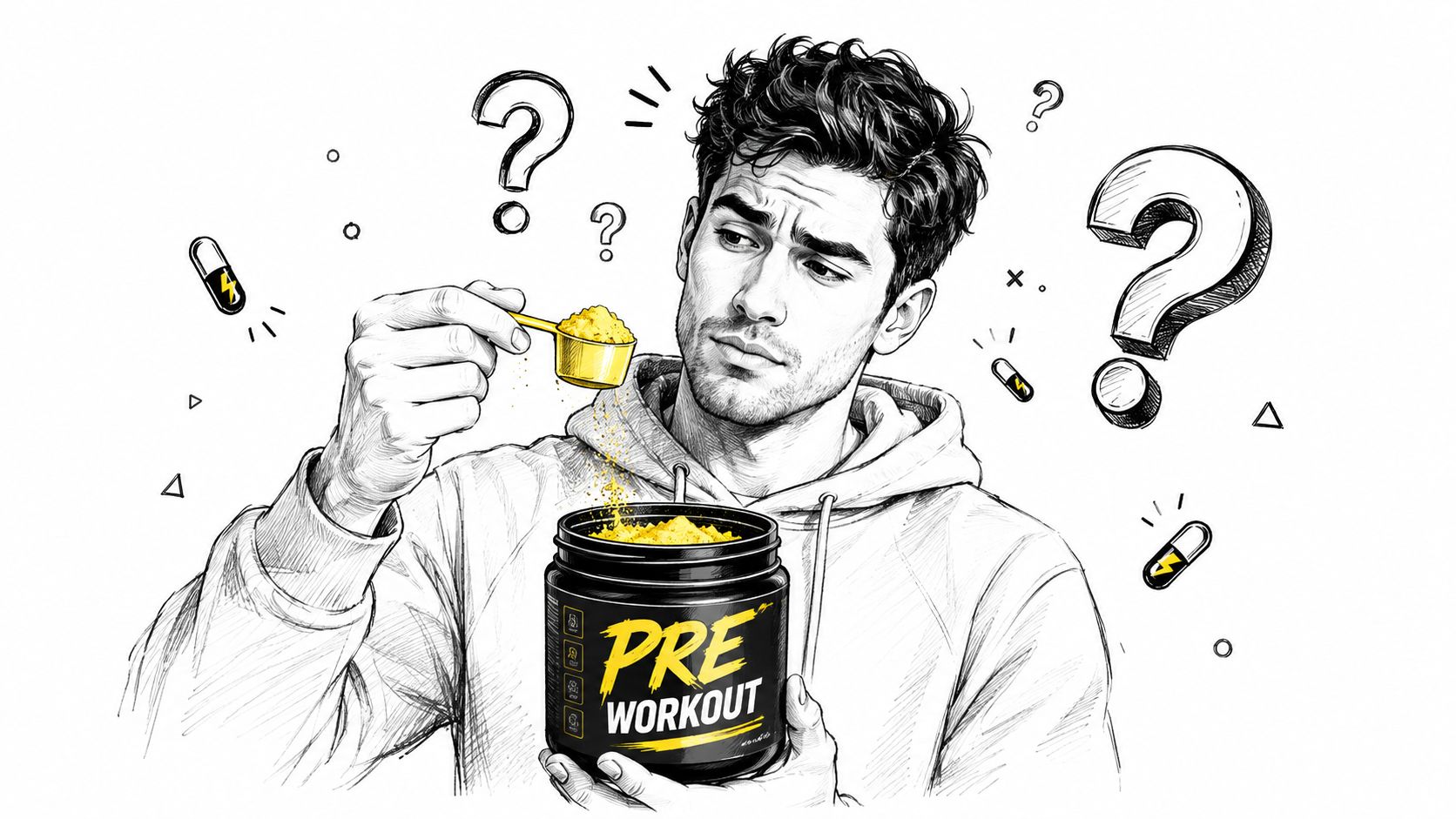
Why the strongest formula isn't always the best choice
The move towards non-stimulant products is particularly important. UK market coverage describes the non-stim segment as growing at a low-double-digit annual rate, accounting for about 20-25% of category volume, with pump-focused products representing roughly 40-45% of non-stim demand. All-in-one non-stim products are described as the fastest-growing part of that segment, with reported annual growth of 12-15%. (UK non-stim pre-workout market analysis)
Those figures change the way a shopper should compare products. If you train late, sleep lightly, or feel uncomfortable after caffeine, a pump formula may be more useful than a high-stimulant blend. If you train early and want alertness, caffeine may have a place, but the label still matters.
A practical test: ask what you want the product to do during your session, not how intense you want the tingling or rush to feel.
Pre-workout also sits within a wider supplement routine. Coffee, energy drinks, fat-burning products, and other caffeine-containing supplements can all affect your total intake. For a broader overview of how to assess supplement claims and risks, read this guide to supplement safety myths and facts.
The rest of the decision becomes clearer once you separate three questions: which ingredients are present, whether you want stimulants, and whether the product fits UK labelling guidance. That approach is more reliable than judging a tub by its front-of-pack claims.
Understanding Key Performance Ingredients
Most pre-workout formulas are built around a small group of ingredients, although the amounts and combinations vary. The label should tell you whether each active ingredient has a declared quantity. A proprietary blend that lists several ingredients without individual amounts makes it harder to judge what you are taking.
Caffeine for alertness and perceived effort
Caffeine acts mainly through the central nervous system. In practical terms, it can make a demanding session feel more manageable and may support alertness and endurance when used at an appropriate dose. UK clinical guidance linked to the NHS describes caffeine taken around 30-60 minutes before exercise as potentially helpful for endurance and perceived effort. It notes that benefits are often seen around 3-4 mg per kilogram of body weight, while smaller amounts around 1.5 mg/kg may still work for some people. (NHS-linked exercise and caffeine guidance)
That isn't a recommendation to start at the upper end. Tolerance differs, and caffeine can affect sleep, heart rate, and how comfortable you feel during training. A person who regularly drinks coffee may respond differently from someone who rarely consumes caffeine.
Beta-alanine for high-intensity fatigue
Beta-alanine helps the body produce carnosine in muscle. Carnosine contributes to buffering the changes associated with intense muscular work, so the ingredient is commonly included in formulas aimed at repeated hard efforts and high-repetition sets.
The familiar tingling sensation, called paraesthesia, can occur after beta-alanine. It isn't the same thing as proof that the product is working, and a stronger sensation doesn't automatically mean a better formula. Splitting intake or choosing a product with a clearly stated amount may be more comfortable for some users.
Creatine is a separate ingredient with a different role and timing pattern. It's commonly used consistently rather than treated as an instant pre-workout effect, so readers comparing products may find this guide to the types of creatine useful.
Citrulline and the pump
Citrulline is used in many formulas marketed around blood flow and muscle pump. The intended effect is different from caffeine's alertness effect and beta-alanine's role in repeated intense work. That makes it relevant to people who want a training sensation and formula that doesn't depend on stimulation.
Think of these ingredients as separate tools rather than a single ladder of strength:
- Caffeine supports alertness and may reduce perceived effort.
- Beta-alanine is associated with buffering during demanding, high-intensity work.
- Citrulline is commonly included to support blood flow and pump-focused training.
The amounts illustrated in the infographic are typical product-style examples, not universal dosing instructions. Always compare the declared serving with the rest of your daily intake and your own tolerance. If you're researching broader discussions about energy and wellbeing beyond conventional sports formulas, this overview of peptide science for vitality provides additional context, but it shouldn't be treated as a substitute for product-specific or medical advice.
A product such as METABURN 60 Capsules is a weight-management supplement rather than a pre-workout formula, so it shouldn't be assumed to provide the same ingredient profile or training purpose.
Stimulant-Based vs Non-Stimulant Formulas
The most useful comparison isn't “strong versus weak”. It's stimulated versus non-stimulated, followed by a check of whether the formula supports your actual session.
| Feature | Stimulant-Based | Non-Stimulant |
|---|---|---|
| Main purpose | Alertness, drive, and perceived energy | Pump, blood flow, or training support without caffeine |
| Best fit | Early sessions or people who tolerate caffeine | Evening sessions, caffeine-sensitive users, or stimulant-free routines |
| Main consideration | Total caffeine intake and sleep impact | Whether the ingredients match the intended training goal |
| Common drawback | Jitters, sleep disruption, or discomfort for some users | Doesn't provide a caffeine-style alertness effect |
| Label focus | Caffeine amount per serving and warnings | Full ingredient quantities and authorised claims |
UK market coverage describes non-stim pre-workout as a substantial and expanding category rather than a novelty. It reports 20-25% of total category volume and identifies pump-focused formulas as roughly 40-45% of non-stim demand. The same source reports low-double-digit annual growth for the segment and 12-15% annual growth for all-in-one non-stim products. (UK non-stim market source)
When a stimulant formula may make sense
A caffeinated product may be useful before an early workout when you want help feeling more alert. It may also suit someone who understands their response and can include the serving within their wider caffeine intake.
The problem starts when the product becomes a substitute for sleep, food, hydration, or a realistic training plan. Increasing the dose because the first serving feels familiar can also turn a manageable routine into an uncomfortable one.
When non-stim is the better match
Non-stim formulas can make sense for evening training, people who experience caffeine-related sleep problems, and anyone who already gets enough caffeine from coffee or other drinks. They can also suit users whose main goal is pump or blood-flow support rather than mental stimulation.
A non-stim product isn't automatically safer or more effective for everyone. It still needs a transparent label, sensible serving guidance, and ingredients that match your goals. Food supplements can contain several active substances, so “caffeine-free” doesn't mean “risk-free”.
For shoppers interested in focus products outside a workout formula, BrainQuick Brain Support Supplement is listed as a vegetarian vitamin and mineral blend designed to support focus and brain function. It shouldn't be confused with a pre-workout or treated as a replacement for one.
Better question: will this formula help the session you're about to do, without creating a problem for the hours afterwards?
Navigating UK Caffeine Guidance and Dosing
In the UK, pre-workout supplements containing caffeine fall under government guidance for food supplements. They're treated as food supplements rather than medicines, which affects how they're formulated, labelled, and sold. The relevant GOV.UK guidance was updated in June 2026 and last updated in September 2026, showing that oversight remains an active policy area. (GOV.UK guidance on food supplements containing caffeine)
The guidance says these products don't need pre-approval, and there's no maximum legal caffeine limit specifically set for supplements. That doesn't remove the need for caution. Manufacturers remain responsible for safe products and accurate labelling, while consumers need to read the serving information carefully.
How to read the warning
A label must carry a warning when the product contains more than 150 mg/l of added caffeine for a physiological purpose, according to UK government guidance. This threshold concerns the labelling requirement, not a personal safe dose or a target amount to consume.
The same official guidance advises avoiding more than 200 mg of caffeine in a single serving or 400 mg across the day. Those figures should be considered alongside caffeine from coffee, tea, energy drinks, medicines, and other supplements. (GOV.UK guidance for food businesses)
A body-mass example
NHS-linked guidance places commonly effective exercise doses around 3-4 mg/kg, with smaller doses potentially useful for some people. For a 70 kg athlete, that works out at roughly 105-280 mg, depending on the selected dose. (NHS-linked caffeine guidance)
That range illustrates why a 200 mg serving can feel very different between people. It may sit within a commonly discussed performance range for one athlete, while being too stimulating for another, particularly if they've already consumed caffeine or plan to train late.
Use this label check before taking a serving:
- Find caffeine per serving, not just caffeine per scoop.
- Check the scoop size, because a full scoop may not match the suggested starting serving.
- Add other caffeine sources from the same day.
- Consider training time, sleep quality, sensitivity, and any relevant health conditions.
- Don't treat tingling or a strong rush as evidence of effectiveness.
For a non-caffeinated daily energy option, BioBees Fresh Royal Jelly is described as a bee-derived supplement containing proteins, amino acids, essential fatty acids, and B vitamins. Its product information says it isn't suitable for people allergic to bee products, so “natural” still requires a suitability check.
Seek advice from a pharmacist or clinician if you're pregnant, have a cardiovascular condition, take medicines, or experience palpitations, chest discomfort, severe anxiety, or other concerning symptoms after using a supplement.
Choosing the Right Product in the UK Market
Shopping becomes easier when you treat the label as a checklist rather than a marketing poster. Start with the workout: an early strength session, a late gym visit, and a long endurance workout may call for different priorities. Then decide whether you want caffeine before you compare flavours or brand names.
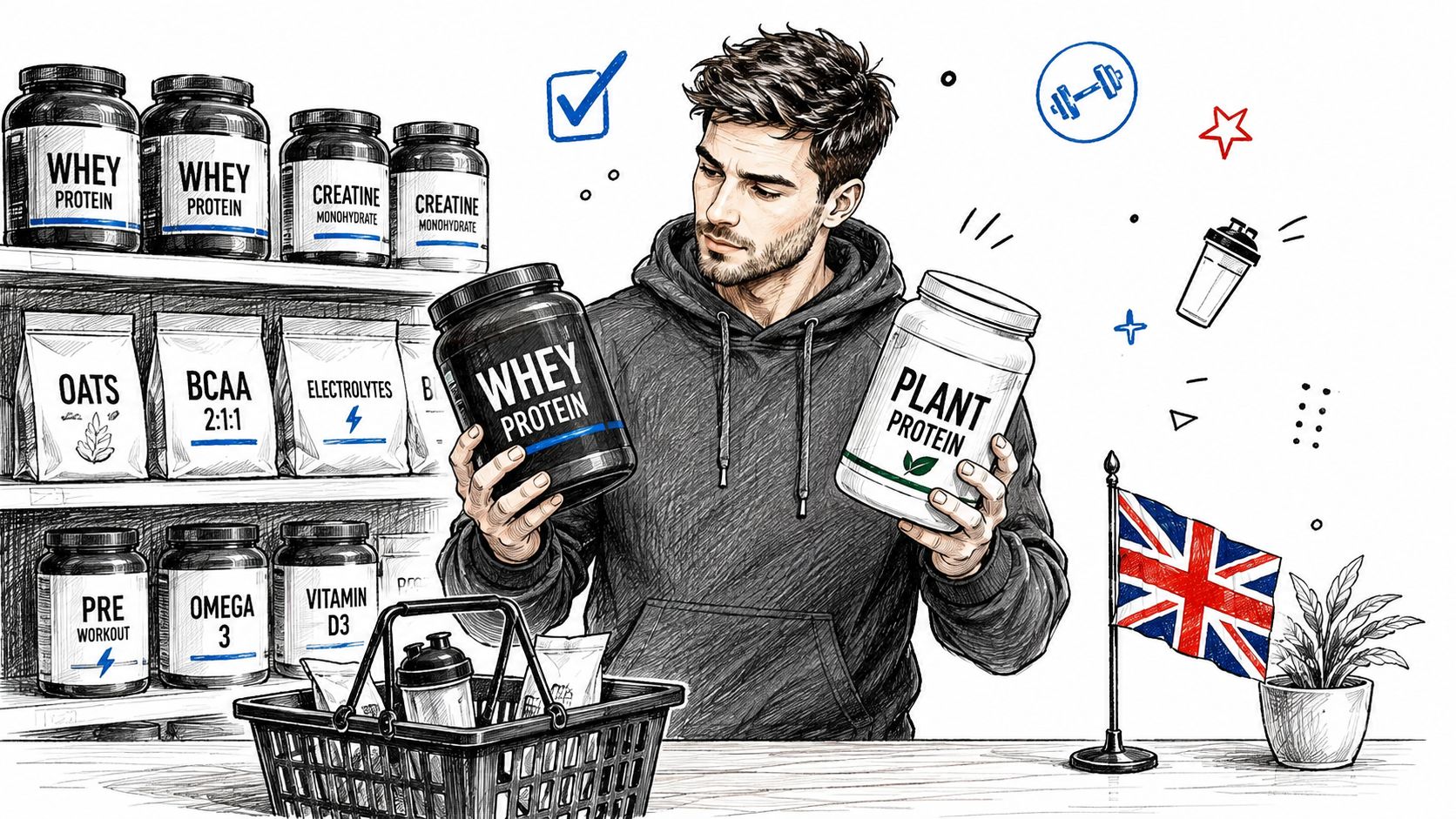
A realistic shopping scenario
Suppose you train after work and already drink coffee during the day. A high-stimulant powder may create more problems than it solves, especially if it affects sleep. A non-stim formula with clearly stated ingredients may align better with your schedule, while a lower-caffeine product could be an option if you specifically want alertness and can account for the total daily intake.
Now consider an early session before a busy day. You might prioritise caffeine, but you still need to check the amount per serving, whether the tub uses a proprietary blend, and whether the formula includes ingredients relevant to your session. A product that lists several ingredients without quantities gives you less information for comparison.
Look for:
- Transparent quantities: Active ingredients should be listed with amounts per serving where applicable.
- Clear directions: The label should explain serving size and use.
- Caffeine disclosure: Check whether caffeine is listed directly and whether a warning applies.
- A sensible match: Choose based on training time, goal, and tolerance.
- Reliable retail information: Product pages should provide complete ingredient and usage details rather than relying only on front-label language.
UK-based retailers can also simplify delivery and support when stock, dispatch, and product information are clearly presented. Vitamin Planet is a UK-based online retailer offering sports nutrition alongside vitamins, minerals, dietary supplements, personal care, food, and other health essentials. Its catalogue includes pre-workout, creatine, protein, nitric-oxide boosters, hydration, and recovery products, so shoppers can compare related categories in one place.
The retailer says it dispatches from London and offers tracked domestic delivery through Royal Mail. Those logistics don't prove that a particular formula suits you, but they can make the practical side of buying easier to assess.
A product page should still be only the starting point. Check the physical packaging when it arrives, follow the stated serving guidance, and keep the container details in case you need to ask the retailer or manufacturer a question.
Here's a useful visual reminder of how to compare sports nutrition packaging and product categories:
If you compete, check your sport's rules and the manufacturer's quality information separately. A supplement marketed for general fitness isn't automatically suitable for tested sport.
Putting It All Together for Your Goals
A good pre-workout decision can be reduced to four checks. First, identify the session: strength, high-repetition work, endurance, or pump-focused training. Second, decide whether caffeine supports that session or creates a problem for your sleep and comfort.
Third, read the serving information carefully. Compare the caffeine amount with your body mass, existing intake, and the UK guidance described earlier. Fourth, reject products that hide important quantities behind an unclear proprietary blend when you need to understand exactly what you're taking.
Use this quick framework:
- Early training and good caffeine tolerance: Consider a clearly labelled stimulant formula, starting conservatively.
- Late training or poor sleep response: Look at non-stim options focused on pump or blood flow.
- High-intensity repeated efforts: Pay attention to whether beta-alanine is included and how much the label provides.
- A broader performance routine: Don't overlook food, hydration, sleep, and recovery. A practical guide to muscle repair can help place supplements in the wider recovery picture.
There's no need to use a pre-workout every time you train. Some sessions may benefit from a targeted formula, while others may be better supported by a meal, water, and consistent sleep. For wider exercise nutrition ideas, see Vitamin Planet's exercise and fitness guidance.
The strongest product on the shelf isn't automatically the right product for you. Choose the formula that gives you a clear reason to use it, a label you can understand, and a risk profile that fits your routine.
Vitamin Planet offers UK-based access to pre-workout, non-stimulant sports nutrition, creatine, protein, hydration, and recovery products alongside everyday supplements. Visit Vitamin Planet to compare clearly labelled options and choose support that fits your training time, caffeine tolerance, and goals.