

Best Iron Supplements UK 2026: Dosage & Side Effects Guide
You've bought an iron supplement because you feel tired, your periods are heavy, or a blood test showed that your iron stores are low. Then the nausea starts. A few days later, constipation makes the tablets feel impossible to continue, and you're left wondering whether a different brand would solve the problem.
The best iron supplement isn't necessarily the strongest product on the shelf. For many people, the better choice is the form and dosing schedule they can tolerate consistently, alongside a clear understanding of why iron is low in the first place. This guide compares common UK options by elemental iron, absorption, side effects and practical use, rather than ranking brands.
Table of Contents
- Why Finding the Best Iron Supplement Feels Hard
- Iron Supplement Forms Compared
- Understanding Iron Bioavailability and Absorption
- Dosing Strategies That Reduce Side Effects
- Choosing the Right Iron for Your Situation
- Practical Selection Checklist
- What Happens When You Get It Right
Why Finding the Best Iron Supplement Feels Hard
Iron supplements can look deceptively similar. One packet may advertise a large compound weight, while another highlights a smaller amount of elemental iron. A third may promise a gentle formula, but give little practical guidance about when to take it or what to do if side effects appear.
The first point to understand is that compound weight and elemental iron are not the same thing. Elemental iron is the amount of iron supplied by the tablet and is the figure that matters when comparing products or following clinical advice. In UK practice, a 200 mg ferrous sulphate tablet provides about 65 mg of elemental iron, according to UK haematology prescribing guidance.

Start with the reason for supplementation
Your needs may differ substantially from someone else's. The NHS explains that men aged 19 and over need 8.7 mg of iron daily, while women aged 19 to 49 need 14.8 mg, partly because menstruation increases the risk of iron loss. UK dietetic guidance also reports that 54% of girls aged 11 to 18 and 27% of women aged 19 to 64 fall below the Lower Reference Nutrient Intake for iron.
That doesn't mean everyone in those groups should start a high-dose supplement. It means the decision deserves context. Heavy periods, pregnancy, low dietary intake, blood loss and problems absorbing nutrients can each require a different response.
Then assess tolerance
Ferrous sulphate is widely used because it's established and supplies a substantial amount of elemental iron. However, nausea, constipation and diarrhoea can make regular use difficult. A lower or less frequent dose that you take reliably may be more useful than a stronger product that you abandon.
Practical rule: Choose by elemental iron, chemical form and schedule before you choose by brand.
The NHS states that taking 17 mg or less of iron from supplements per day is unlikely to cause harm for most adults, although people treating confirmed deficiency may be advised to take more under professional supervision. Routine supplementation and treatment of iron-deficiency anaemia aren't the same decision.
Iron Supplement Forms Compared
The most familiar products contain ferrous iron salts, including ferrous sulphate, ferrous fumarate and ferrous gluconate. These are conventional options used in UK practice, but the amount of elemental iron varies between compounds and products. Always check the label rather than assuming that a larger tablet weight means more usable iron.
| Form | Elemental iron | Key trait |
|---|---|---|
| Ferrous sulphate | About 65 mg in a 200 mg tablet | Common first-line option in UK practice |
| Ferrous fumarate | Varies by product | Concentrated iron salt used in oral treatment |
| Ferrous gluconate | Varies by product | Conventional salt that may suit some people better |
| Ferrous bisglycinate | Varies by product | Chelated form often chosen for tolerability |
| Heme iron | Varies by product | Animal-derived form with a different absorption pathway |
Ferrous sulphate
Ferrous sulphate is often the starting point when a clinician confirms iron-deficiency anaemia. It's familiar to prescribers, widely available and supported by established treatment pathways. Its drawback is that unabsorbed iron can remain in the gut, where some people experience stomach discomfort or altered bowel habits.
The right response to side effects isn't always to stop treatment without advice. A pharmacist or GP may suggest changing the timing, reducing frequency, or considering another formulation.
Fumarate and gluconate
Ferrous fumarate and ferrous gluconate are also iron salts. Their elemental iron content differs, so compare the actual elemental figure on the packaging. They can be useful alternatives when a person finds one salt difficult to tolerate, although changing from one salt to another won't guarantee that symptoms disappear.
Bisglycinate and other alternatives
Ferrous bisglycinate is a chelated form, meaning the iron is bound to the amino acid glycine. UK consumer guidance has highlighted good absorption and fewer reports of nausea and constipation compared with ferrous sulphate. It may be worth discussing if a standard salt is difficult to continue, particularly where the goal is a manageable long-term routine.
For a closer comparison of the two commonly discussed forms, see iron bisglycinate versus ferrous sulphate. Heme iron follows a different route through digestion and comes from animal sources, so it may not suit vegetarians or vegans. It also isn't automatically the right answer for medically confirmed anaemia.
The key distinction is simple: the largest number on the front of the packet isn't necessarily the best choice. Look for elemental iron, then consider whether the form and schedule are realistic for your stomach and daily life.
Understanding Iron Bioavailability and Absorption
Bioavailability describes how much of a nutrient becomes available for the body to use. With iron, the amount swallowed and the amount absorbed can differ considerably because digestion, food and other medicines influence uptake.
Non-haem iron, which includes most iron in standard supplements and plant foods, is affected by the digestive environment. Tea, coffee, calcium-containing products and antacids can interfere when taken at the same time. Food can reduce iron bioavailability by up to 75%, according to the 2025 CPOC anaemia guideline.
Timing makes a practical difference
Taking iron on an empty stomach generally supports absorption. That's the ideal approach if your stomach tolerates it, but it isn't a test of willpower. If an empty stomach causes significant nausea, taking the supplement with a small amount of food may help you continue treatment. Better adherence can matter more than pursuing perfect absorption for a few days and then stopping.
Try to leave tea, coffee, dairy, calcium supplements and antacids away from your iron dose. Follow a pharmacist's advice for prescription medicines, because some medicines need careful separation or review rather than a simple timing change.
Vitamin C is commonly used alongside iron-containing foods and supplements. Citrus fruit, berries or vegetables can fit into a meal, but don't assume that adding a large vitamin C dose makes an unsuitable iron product appropriate. The formulation and the reason for deficiency still matter.
Why tolerability affects absorption in real life
A theoretically well-absorbed product has little value if it causes symptoms that lead you to skip doses. This is one reason ferrous bisglycinate is often considered when conventional salts are uncomfortable. It may offer a more manageable experience for some people, although individual responses vary.
If your wider concern is tiredness rather than confirmed low iron, boost energy with better absorption offers broader context on nutrient uptake. A different product category, BioBees Fresh Royal Jelly - Natural Energy & Immune Support, contains proteins, amino acids, essential fatty acids and B vitamins, but it isn't an iron treatment and shouldn't replace assessment of suspected deficiency. It contains bee products and isn't suitable for people allergic to them.
Absorption advice should support a routine, not make life unnecessarily complicated. Pick a time you can repeat, keep known inhibitors away from the dose, and adjust the plan with professional help if symptoms persist.
Dosing Strategies That Reduce Side Effects
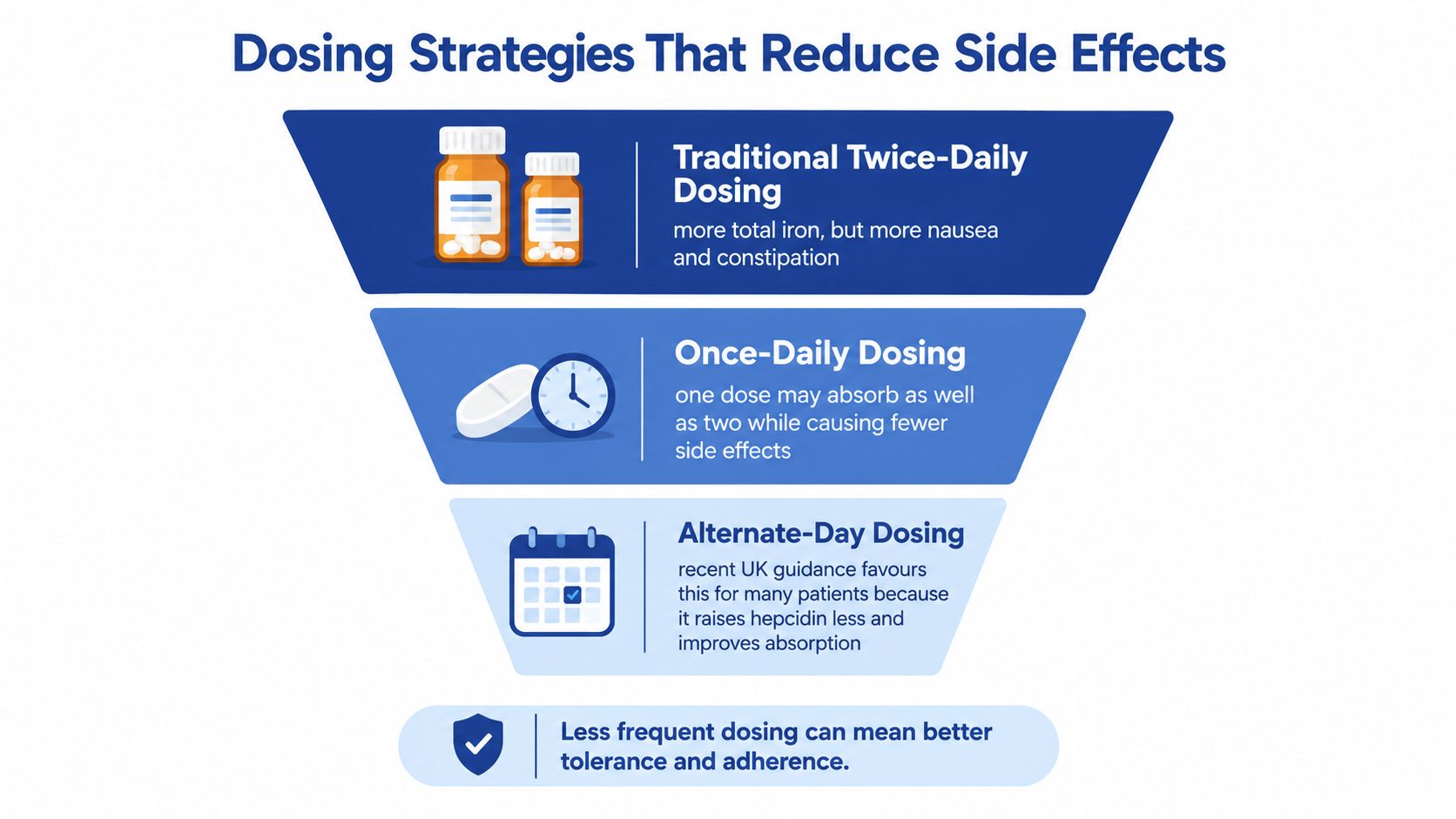
The old assumption that iron must be taken several times daily doesn't suit everyone. Recent UK guidance favours once-daily or alternate-day oral iron for many patients, because less frequent dosing may improve absorption, reduce side effects and make the treatment easier to follow.
The North East and North Cumbria guidance supports 50 to 100 mg of elemental iron daily in many adults, using ferrous sulphate, ferrous fumarate or ferrous gluconate as standard options. It also recognises alternate-day dosing when intolerance is significant. That range is not a personal prescription, and the correct amount depends on blood results, the cause of deficiency and clinical advice.
Once daily may be enough
Once-daily treatment reduces the number of tablets you need to remember and can limit repeated exposure to unabsorbed iron in the digestive tract. For some patients, it offers a useful middle ground between an effective treatment dose and a tolerable routine.
The word “once” matters. Taking the same total daily amount in multiple doses isn't automatically better. Frequent dosing can affect the body's iron-regulating response, which is one reason newer protocols place more emphasis on spacing.
Alternate days can help when symptoms dominate
Alternate-day dosing means taking iron on one day and leaving the next day free. This approach may suit people who develop constipation, nausea or diarrhoea with daily use. It can also reduce tablet burden, which makes the regimen easier to maintain.
It may not be appropriate for every situation, especially where deficiency is severe, ongoing blood loss is present or a clinician has given specific instructions. If you've been prescribed iron, discuss changes before making them.
For practical details on elemental iron and administration, see this guide to iron supplements and dosage. Keep a simple record of the days you take your supplement and any symptoms you notice. That gives your pharmacist or GP useful information if the plan needs adjusting.
A tolerable regimen is part of effective treatment. A schedule you can follow is more useful than a theoretically ideal schedule that repeatedly causes you to stop.
Choosing the Right Iron for Your Situation
The cause of low iron should influence the next step. A person with low intake may need dietary support and a suitable supplement, while someone losing blood or failing to absorb iron may need investigation and a different treatment route.
| Situation | What deserves attention | Possible direction |
|---|---|---|
| Heavy periods | Ongoing blood loss may continue to reduce iron stores | Arrange assessment, then discuss oral iron form and schedule |
| Pregnancy | Iron needs and treatment decisions require individual clinical advice | Use antenatal guidance rather than choosing a high-strength product alone |
| Vegan or vegetarian diet | Non-haem iron is more affected by meal composition | Review dietary intake, timing and a suitable non-animal form |
| Sensitive digestion | Nausea or constipation can undermine adherence | Consider a less frequent schedule or discuss bisglycinate |
| Bowel disease or suspected malabsorption | The supplement may not be absorbed adequately | Seek medical review rather than repeatedly changing brands |
| Confirmed anaemia | The underlying cause and blood results matter | Follow a prescribed plan and arrange monitoring |
Heavy periods and pregnancy
Menstruation is one reason women of reproductive age can have higher iron needs. Heavy or prolonged bleeding, however, shouldn't be managed indefinitely with over-the-counter tablets without investigating the cause. If bleeding is substantial or symptoms are worsening, speak with a GP.
Pregnancy also changes the decision. The right product and dose depend on individual blood results, pregnancy care and professional advice. A general women's multivitamin may not provide the treatment needed for established deficiency, while a high-dose iron product may be unnecessary for someone without low iron.
Digestive conditions and malabsorption
The NHS identifies blood loss, pregnancy, dietary deficiency and malabsorption among causes of iron-deficiency anaemia in its clinical guidance on iron-deficiency anaemia. If bowel disease, previous gastrointestinal surgery or persistent digestive symptoms may be involved, switching brands repeatedly can delay the right assessment.
Some people need prescription oral iron, a supervised alternate-day plan or referral for intravenous iron. The best answer may therefore be a medical pathway rather than a retail product.
Plant-based diets
A vegan or vegetarian diet can provide iron through beans, lentils, tofu, leafy vegetables and fortified foods, but the wider meal affects non-haem iron absorption. Pairing sensible food choices with appropriate timing may help. If blood tests confirm deficiency, diet alone may not be enough, particularly when iron stores are depleted.
A women's formula may look appealing because it includes iron, but check the elemental amount and consider whether it matches your actual need. Guidance on a multivitamin for women with iron can help with product comparison, but it shouldn't replace diagnosis or follow-up.
Practical Selection Checklist
Before buying, turn the label into a short set of questions. This prevents marketing language from doing the decision-making for you.
- Check elemental iron: Find the amount of elemental iron per tablet or serving, not just the weight of ferrous sulphate, fumarate or another compound.
- Identify the form: Decide whether a conventional salt or a chelated form such as ferrous bisglycinate better suits your tolerance.
- Review the schedule: Check whether the label supports a practical daily routine and ask a pharmacist about once-daily or alternate-day use if side effects are a problem.
- Inspect the ingredients: Look for allergens, unnecessary additives and ingredients that could clash with medicines or other supplements.
- Check quality information: Look for transparent manufacturing and testing information rather than relying only on claims such as “maximum strength”.
- Compare the cost per dose: A larger bottle isn't automatically better value if the serving size is larger or the product is difficult to tolerate.
Standard-release products may be easier to compare with clinical guidance than modified-release formats. If a product doesn't clearly state elemental iron, serving size and directions, choose one with clearer labelling or ask a pharmacist before using it.
You should also check whether the product is suitable for your diet. Heme iron comes from animal sources, whereas ferrous salts and bisglycinate may be available in vegetarian or vegan-friendly products, depending on the full ingredients and manufacturing process.
What Happens When You Get It Right
Consider two common outcomes. One person chooses a high-strength ferrous sulphate product because the label looks impressive, takes it on an empty stomach despite severe nausea, misses doses and eventually stops. Another discusses the symptoms with a pharmacist, checks the elemental iron, changes the timing or schedule and chooses a form they can continue.
The second person hasn't found a magic tablet. They've removed the biggest practical barrier to treatment: a regimen they can't tolerate. That distinction matters because UK guidance describes nausea, constipation and diarrhoea as common adverse effects, and people often stop taking iron when those symptoms interfere with daily life.
Iron-deficiency anaemia affects 4% to 9% of people aged 1.5 to 64 in the UK, according to the British Dietetic Association's practical guide. The same guide reports low iron stores in 24% of teenage girls and 12% of women of childbearing age. These figures explain why iron is a familiar concern, but they don't tell you which supplement or dose is right for an individual.
The useful end point
Treatment should include a plan for monitoring, not just a purchase. NHS pathways commonly continue oral iron for about three months after haemoglobin normalises to replenish stores, while treatment for iron-deficiency anaemia may last about six months overall. Your clinician may adjust that plan according to the cause, blood results and response.
Choose the form you can tolerate, the schedule you can follow and the product that states elemental iron clearly. If symptoms persist, bleeding continues or treatment doesn't work as expected, ask for reassessment rather than moving from brand to brand.
Vitamin Planet offers iron, vitamins, minerals and other health products from its UK-based online catalogue, including tablets, capsules and targeted formulas. Visit Vitamin Planet to compare clearly labelled options, then use the elemental iron and tolerability checklist before choosing a product.