

Aloe Vera for Hair: What It Actually Does and What to Try
You're standing in front of the bathroom mirror with a blob of clear gel in one hand and a sceptical expression in the other. Your scalp feels tight after washing, your ends look dull, or a few flakes have appeared along your parting. Then you remember the social media videos promising that aloe vera will transform hair growth, and you wonder whether this plant belongs in your routine or in the cupboard with other beauty experiments.
Aloe vera can be useful for scalp comfort, light moisture and wash-day slip, but those benefits aren't the same as growing new hair. A UK review states that there's no human trial showing aloe vera lowers DHT or treats pattern hair loss, and describes the human evidence for scalp hair as virtually absent in its discussion of natural DHT blockers. That distinction matters if you're dealing with thinning, because a soothing ingredient shouldn't be mistaken for a treatment.
The practical question is simpler: can aloe vera make your scalp feel calmer and your hair easier to handle? Often, it may. This guide separates those realistic uses from the claims that go further than the evidence, then shows you how to choose, test and use aloe vera for hair without turning wash day into a chemistry project.
Table of Contents
- Why People Reach for Aloe Vera on Wash Day
- What Aloe Vera Actually Is and How It Works
- Evidence-Based Benefits You Can Realistically Expect
- Pure Gel, Juice, Shampoos and Masks Compared
- DIY Recipes and a Simple Usage Routine
- Safety, Patch Testing and the Shedding Question
- Matching Aloe Vera to Your Hair Type
- A Practical Checklist Before You Buy or Mix
Why People Reach for Aloe Vera on Wash Day
It usually starts with a small irritation. You wash your hair, notice flakes on a dark jumper, and feel the urge to scratch. Or perhaps colour treatment has left your scalp feeling sensitive, while your lengths need moisture but not another heavy oil. Aloe vera seems appealing because it looks light, familiar and plant-based.
The attraction grows when online advice places the ingredient beside dramatic promises about density and regrowth. Someone recommends applying fresh gel overnight; another suggests mixing it with oils; a third presents aloe as a natural answer to every scalp concern. Curiosity is understandable, but the same routine won't suit a dry scalp, an oily root area, fine straight hair and tightly coiled lengths equally well.
People often want more modest results from wash day:
- A more comfortable scalp, particularly when dryness makes the skin feel tight.
- Better glide, so fingers or a comb move through wet lengths with less tugging.
- Light hydration, without the coated feeling that some rich masks leave behind.
- A calmer post-colour routine, provided the formula contains no irritating extras.
- Easier styling, especially when frizz comes from dry, rough-feeling ends.
Aloe vera can fit those aims as a supporting product, not a cure-all. Basic habits such as gentle cleansing, suitable conditioning, heat protection and careful detangling still do most of the routine's work. This guide to ways hair products can support healthy hair is useful context because the condition of the fibre depends on the whole routine rather than one fashionable botanical.
A sensible expectation: try aloe to improve how your scalp and hair feel. Don't use it as proof that a hair-loss condition is being treated.
That mindset also makes results easier to judge. If your scalp feels less tight or your conditioner spreads more smoothly, those are meaningful cosmetic benefits. If your goal is to reverse a widening parting or androgenetic hair loss, you'll need an evidence-based assessment instead of relying on aloe alone.
What Aloe Vera Actually Is and How It Works
Aloe vera, usually listed botanically as Aloe barbadensis, is a succulent whose leaves contain a clear inner gel. That gel is largely water, with dissolved polysaccharides and smaller amounts of amino acids, enzymes and minerals. The plant's yellow latex sits closer to the outer leaf and is a different material, which is why the preparation matters.
Think of the inner gel as a very thin, water-holding sponge. It can spread over the scalp and hair, retain moisture at the surface and leave a temporary film that improves slip. That film doesn't rebuild a damaged follicle or permanently repair a split end. It can, however, make wet hair feel smoother while you cleanse, condition or detangle.
The compounds that matter
Polysaccharides, including compounds commonly discussed such as acemannan and glucomannan, give the gel some of its cushion and film-forming behaviour. They're relevant to moisture and handling rather than proof of follicle stimulation. Amino acids can contribute to the conditioning feel of a formula, although the presence of an ingredient doesn't establish that it will materially increase keratin production in a person's scalp.
Aloe also contains enzymes and other plant compounds that are often associated with gentle surface cleansing or soothing activity. Those mechanisms are plausible for a flaky or irritated scalp, but a plausible mechanism still needs human scalp evidence before it becomes a hair-growth claim.
The leaf itself is worth separating into three parts:
- Inner-leaf gel, the clear material generally preferred for topical use.
- Whole-leaf preparations, which may contain more components from the outer leaf.
- Decolourised or processed products, where unwanted latex compounds have been reduced or removed.
Ingredient labels can therefore tell you more than a green leaf picture on the packaging. Look for the named aloe ingredient and check what else sits around it, particularly fragrance, drying alcohols and preservatives.
If you're comparing plant-based products more broadly, Biona Tart Cherry Juice is an example of a separate food product made from organic tart cherries, not an ingredient for applying to hair or scalp. Keeping oral products and topical treatments in their proper categories prevents a common mistake, assuming that “natural” means interchangeable.
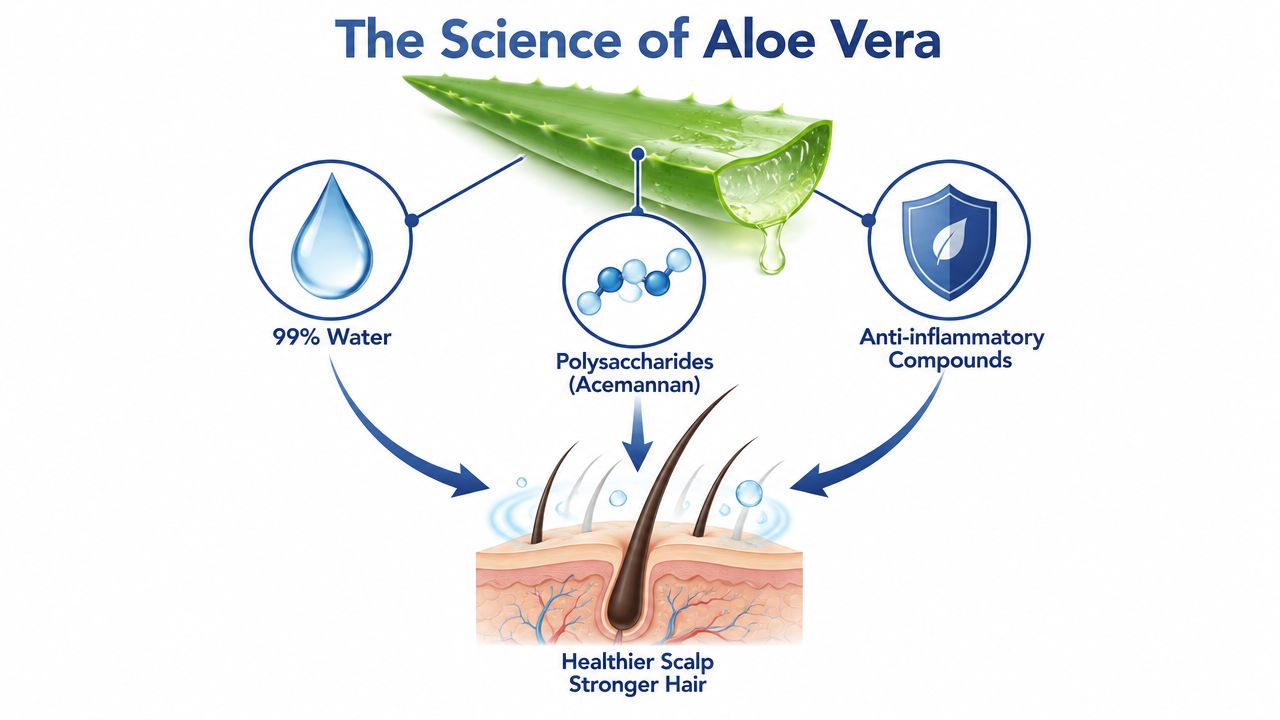
The mechanism summary is straightforward: water plus polysaccharides may support surface hydration and slip, while other compounds may help a scalp feel less irritated. None of that, by itself, demonstrates that aloe lowers DHT, treats alopecia or creates new density.
Evidence-Based Benefits You Can Realistically Expect
Aloe vera makes the most sense as a comfort and conditioning ingredient, not as a proven hair-growth treatment. A softer feel does not show that follicle activity has changed, just as a moisturiser can ease dry skin without treating a chronic rash.
Scalp hydration and comfort
The clearest reason to try aloe is a dry-feeling, tight scalp. Its water-rich texture and polysaccharides may provide light surface hydration and make the scalp feel more comfortable. A UK evidence review describes aloe as potentially soothing for irritation or flaking, while finding no evidence that this effect leads to regrowth in its review of natural DHT blockers.
This is a surface benefit, similar to adding a thin layer of moisture to dry skin. It may improve how the scalp feels without changing the condition causing the dryness.
Itch and flaking
Aloe's soothing effect is plausible but limited. Some people may notice less irritation, but ongoing itch, heavy flaking or redness can point to psoriasis, seborrhoeic dermatitis or persistent dandruff. Aloe should not replace treatment for those conditions. Results also depend on the extract, the product formula and the reason the scalp is irritated.
Conditioning slip and breakage
Aloe can give hair temporary slip, allowing strands to separate more easily during washing or detangling. Less pulling may mean less mechanical stress and fewer avoidable snapped hairs. That is a handling benefit, not evidence that aloe strengthens the fibre internally or stimulates follicles.
Sebum regulation
Evidence is weak for controlling oily roots. Aloe can feel fresh because it is light and water-based, but that sensation does not show that it has normalised sebum production. Rapid oiliness may relate more to cleansing habits, product build-up or an underlying scalp condition.
Hair growth and DHT
Hair-growth claims need the most restraint. The cited UK review reports no human trial showing that aloe lowers DHT or treats pattern hair loss. Human evidence for aloe and scalp hair is limited, so describing it as a natural hair-growth treatment goes beyond what clinical evidence supports.
| Claim | Evidence Type | Verdict |
|---|---|---|
| Scalp moisture and comfort | Topical use and mechanism-based reasoning | Plausible, limited |
| Relief for irritation or flaking | UK consumer and clinical-context discussion | Plausible, limited |
| Easier detangling | Cosmetic conditioning effect | Useful but cosmetic |
| Sebum control | Limited direct scalp evidence | Weak |
| New growth or lower DHT | No human trial demonstrating the claim | Weak |
A complete aloe plant guide can clarify the plant's parts and help explain why different preparations may behave differently. Plant background does not establish every traditional or cosmetic use as an effective hair-loss treatment.
UK consumer demand appears stronger than the evidence base. Belgravia Centre reports that an aloe vera Garnier shampoo-bar variant ranked first for value and unit sales in Great Britain for the 52 weeks ending 11/09/21 and again for the 52 weeks ending 05/11/22 in its discussion of aloe vera and hair growth. Those sales show that shoppers are interested in aloe products. They do not show that aloe regrows hair.
Pure Gel, Juice, Shampoos and Masks Compared
The format determines how much control you have, how long the product stays on the scalp and how many extra ingredients come with it. Pure gel gives you a direct, simple preparation, while a shampoo prioritises cleansing and convenience. Neither format automatically delivers a stronger hair result.
| Format | Typical Potency | Cost per Use | Best For | Watch For |
|---|---|---|---|---|
| Fresh inner-leaf gel | Highest control over the gel itself | Can be economical, but preparation takes effort | Short pre-shampoo scalp treatments | Latex residue, spoilage and contamination |
| Bottled aloe juice or gel | Variable and often diluted | Convenient for regular use | Light scalp application or sprays | Preservatives, alcohol, fragrance and dilution |
| Aloe shampoo or conditioner | Usually a supporting ingredient | Easy to include in an existing routine | Wash-day slip and convenience | Short contact time and long ingredient lists |
| Pre-made mask | Variable, depending on the formula | Simple, with no mixing | Occasional conditioning | Added fragrance, oils or heavy coatings |
How to read the label
Aloe may appear as Aloe Barbadensis Leaf Juice or a similar botanical name. If it sits near the end of a long ingredient list, the product may still feel pleasant, but you shouldn't assume it contains a concentrated aloe treatment. The words “aloe vera” on the front of a pack don't, by themselves, tell you the percentage or potency.
Short contact products deserve realistic expectations. A shampoo is rinsed away quickly, so any benefit may come more from the overall cleansing and conditioning formula than from aloe specifically. A leave-in gel or pre-shampoo mask gives the ingredient longer contact, but also increases the importance of patch testing.
For a ready-made topical option, you can compare the ingredient list and directions for Aloe Pura Aloe Vera Gel 200ml. Treat the product as a cosmetic preparation, not a hair-loss medicine, and assess whether its supporting ingredients suit your scalp.
A separate example, BioBees Fresh Royal Jelly, is an oral supplement made from fresh royal jelly. It isn't an aloe preparation and shouldn't be mixed into a scalp mask.
Quick rule: the shorter the contact time, the less sensible it is to expect aloe alone to change the scalp. Choose shampoo for convenience, a mask for conditioning, and a simple gel when you want to test the ingredient itself.
DIY Recipes and a Simple Usage Routine
DIY aloe can be easy, but freshness and restraint matter more than elaborate combinations. Use clear inner-leaf gel, avoid the yellow sap close to the rind, and prepare only a small amount so you're not storing a jar of contaminated water and plant material for weeks.
A pre-shampoo scalp soother
Mix 2 tablespoons of fresh inner-leaf gel with 1 teaspoon of jojoba oil. Apply it to the scalp in sections, using light fingertip pressure rather than vigorous scrubbing, then leave it for 10 minutes before shampooing.
This recipe is aimed at surface comfort. Jojoba adds a more emollient feel, so use less or omit it if your roots become greasy easily. Rinse thoroughly and stop if the scalp stings.
A slip-boosting conditioner
Whisk 3 tablespoons of aloe gel into 100 ml of plain yoghurt or silicone-free conditioner. Spread it over the mid-lengths and ends after shampooing, leave it briefly while you finish washing, then rinse well.
Keep this away from the scalp if you're prone to build-up. The purpose is easier distribution and detangling, not follicle treatment.
A light leave-in spritz
Blend 4 tablespoons of gel with 100 ml of distilled water and 5 drops of glycerine. Decant it into a clean spray bottle, mist lightly over damp lengths and scrunch or smooth through the ends.
Glycerine can feel sticky in some weather, especially when the hair already feels coated, so start with a small amount of spray. Homemade mixtures should be refrigerated and used within 3 to 5 days, then discarded if the smell, colour or texture changes.
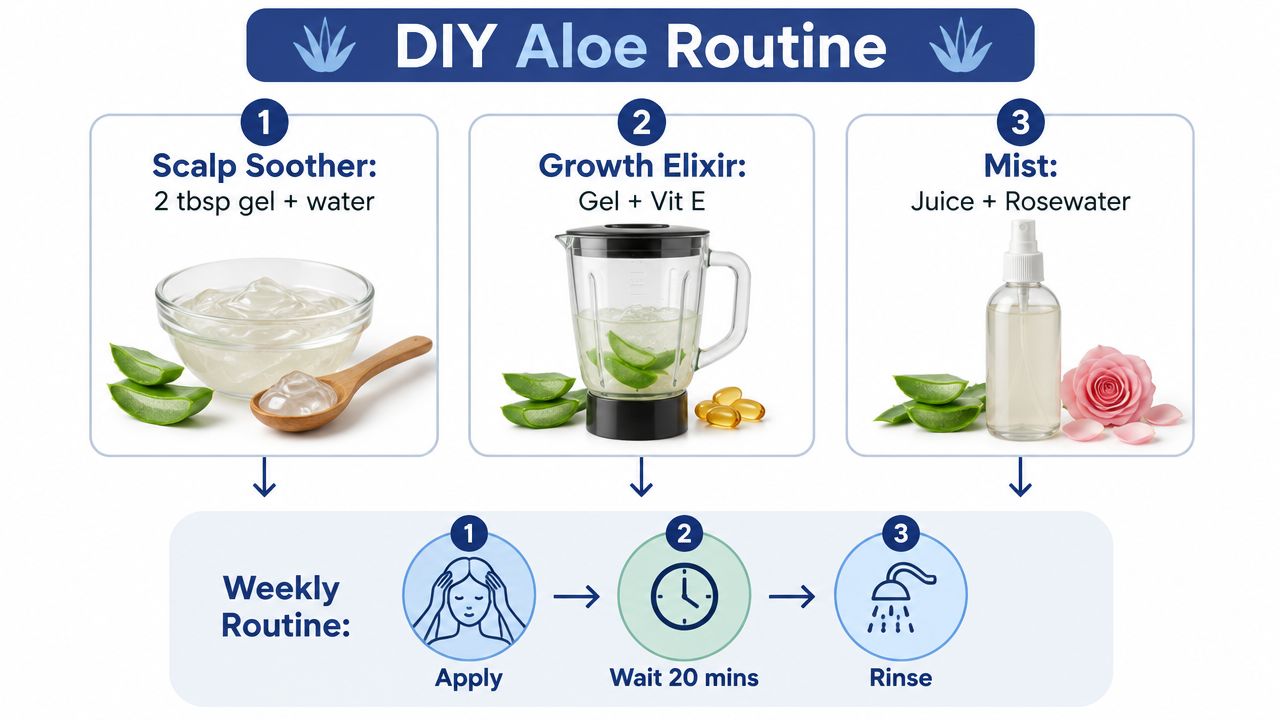
A repeatable weekly rhythm
- Cleanse first. Use your normal shampoo when there's visible build-up or residue.
- Treat on a separate wash day. Apply one aloe recipe rather than layering all three.
- Rinse or leave in deliberately. The soother and conditioner are rinse-off options. The spritz is a light leave-in.
- Deep-condition weekly if needed. Aloe won't replace a richer conditioner when the lengths are very dry.
- Patch-test the night before. Apply a small amount of the exact mixture to the inner forearm and check the area before scalp use.
For a visual walkthrough of the routine, use the following video as a demonstration of application style, not as proof of hair-growth effects.
Safety, Patch Testing and the Shedding Question
“Natural” describes an origin, not a safety guarantee. Aloe can be well tolerated, but a plant ingredient can still irritate skin or trigger allergic contact dermatitis. A UK pharmacy guide says rare irritation can lead to temporary telogen effluvium, while also noting that there are no large-scale clinical trials showing aloe directly causes hair loss and no established link with permanent hair loss in its safety guide.
Test before applying
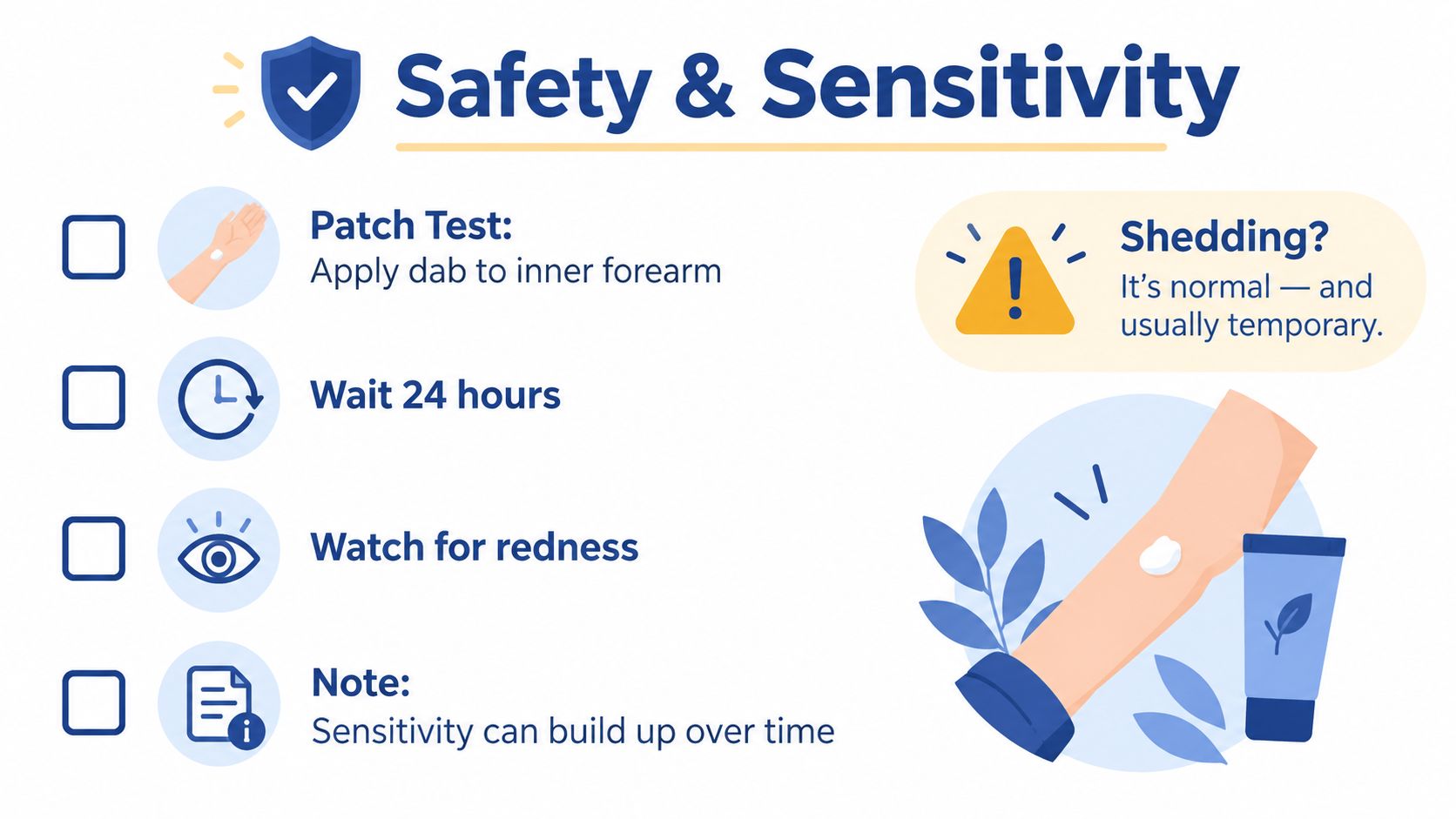
Use a small dab of the gel or diluted juice on the inner forearm. Leave the area undisturbed for 24 hours, and check for redness, itching, swelling, burning or a rash before applying the mixture to your scalp.
A first test can be clear while repeated use later causes sensitivity. Keep watching your scalp during future applications, particularly after changing from a simple gel to a fragranced commercial product.
Choose the preparation carefully
Unprocessed raw latex can contain anthraquinone compounds, including aloin, which may irritate skin. Food-grade and cosmetic-grade preparations are processed to reduce or remove these compounds, but product quality varies, so don't assume that a raw leaf is automatically gentler.
Aloe also doesn't pull healthy hairs out by the root. Massage can dislodge strands that were already ready to shed, making the amount in the drain look alarming. If shedding continues, becomes marked or appears alongside thinning, the ingredient may be distracting you from an underlying issue that deserves assessment.
Stop using the product if you develop burning, persistent itching, a rash around the ears or neck, swelling or hives. A medicated problem such as psoriasis or seborrhoeic dermatitis needs appropriate clinical care, not a kitchen remedy. For wider guidance about checking supplement and product claims, this safety guide on supplement myths and facts offers useful consumer context, although it isn't a substitute for medical advice.
Matching Aloe Vera to Your Hair Type
Aloe should adapt to your hair rather than dictate the routine. The same watery gel that feels comfortable on a dry, tightly curled length can leave fine hair limp if it's applied heavily at the roots.
Curls and coils
Curly and coily hair often benefits from extra slip during sectioning and detangling. Apply a small amount to damp lengths, smooth it between your palms and scrunch it into the ends before your usual styling product.
For looser waves, keep the product lighter and focus below the ears. For dense coils, work in sections so the gel reaches the surface without requiring rough combing. A useful external guide to choosing a shampoo for all hair types including curly can help you assess the rest of the cleansing formula, because aloe can't compensate for a shampoo that leaves your hair stripped.
Fine or straight hair
Fine hair usually needs less product. Try a small amount of gel scrunched into the ends or mixed into conditioner, and avoid saturating the roots unless the scalp itself feels dry.
If your hair looks flat, sticky or stringy after drying, reduce the amount or switch to a rinse-off format. A light finish is more useful than a heavy layer that makes the next wash feel urgent.
Oily scalps
Use diluted juice, a light gel rinse or an aloe-containing shampoo rather than an overnight mask. Keep oils away from the roots, and cleanse according to your normal needs rather than trying to suppress oil with repeated treatments.
Aloe may feel cooling, but that doesn't establish that it regulates sebum. If itching, scale or odour persists, ask a pharmacist or clinician about suitable scalp care.
Colour-treated or chemically processed hair
Prioritise a simple gel or an alcohol-free commercial product, and patch-test before applying it across freshly treated skin. Avoid assuming that every bottled juice is interchangeable, since added acids, fragrance or alcohol may affect comfort and the feel of processed hair.
| Hair Type | Best Preparation | Application Tip | Caution |
|---|---|---|---|
| Waves and curls | Light gel or aloe conditioner | Scrunch into damp lengths | Too much can reduce bounce |
| Coils | Gel mixed into conditioner | Apply in sections for slip | Avoid rough massage at the root |
| Fine straight hair | Diluted gel or rinse-off mask | Concentrate on ends | Heavy application can flatten roots |
| Oily scalp | Diluted juice or shampoo | Keep contact time short | Don't use rich overnight mixtures |
| Colour-treated hair | Simple, alcohol-free gel | Use on lengths first | Watch for irritation and added acids |
If the scalp is sensitive, your cleansing base matters just as much as the aloe. Choose the whole formula according to your hair and scalp needs, rather than buying solely because the front label features a plant.
A separate product in the wider wellness category, METABURN 60 Capsules, is a weight-management supplement and has no role in applying aloe vera to hair or treating scalp concerns.
A Practical Checklist Before You Buy or Mix
Aloe is worth testing when you have a clear, modest objective. You might want a light pre-shampoo treatment for a dry-feeling scalp, more slip on wash day or a simple leave-in for frizz at the ends. You're less likely to benefit from adding it if your current routine already keeps your scalp comfortable and your hair manageable.
Check the product before it reaches your scalp
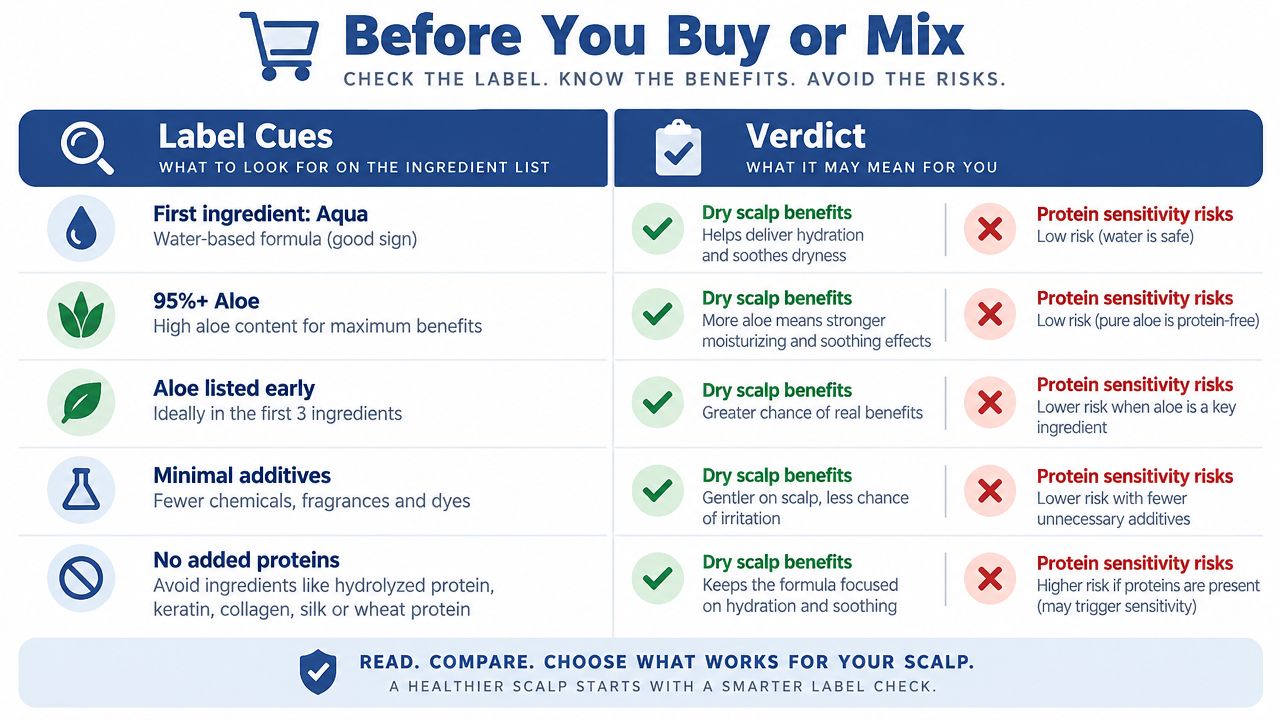
- Read the ingredient list. Look for Aloe Barbadensis Leaf Juice or a comparable aloe ingredient, then see where it appears.
- Inspect the supporting formula. If your scalp reacts easily, be cautious with strong fragrance, added colour and drying alcohol high in the list.
- Separate marketing from concentration. “Aloe vera” on the front doesn't tell you how much is present.
- Choose the format for the job. A shampoo offers convenience, a mask offers conditioning time, and a simple gel gives you more control.
- Test every new mixture. Use the inner-forearm test and wait 24 hours before applying it to your scalp.
- Date homemade preparations. Refrigerate them and discard them within the stated freshness window rather than trying to rescue an old mixture.
The bottom line is uncomplicated. Aloe vera is a reasonable scalp-soothing and conditioning-slip ingredient, not a proven hair-growth treatment. It may suit someone with mild dryness, surface irritation or difficult detangling, while someone with persistent scale, sudden shedding or pattern thinning needs a more targeted approach.
Use a go or no-go test based on your actual need:
- Go if your goal is comfort, light moisture or easier handling.
- Go carefully if your scalp is reactive, oily or recently coloured.
- No-go as a sole treatment if you're trying to reverse visible hair loss.
- Stop and seek advice if irritation, rash or ongoing shedding appears.
Vitamin Planet brings together hair-care products, beauty nutrition and wider health essentials, so you can compare a topical aloe preparation with the rest of your routine in one UK-focused catalogue. Visit Vitamin Planet to browse the available hair and personal-care options, then choose based on your scalp needs rather than the biggest hair-growth promise.