

Sea Kelp Tablets: What They Are and How to Choose
“Sea kelp tablets are a natural iodine supplement” sounds like useful shopping advice. It's also incomplete. Kelp is a concentrated marine plant, and the amount of iodine in a tablet can vary considerably between products, batches and serving sizes. In the UK, the more useful question isn't only whether kelp contains iodine. It's whether you know how much iodine your chosen tablet delivers, whether that amount has been tested, and whether your thyroid can tolerate it.
A 2014 UK retail survey found a median iodine content of 127 micrograms per capsule or tablet, with an interquartile range of 65 to 368 micrograms. Its estimated median iodine dose per serving was 664 micrograms, and some products exceeded the tolerable upper limit. The published UK survey helps explain why sea kelp tablets deserve more careful scrutiny than their “natural” image suggests.
Table of Contents
- What Sea Kelp Tablets Actually Are
- The Nutrient Profile Inside a Kelp Tablet
- Why People Take Sea Kelp Tablets
- The Iodine Dose Problem You Should Not Ignore
- Typical Dosages and How to Read the Label
- Who Should Avoid Sea Kelp Tablets
- How to Choose a Quality Sea Kelp Tablet
- The Honest Bottom Line on Sea Kelp Tablets
What Sea Kelp Tablets Actually Are
Sea kelp is a large brown seaweed that grows in cold coastal waters, including waters around the UK, the North Atlantic and parts of the Pacific. Products may use species from groups such as Ascophyllum or Laminaria, but the label doesn't always give enough detail to identify the species, harvest area or processing method.
The simplest way to picture a kelp tablet is as a compressed portion of dried underwater vegetation. Kelp absorbs minerals from the surrounding seawater rather than drawing them from soil, so drying removes water while concentrating the material that remains. Manufacturers then mill the dried seaweed into powder and compress it into tablets, or place it inside capsules with other ingredients used to give the product shape and stability.
That process matters because the tablet isn't a purified iodine medicine. It's a concentrated piece of seaweed, and its composition depends on the plant and the water where it grew.
From coastal plant to supplement
A finished tablet may contain kelp powder alongside excipients such as a bulking or binding agent. The kelp itself can contribute iodine, minerals, fibre-like compounds and other naturally occurring substances. It may also carry unwanted contaminants if the source water or manufacturing controls aren't properly managed.
This is why two products with similar kelp powder weights can behave differently nutritionally. One tablet may contain a modest iodine amount, while another may provide a much larger dose. The weight of the seaweed powder alone doesn't tell you the iodine dose.
Practical rule: Treat kelp powder as a variable raw ingredient, not as a standardised iodine dose, unless the manufacturer provides credible testing for iodine per tablet.
For readers who want a broader introduction to the ingredient and its uses, Peak Performance's organic sea kelp4 guide offers additional background. Keep that general information separate from the question that matters most for supplementation, namely how much iodine the finished product delivers.
The Nutrient Profile Inside a Kelp Tablet
Iodine is the headline nutrient in sea kelp, but it isn't the only substance present. Brown seaweed can also contain smaller amounts of minerals such as iron, calcium, magnesium, potassium and manganese, together with plant compounds and soluble fibres. The exact profile depends on the species, growing conditions and processing.
The difficulty is that a tablet's label may emphasise the kelp quantity without giving a reliable iodine quantity. That reverses the order in which you should assess the product. For thyroid-sensitive consumers, the iodine figure is usually more important than the impressive-sounding weight of dried seaweed.
What the tablet may contain
Kelp also contains compounds such as alginate, a soluble fibre associated with the structure of brown seaweed. These substances may be nutritionally interesting, but a kelp tablet shouldn't automatically be treated as a complete mineral supplement or a substitute for a varied diet.
The following table is deliberately cautious. It shows the nutrients commonly associated with dried kelp, but it doesn't assign invented amounts to a variable product.
| Nutrient | Approximate Amount | % UK Adult RNI |
|---|---|---|
| Iodine | Highly variable by species, source and serving | Cannot be calculated reliably without tested product data |
| Iron | Small or variable amount | Product-specific |
| Calcium | Small or variable amount | Product-specific |
| Magnesium | Small or variable amount | Product-specific |
| Potassium | Small or variable amount | Product-specific |
| Manganese | Small or variable amount | Product-specific |
| Vitamin K and folate | May be present in modest amounts | Product-specific |
| Alginate and other seaweed fibres | Present in varying amounts | No UK adult RNI established |
A useful comparison is a handful of herbs versus a concentrated spice extract. The original plant may be safe and familiar, but a concentrated format can deliver a very different dose. Kelp has a similar issue, except iodine is the nutrient that makes the difference especially important.
People comparing sea kelp with other natural foods may also find it useful to browse this guide to super foods for outdoor enthusiasts, while a wider explanation of micronutrients is available in this healthy person's guide to vitamins and minerals. For shoppers considering other kinds of wellness products, BioBees Fresh Royal Jelly Capsules are listed with fresh royal jelly, propolis extract and bee pollen, which is a different ingredient profile from kelp and shouldn't be used as a comparison for iodine intake.
Why People Take Sea Kelp Tablets
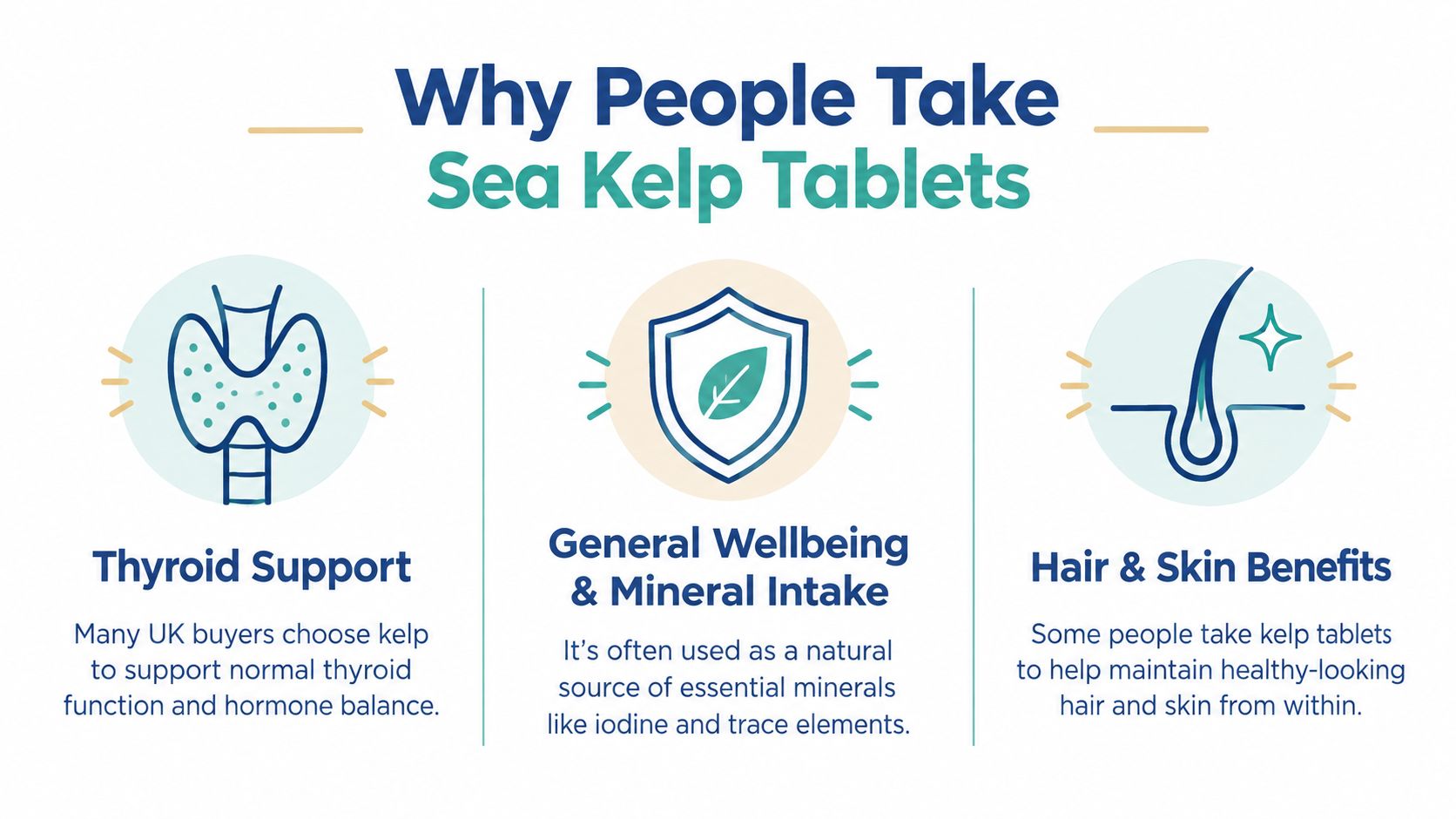
Most buyers choose sea kelp tablets for a small number of familiar reasons. The strongest rationale concerns iodine, because iodine is needed to make thyroid hormones. That doesn't mean extra iodine improves thyroid function in everyone. It means a measured intake may be relevant when someone has genuinely low iodine intake and a clinician has identified a suitable way to correct it.
The distinction is important. A person avoiding fish, eggs, dairy and iodised foods may have a different iodine intake from someone who eats those foods regularly. A supplement can only address a deficiency-related problem. It can't turn a normal thyroid into a faster-working one.
Separating plausible uses from marketing
Thyroid support is the most biologically plausible reason to consider iodine. The benefit belongs to people with inadequate intake, not to people who already consume enough. Because kelp tablets can deliver unpredictable amounts, they're a poor choice when the aim is precise correction.
Hair, skin and nails are often included in kelp marketing. Thyroid dysfunction can affect hair and skin, so correcting a deficiency-related thyroid problem may help when that problem is the underlying cause. It doesn't follow that iodine will improve hair growth or skin quality in a well-nourished person with normal thyroid function.
Weight management is a more questionable claim. Iodine is involved in thyroid hormone production, but adding iodine does not reliably increase metabolic rate when thyroid function and iodine intake are already adequate. A kelp tablet should not be used as a weight-loss product just because its marketing mentions metabolism.
The honest summary is narrow but useful: sea kelp tablets may have a role in a carefully assessed iodine plan, but they aren't a general-purpose energy, beauty or slimming supplement.
The Iodine Dose Problem You Should Not Ignore
A kelp tablet's most important feature may be the one its marketing makes easiest to overlook: the measured iodine dose. UK research has found large variation in seaweed products, while specific iodine labelling has remained uncommon. A UK market study covering the period from 2018 to 2021 found that median iodine doses in a single serving of seaweed food products exceeded 400 micrograms in every year studied, and product availability was 2.3 times higher than in the last published dataset from 2015. The British Food Journal study links growing access with continuing labelling concerns.
For context, the commonly used UK adult iodine reference value is 150 micrograms, while the European Food Safety Authority adult upper limit is 600 micrograms per day. A product can therefore move from apparently modest to excessive without the consumer changing anything except the brand.
Why the label can mislead
A label might state the weight of kelp powder but not a standardised iodine amount. Even where an iodine figure appears, independent testing has raised concerns about whether the contents match the claim. Endocrinology literature summarising UK-relevant evidence describes typical kelp tablet doses of roughly 1,000 to 10,000 micrograms of iodine per tablet or capsule, with frequent label inaccuracy and enough iodine to exceed the EFSA upper limit. This endocrinology review describes the resulting risk of iodine-induced hypothyroidism or hyperthyroidism, particularly in people with autonomous thyroid function or Graves' disease.
A worked example shows the problem. If a tablet claims to provide 150 micrograms, but the product has not been properly standardised, the printed figure may not be a dependable measure of what you swallow. The danger isn't that every tablet contains an excessive amount. It's that the buyer may have no reliable way to distinguish a low-dose product from a high-dose one.
This is also where contamination deserves attention. Seaweed can accumulate substances from the water in which it grows, so responsible buying involves more than checking iodine. Evidence from UK-relevant kelp supplement research highlights historical variation in iodine doses and the importance of clearer quality control, including testing for contaminants and batch consistency.
For a wider perspective on common supplement misunderstandings, see this guide to supplement safety myths and facts. It's especially relevant if “natural” has become shorthand for “risk-free” in your shopping decisions.
Typical Dosages and How to Read the Label
Many UK products present a serving instruction rather than a clearly verified iodine dose. Some labels may recommend one or more tablets, but the number of tablets is less useful than the amount of iodine in each tablet and the evidence supporting that figure.
Start with the iodine amount per tablet, not the kelp powder weight. A product that lists hundreds of milligrams of kelp may sound stronger than one listing less powder, yet powder weight doesn't provide a reliable comparison between different species or suppliers.
A practical label check
Look for these details in order:
- Iodine per tablet. The label should state the iodine amount clearly, rather than only naming kelp powder.
- Serving size. Check whether the stated iodine applies to one tablet or a multi-tablet serving.
- Testing information. Look for batch-specific or independently verified results, not just a generic quality statement.
- Warnings. Read the thyroid, pregnancy, medication and allergy cautions before considering the product.
- Manufacturer contact details. A responsible supplier should be able to answer questions about sourcing and testing.
The UK adult reference value of 150 micrograms and the EFSA adult upper limit of 600 micrograms per day provide useful context, but they don't turn an untested kelp tablet into a controlled supplement. A tablet that appears to sit below the reference value could still be inaccurately labelled.
If you're considering kelp because you suspect low iodine, ask a GP or pharmacist whether you need an assessment rather than guessing from the front of a packet.
Discuss existing thyroid function, medicines and the need for blood tests with a healthcare professional. That's particularly important if you take levothyroxine or antithyroid medicine, or if you're considering regular use rather than an isolated dietary change.
Who Should Avoid Sea Kelp Tablets
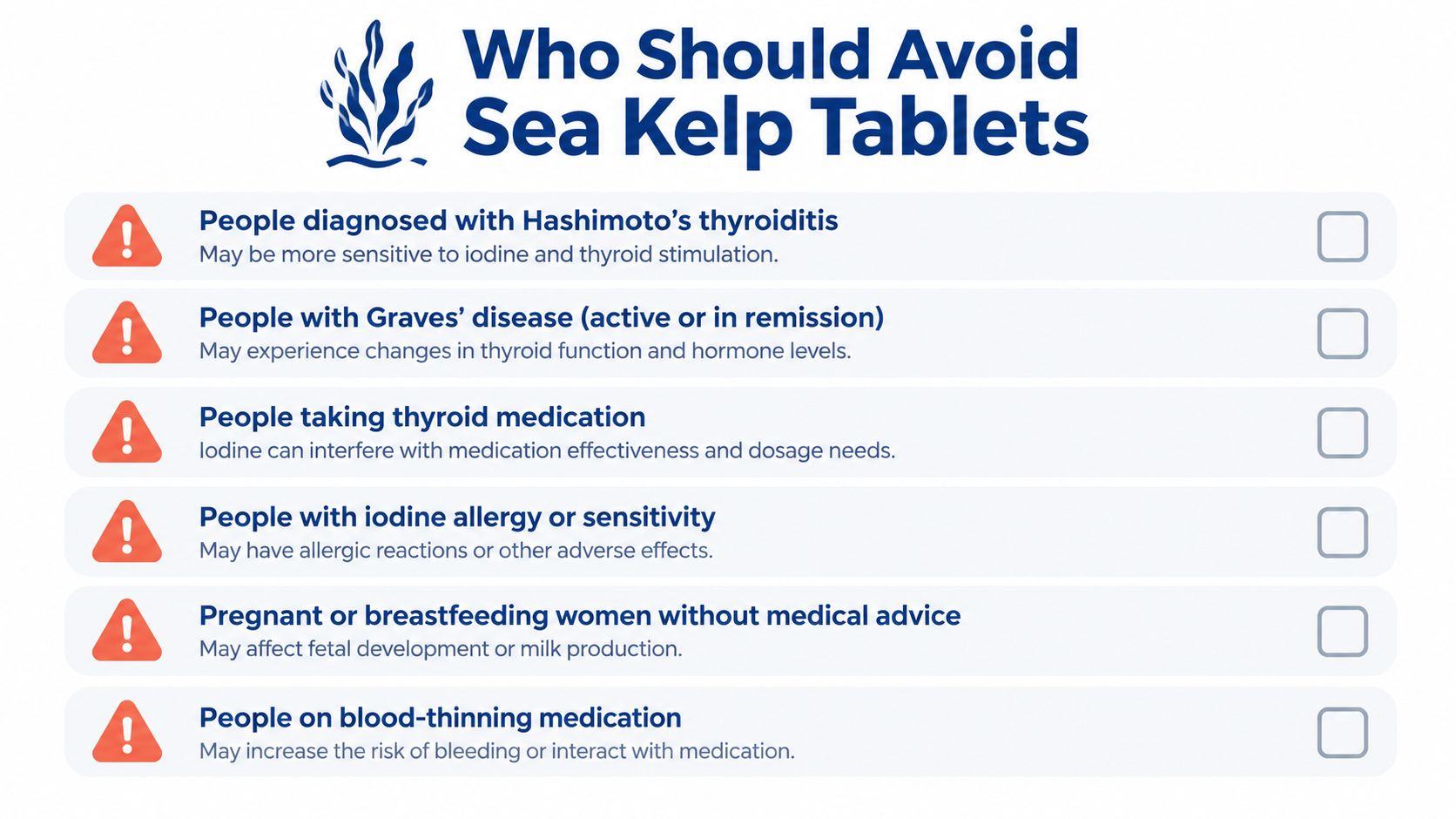
Some people should avoid sea kelp tablets unless a clinician has specifically advised them to use one. The concern isn't only the presence of iodine. It's the possibility that an unpredictable iodine dose could interfere with an existing condition or treatment plan.
Thyroid conditions and medicines
People diagnosed with Hashimoto's thyroiditis, Graves' disease, thyroid nodules or other thyroid disorders should get medical advice first. This includes people whose Graves' disease is in remission. Added iodine may destabilise thyroid control in susceptible individuals rather than provide the expected support.
The same caution applies to anyone taking levothyroxine or antithyroid medicines. Don't assume that a food-based supplement is too mild to matter. A variable dose can complicate treatment, symptoms and the interpretation of follow-up blood tests.
Pregnancy, breastfeeding and younger people
Pregnancy and breastfeeding require particular care because iodine affects thyroid hormone production in both the mother and developing or nursing child. The British Dietetic Association advises that brown seaweed and kelp have very high iodine concentrations and says kelp supplements shouldn't be used as an iodine source. Its UK iodine guidance also warns that the amount can vary substantially from the label and may exceed the adult daily requirement.
Children and adolescents shouldn't use adult kelp tablets without professional advice. Their nutritional needs and safe intake limits differ, and food-first sources are easier to control.
People with known iodine sensitivity, unusual reactions to seaweed products or conditions requiring specialist dietary management should also ask a clinician before use. The practical rule is straightforward: if you have a diagnosed condition, take prescribed medication, are pregnant or breastfeeding, or are planning a pregnancy, speak to a GP or pharmacist before buying sea kelp tablets.
How to Choose a Quality Sea Kelp Tablet
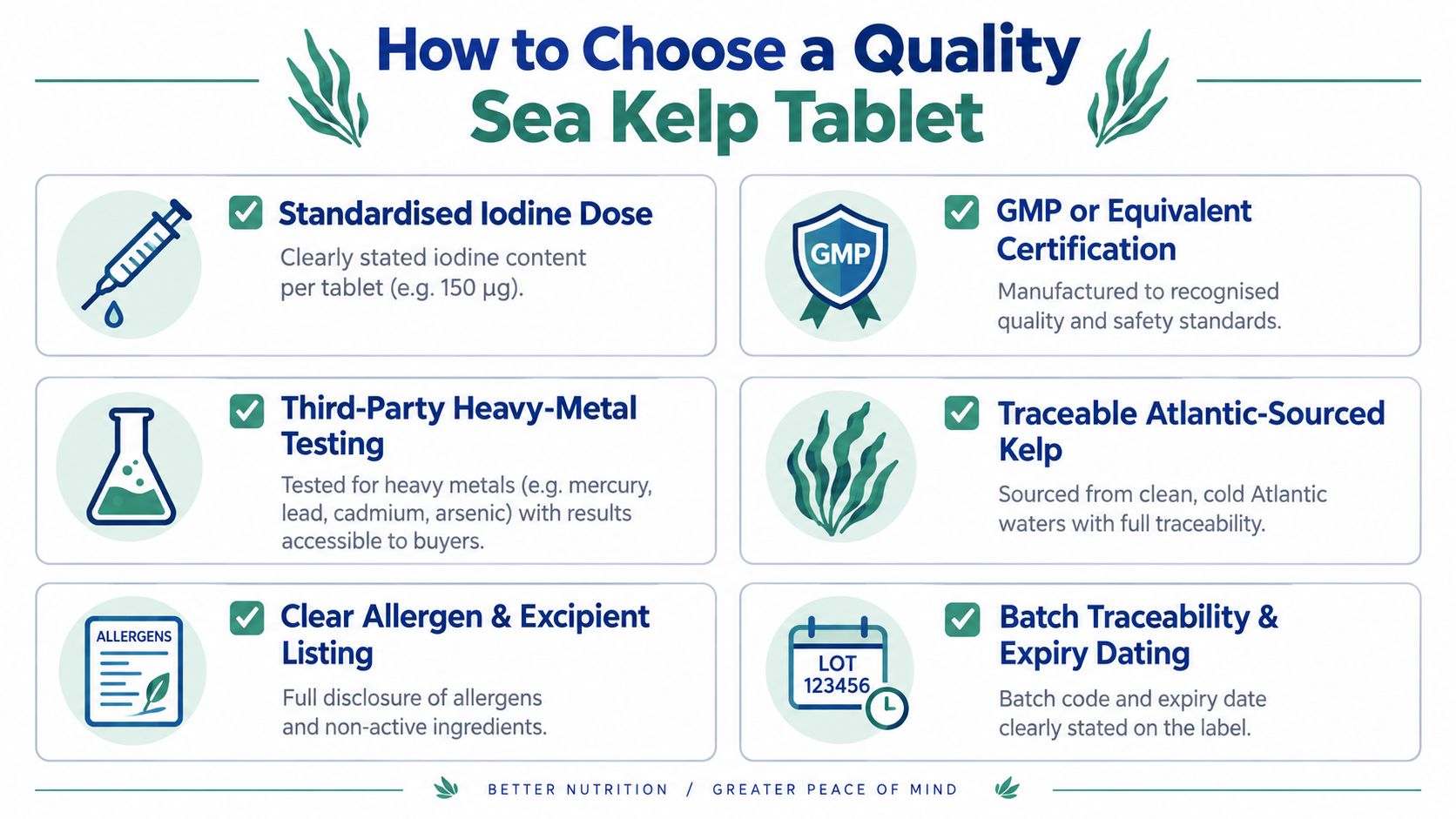
A better buying decision starts with the testing file, not the front label. The product should tell you what it contains, where the kelp came from and how the manufacturer checks each batch.
A UK-focused buying checklist
Standardised iodine per tablet is the first filter. If a product gives only the kelp powder weight, you can't compare its iodine delivery fairly with another product. A credible iodine figure should apply to the actual tablet and be supported by testing.
GMP or equivalent manufacturing controls don't guarantee that a product is suitable for you, but they indicate that the manufacturer operates within a documented quality system. Ask who makes the product and whether the certification applies to the relevant facility.
Independent testing for heavy metals and other contaminants matters because kelp grows in seawater and can accumulate substances from its environment. Ideally, the supplier should make a certificate of analysis available or explain how buyers can request batch results.
Traceable origin gives you more information about species and harvest region. A label that names only “seaweed” leaves important questions unanswered. Origin doesn't prove safety by itself, but it makes quality checks more meaningful.
A complete ingredient list should identify excipients, allergens and the plant material used. It should also provide a batch code, expiry date and a supplier contact that can respond to technical questions.
Compare the iodine dose, not just the tablet price. Cost per tablet can be misleading when tablets contain different amounts of kelp or iodine. The useful comparison is the cost of a clearly stated, independently supported iodine amount, although no price comparison can compensate for a product with poor testing.
For a general framework for assessing supplement formulations, you can also read what makes a good multivitamin. The same habits apply here: inspect the active ingredient, serving size, manufacturing information and warnings rather than relying on a health claim.
A short video can help visualise what to look for on supplement packaging:
Before you buy, write down the product's iodine amount, kelp species, harvest location, testing policy and serving instruction. If the supplier can't answer basic questions about those points, choose a different product or ask a pharmacist for a more controlled iodine option.
The Honest Bottom Line on Sea Kelp Tablets
Sea kelp tablets aren't automatically good or bad. They're a high-variance iodine delivery format. That makes them potentially relevant for someone with genuinely low iodine intake, but poorly suited to casual self-prescribing.
Their reasonable use is limited. A person who can't obtain enough iodine from suitable foods may need a measured supplement plan, but the product should provide a clearly stated dose and fit the person's health history. Food sources such as fish, eggs, dairy and iodised foods remain the more practical default for many UK adults, provided they fit the person's diet and medical needs.
Kelp tablets aren't a reliable shortcut for weight loss, detoxification, faster metabolism or hair growth in someone who already has adequate nutrition. The presence of minerals and seaweed compounds doesn't make a tablet a general multivitamin, either.
The most important precaution is simple: don't start a kelp tablet without knowing why you need iodine and what dose you're taking. If you have thyroid disease, use thyroid medication, are pregnant or breastfeeding, or plan to become pregnant, speak to a GP or pharmacist first.
Vitamin Planet offers vitamins, minerals, dietary supplements and related health products through a UK-based online store, including targeted nutrition categories beyond kelp. Visit Vitamin Planet to compare products carefully, then check the iodine dose, warnings and quality information before placing an order.